


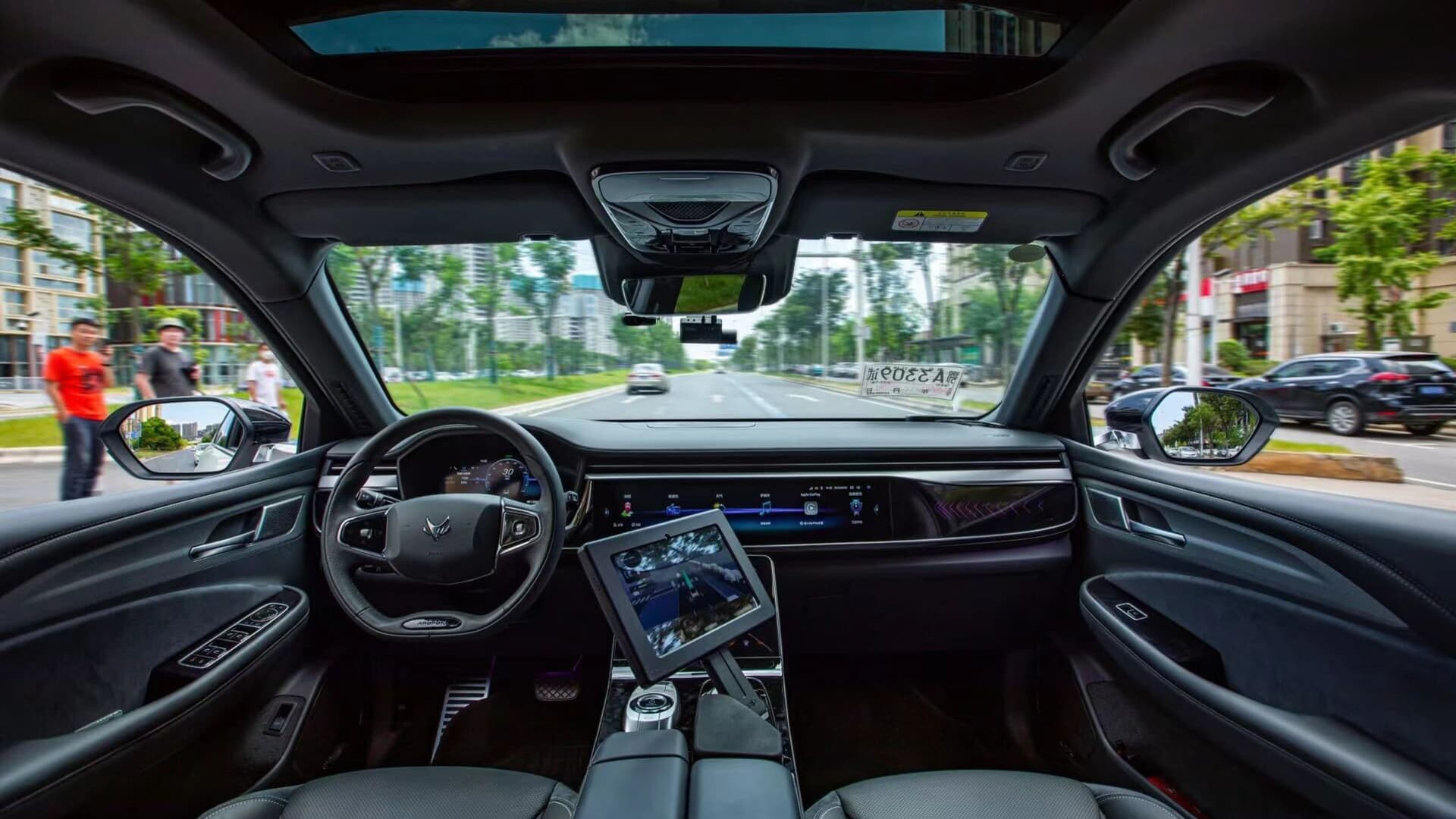
Chinese tech company Baidu announced Monday it can sell some robotaxi rides without any human staff in the vehicles.
Baidu
BEIJING — Chinese tech company Baidu is reporting slower growth in its Apollo Go robotaxi rides than in prior quarters.
Figures Baidu reported Thursday showed the number of robotaxi rides operated publicly grew by 26% year-on-year in the first half of the year to a monthly average of 287,500 rides, according to CNBC calculations.
That’s down sharply from year-on-year growth of 184% in the first half of 2023, for a monthly average of 229,000 rides.
Some of the cars still require a safety driver and are not fully autonomous.
Baidu is one of the major operators of public-facing robotaxis in China, where regulators in parts of Beijing and cities such as Wuhan — Apollo Go’s largest operating region — have allowed the companies to collect fares.

Apollo Go has cumulatively operated 7 million rides as of July 28, Baidu said Thursday. That’s up from 6 million as of April 19. The company first crossed the 1 million mark two years ago in July 2022.
In nearly all parts of Wuhan, Baidu’s Apollo Go robotaxis now operate fully autonomously with no safety staff on board, Baidu CEO Robin Li said on an earnings call Thursday, according to a FactSet transcript.
“This has a significant impact on costs,” he said.
A surge of interest in the Wuhan robotaxis in early July coincided with a rapid rise in people turning to ride-hailing jobs, raising concerns about the impact of automation on employment.
Apollo Go only has around 1% share of the ride-hailing market in Wuhan, Li said. “Scaling will be a gradual process and could take many years.”
He described the local fleet as consisting of around 400 robotaxis, without reiterating longer-term goals.
Baidu previously said it had more than 500 robotaxis operating in Wuhan, and planned to increase that to 1,000 by the end of the year.
A tiny fraction of ride-hailing
The company operated around 336,000 Apollo Go rides in China last month as of July 28, CNBC calculations showed. That’s about 23% above the monthly average in the third quarter of 2023.
With growth above 20%, the increase in robotaxi rides is still faster than that of ride-hailing, but at a far smaller scale.
Didi said earlier this week that gross transaction value in China rose by 8.7% year-on-year in the three months ended June 30. However, its average daily transactions reached a record of 33 million.
“Even with these milestones, our share in the entire ride-hailing service market is very small,” Baidu’s Li said. “It will take many years for us to reach a meaningful market share in China or elsewhere.”

