


Roberto Machado Noa/ LightRocket by way of Getty Illustrations or photos
LONDON — The working experience of shelling out for items and expert services on-line could truly feel a ton distinct in the coming decades.
Starting off from 2030, Mastercard will no more time demand Europeans to insert their card numbers manually when examining out on the internet — no make a difference what platform or product they’re working with.
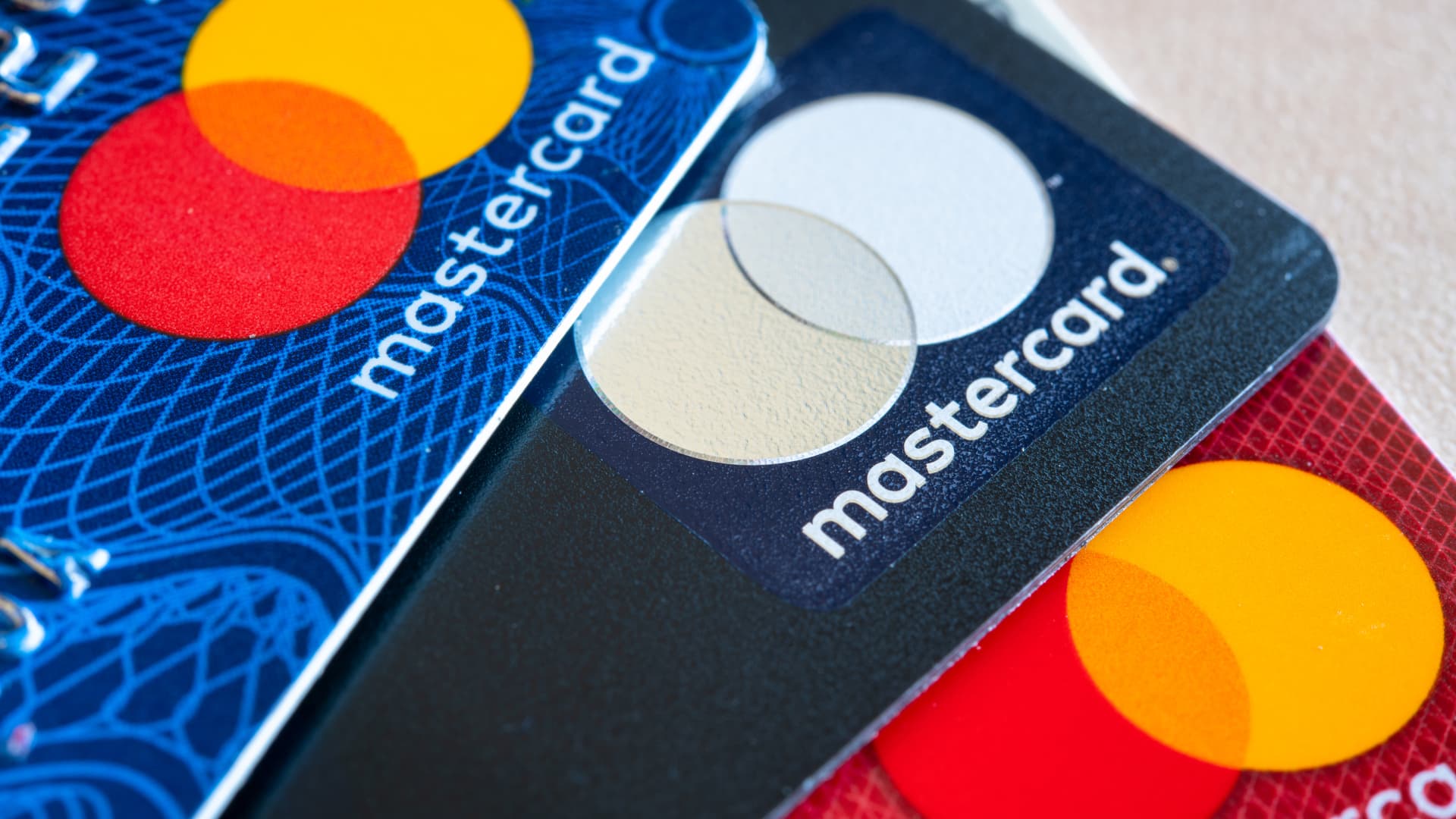
Mastercard will announce Tuesday in a hearth chat with CNBC that, by 2030, all cards it problems on its community in Europe will be tokenized.
In other terms, as a substitute of the 16-digit card variety we’re all accustomed to employing for transactions, this will be replaced with a randomly-generated “token.”
The firm claims it really is been performing with banking companies, fintechs, retailers, and other partners to period out guide card entry for e-commerce by 2030 in Europe, in favor of a one particular-click button across all on-line platforms.
This will assure that consumers’ playing cards are safe in opposition to fraud attempts, Mastercard suggests.
Users won’t have to keep entering passwords every single time they attempt to make a payment, as Mastercard is introducing passkeys that substitute passwords.
It will also permit buyers to make a person-click payments at checkout utilizing biometric authentication with a thumbprint.
Playing cards saved in a merchants’ page or digital wallet by using tokenization can be quickly up-to-date where ever they’re saved when they’re replaced or renewed.
Decreasing fraud
Mastercard states 100% tokenization across e-commerce websites will cut down fraud premiums drastically.
In accordance to market place research company Juniper Analysis, losses from online payment fraud is expected to exceed $91 billion by 2028 — totaling extra than $362 billion globally over the future five a long time.
Adoption of tokenization, Mastercard suggests, has been growing at a fee of 50% just about every year and now secures about 25% of all e-commerce transactions globally across its network.
Mastercard said it is really rolling out the transform in Europe as the continent has extensive been a leader in payments improvements, these as contactless payments and online banking, which authorized banking users to share their accounts’ facts to accessibility new monetary products and solutions.
“In Europe we have viewed tokenization getting momentum throughout the ecosystem, the convenience and diminished charges of fraud market them selves,” Valerie Nowak, government vice president, products and innovation at Mastercard Europe, said in a assertion.
“We are self-confident that reaching this eyesight by 2030 is a earn-acquire-acquire for buyers, shops and the card issuers alike.”
Potential of payments
From the arrival of credit history playing cards for the very first time in the 1950s and 1960s, to the change toward shelling out for factors on-line that arrived with the widespread adoption of the internet in the early 2000s, the strategies we pay back have been through a few very dramatic modifications throughout the a long time.
In the early times when credit rating cards had been initially launched, financial institution clerks would look at card figures against a guide of invalid numbers or get in touch with the issuing lender to check the human being building the payment is who they say they are.
So-named “zip-zap” devices that would imprint card quantities on carbon paper packets were being the primary way of paying by using credit card at the checkout counter.
That was until the 1970s and 1980s, when magnetic stripes and electronic payment terminals took in excess of.
They were succeeded by cards with microchips that saved facts on the card’s owner, amount, and expiry day.

Mastercard is betting its transfer towards this new “embedded” payment technique will be as extraordinary a change as the transfer towards chip and PIN, or the adoption of contactless payments, which are now widely utilized in developed economies throughout the entire world.
The business says its know-how will make the practical experience of shelling out for products on-line as clean as producing a contactless payment in-shop. It states it signifies that consumers will be capable to make payments with a person simply click throughout any product like smartwatches, residence assistants, and even automobiles.
For illustration, Mastercard has a partnership with Mercedes-Benz that makes it possible for the automaker’s consumers to use a fingerprint sensor in their vehicle to make electronic payments at more than 3,600 services stations across Germany.

