


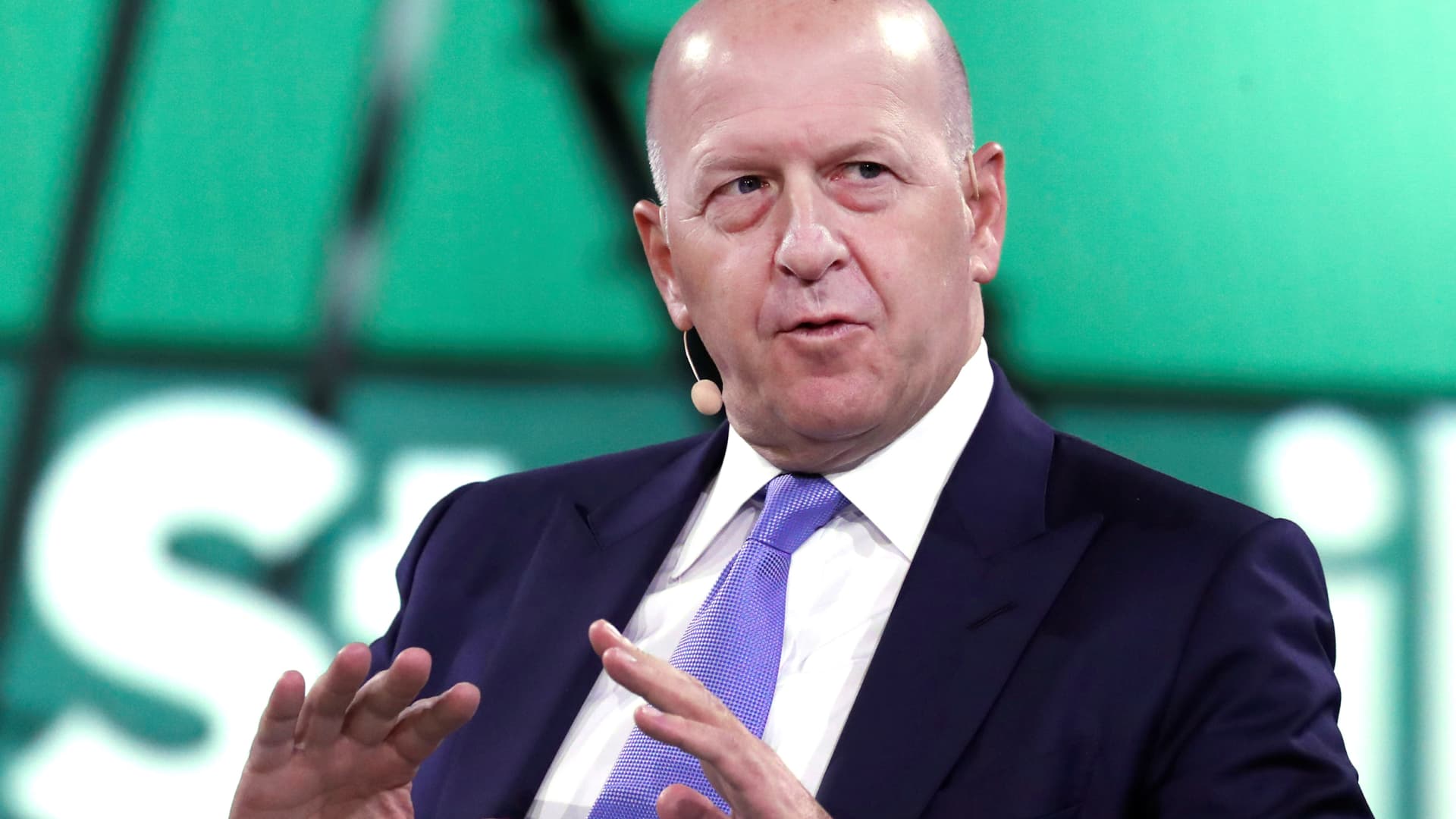
Goldman Sachs CEO David Solomon is advising his clients to be more cautious with their finances because the Federal Reserve’s moves to combat inflation could result in recession or other negative consequences.
Higher interest rates and a reversal in the Fed’s bond-buying programs are “going to have an impact on a number of things in your business that are hard to predict,” Solomon told CNBC’s Andrew Ross Sorkin on Wednesday.
“You have to think about the fact that there’s a reasonable chance at some point that we have a recession or we have, you know, very, very slow, sluggish growth,” Solomon said. “If you’re running a significant enterprise, you have to be looking through a lens with a little bit more caution right now than you might have been when we were sitting here a year ago.”
The combination of rising prices for raw materials, continuing supply chain issues and the Fed’s tightening monetary policy has damaged the confidence of corporate executives, according to a business survey released Wednesday. While a majority of respondents are expecting a recession, Goldman economists peg the odds at about 30% over the next 12 to 24 months.
Target shares sank on Wednesday after disclosing that rising costs for labor and shipping and lower sales for discretionary items took a bite out of earnings.
The Fed boosted its benchmark interest rate twice so far this year and has said it will shrink its balance sheet by tens of billions of dollars a month, “a journey in progress of tightening economic conditions,” Solomon said.
That change, a sharp reversal from the easy money policies of the last decade, has stung investors and caught some companies off guard as they attempt to raise capital, he said.
“There are a number of companies that thought that they’re going to have easy access to capital, that now probably have a harder journey to raise the capital they need,” Solomon said.
During the wide-ranging interview, Solomon also discussed topics including crypto and fintech — saying he was a “real bull” on the digital disruption of finance — to his investment bank’s new vacation policy. The bank is giving partners and managing directors greater flexibility to take time away from work because “historically, our people haven’t taken the vacation they’re entitled to,” Solomon said.

