


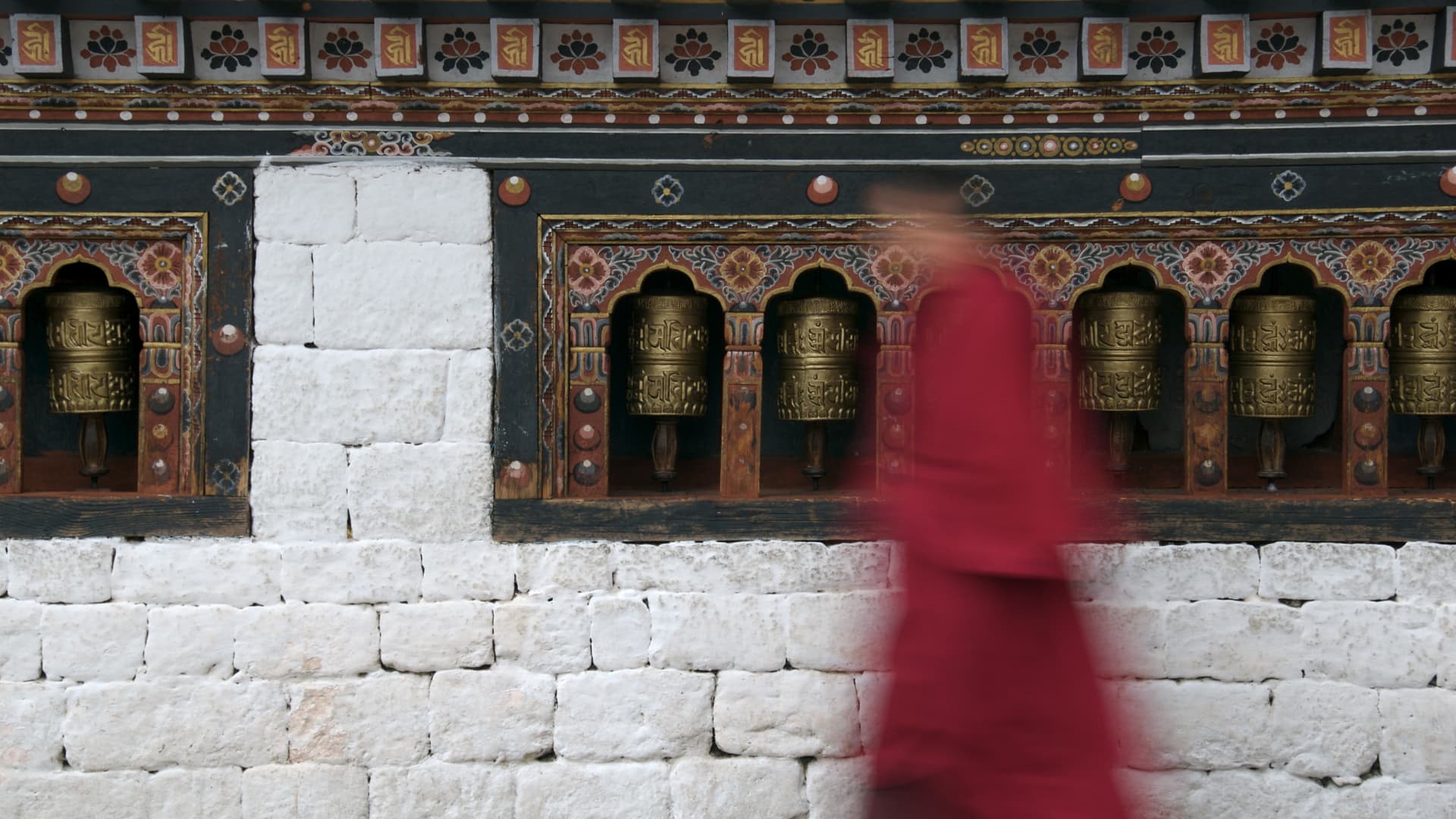
The Kingdom of Bhutan is reopening to tourists on Friday with a hefty hike to its daily tourist tax.
Before the country closed its borders in March 2020 in response to the Covid-19 pandemic, travelers to Bhutan were required to pay a minimum daily package rate of $200-$250 — depending on the time of year. The rate often included hotel, food, transportation and tour guide costs as well as a mandatory $65 Sustainable Development Fee.
But in late June, Bhutan passed a Tourism Levy Bill that eliminated the minimum daily package rate in favor of raising the Sustainable Development Fee from $65 to $200 per person per day.
Travel costs — for hotels and food, for example — are not covered by the fee.
The country is providing a fee discount for families, said Raju Rai, the CEO of Heavenly Bhutan Travels.
“It is 50% for children between 6-12 years [old] and … free for children 5 years and below,” he said.
‘An active contribution’
Bhutan, and supporters of the new policy, say the move is in line with the country’s continued goal to attract “high value, low volume” tourism.
To experience the country — which is famous for providing travelers a rare glimpse of authenticity in a world replete with tourist traps — visitors must “make an active contribution to Bhutan’s economic, social and cultural development,” according to the corporate website for the Tourism Council of Bhutan.
The Tourism Council said the fees will go toward upgrading infrastructure, training workers in the travel industry, preserving cultural traditions, protecting the environment and creating jobs that provide fair wages and working conditions.
Bhutan markets itself as the only carbon-negative country in the world.
Andrew Stranovsky Photography | Moment | Getty Images
Sam Blyth, chair of The Bhutan Canada Foundation and founder of the Trans Bhutan Trail, said the fees will go directly to help local communities.
“The money collected by [the] government will then be directed back into the communities and to support health and education, which are free to all Bhutanese,” he said.
Will travelers benefit?
Travelers, too, will benefit from the increased fees, according to the Tourism Council. Standards and certifications for hotels and tour operators will be revised, which will improve travelers’ experiences, it said. Plus, travelers will have more flexibility in planning and booking their own trips, it said.
The Tourism Council notes that the minimum daily package rate “had its limitations. Tourists, for instance, often had to choose from packaged tours offered by tour operators, which controlled the travel experience for them. By doing away with [it] … tourists will be able to engage their desired service providers directly, and pay for their services accordingly.”
Tour guides are no longer mandatory for all trips, but they are required for travelers who plan to trek or go beyond the cities of Thimphu and Paro, according to the Council.
Travel agencies, who can get visas for travelers, also collect payment for the sustainability fees, said Sarah-Leigh Shenton, the marketing director at the travel agency Red Savannah. “All administration is handled by our team, and our clients do not have to make payments locally.”
Critics versus supporters
Critics argue Bhutan’s increased tourist tax is “elitist,” by further closing the door to budget travelers who dream of visiting Bhutan.
Still more say the new policy will disproportionately affect travel agencies that cater to budget-friendly travelers.
Others are critical of the timing, stating the new rules will discourage travelers from visiting at a time when the country’s tourism industry is reeling from a 2.5-year border closure.
However, the Tourism Council of Bhutan said the pandemic provided the right time “to reset the sector.” It also hinted it may welcome a slow return of travelers, stating, “The gradual return of tourists will allow for the progressive upgrading of infrastructure and services.”
Sam Blyth said he has hiked extensively through Bhutan for the past 30 years. He is the founder of the Trans Bhutan Trail, a not-for-profit company that helped revitalize a 250-mile ancient trail that traverses the center of the country.
Sam Blyth, Trans Bhutan Trail, visiting Bhutan, trekking Bhutan
Wendy Min, Trip.com’s head of government affairs for Australia and New Zealand, said she feels a hefty fee is needed to “filter out travellers and to keep things manageable.”
“For a small country, it will not be ideal for them to open completely since you don’t want Punakha, or any of these cities, to be the next Kathmandu,” she said. “I totally understand why people would be turned off by the price tag, but everyone is different and on the hunt for their own experience and memories.”
She called increased fees “the new normal” citing Venice, where Italian officials have indicated day-trippers will need to pay between 3 and 10 euros ($3 and $10) to enter starting January 2023.
For now, the increased fees won’t apply to Indian tourists, who before the pandemic accounted for around 73% of all travelers to Bhutan, according to a report published by Bhutan in 2019.
But that may change too. The Tourism Council of Bhutan said the $15 daily fee that Indian travelers pay will remain in effect for two years, noting it “will be revised at a later time.”
Blyth, who started visiting Bhutan in 1988, said he doesn’t expect the new fee to negatively affect interest in Bhutan once travelers understand it.
“Tourism in Bhutan has been restructured so that travellers will no longer have to book through tour operators and travel agents and can deal directly with providers such as hotels, restaurants, guides and transportation companies,” he said. “These services are inexpensive and … result in an overall cost, even with the new tourism fee, that is still reasonable.”


