


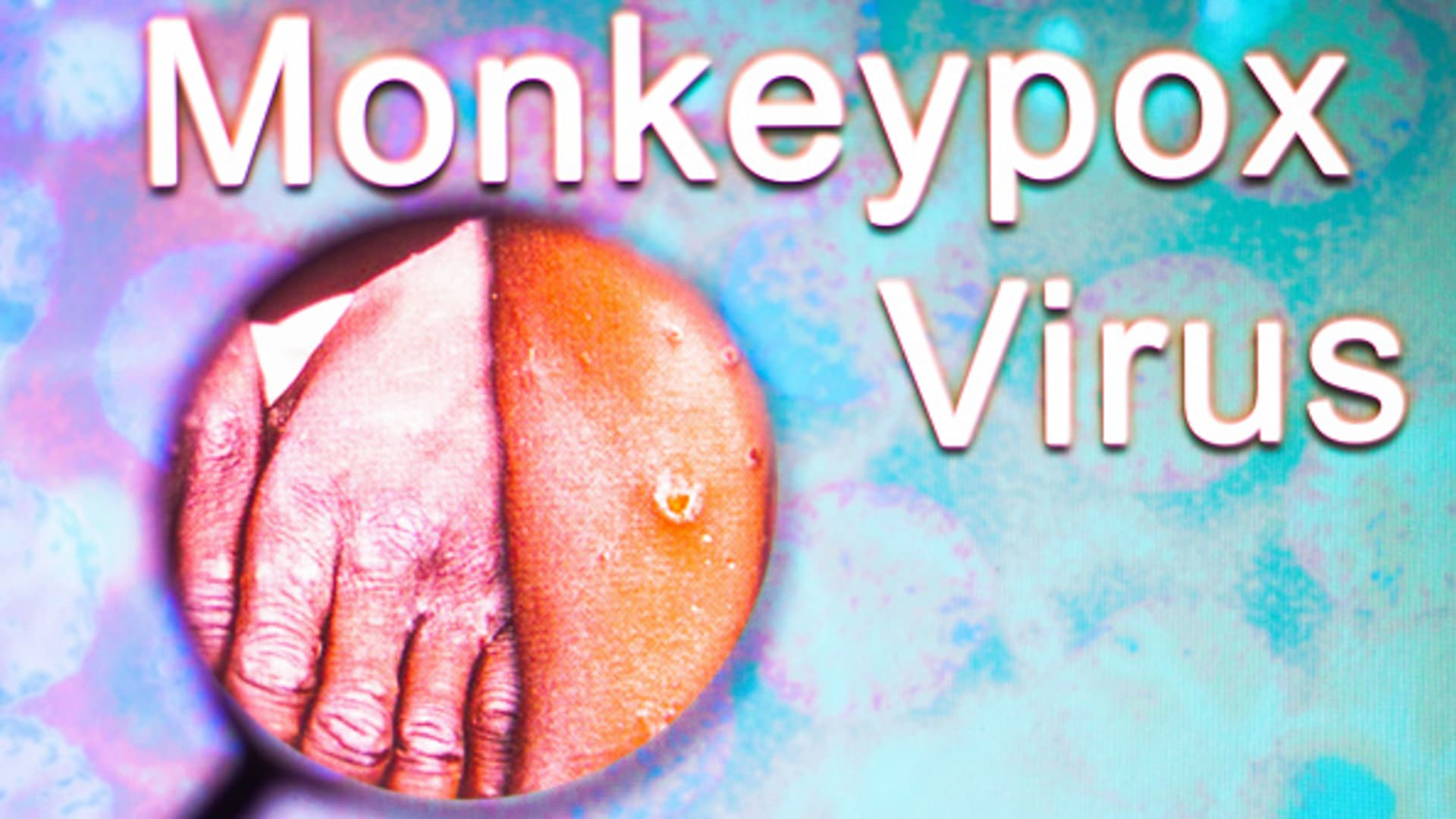
In this photo illustration, a photo of a hand infected with the Monkeypox virus is seen through a magnifying glass. Monkeypox is a viral disease that occurs mainly in central and western Africa.
Rafael Henrique | Lightrocket | Getty Images
The World Health Organization on Wednesday confirmed more than 550 monkeypox cases across 30 countries as the virus continues to spread across the globe.
WHO Director General Tedros Adhanom Ghebreyesus said the sudden appearance of monkeypox in multiple countries across the world indicates the virus has been spreading undetected for some time outside the West and Central African nations where it is usually found.
The virus may have been spreading for months or years undetected though investigations are ongoing and there are clear no answers yet, according to Dr. Rosamund Lewis, the WHO’s monkeypox technical lead.
“We don’t really know whether it’s too late to contain. What WHO and all member states are trying to do is prevent onward spread,” Lewis said during a press conference in Geneva on Wednesday. Contact tracing and isolating patients who have monkeypox are crucial to stopping the spread, she said.
Tedros said most of the cases have been reported by men who sought care at sexual health clinics after they’ve had sex with other men and developed symptoms. He emphasized that anyone can catch monkeypox through close physical contact, warned against stigmatizing people and called on countries to increase surveillance to identify cases in the broader population.
Monkeypox symptoms generally resolve on their own, Tedros said, though the disease can be severe in some cases. No deaths have been reported from the current outbreaks in North America and Europe. However, monkeypox has also not spread yet among more vulnerable populations such as pregnant women and children in these regions, said Maria Van Kerkhove, the WHO’s Covid-19 technical lead.
However, the WHO has been monitoring monkeypox in Africa for five decades and deaths are reported on the continent every year, Lewis said. More than 70 deaths from monkeypox have been reported across five African countries in 2022, she said. Monkeypox cases have been increasing in the Democratic Republic of the Congo in recent years which may be because vaccination against smallpox was halted in 1980. Monkeypox is in the same virus family as smallpox though it is milder.
“Collective immunity in the human population since that time is not what it was at the time of smallpox eradication,” Lewis said. “Anyone under the age of 40 or 50 depending on which country you were born in or where you might have received your vaccine against smallpox would not now have that protection from that particular vaccine.”
The WHO and member countries have maintained smallpox vaccine reserves, though they are mostly first generation shots that do not meet current standards, Lewis said. There are also newer generation vaccines and treatments for smallpox but the supply is limited. The WHO is working with companies to increase access to those new vaccines and treatments, she said.
“The WHO is not recommending mass vaccination. There is no need for mass vaccination,” Lewis said. Right now the virus is mostly spreading in a specific community, men who have sex with men, and it’s important to provide individuals in that community with the information they need to protect themselves and prevent the virus from spreading, she said.
The largest monkeypox outbreaks outside Africa are in Europe, particularly the United Kingdom, Spain and Portugal. The U.S. has reported at least 15 cases across nine states.
Monkeypox usually begins with symptoms similar to the flu, including fever, headache, muscle aches, chills, exhaustion and swollen lymph nodes. Infectious lesions then form on the body. Monkeypox is primarily spread through sustained skin-to-skin contact with these lesions. A person is considered no longer contagious once the lesions have disappeared and a new layer of skin has formed.


