


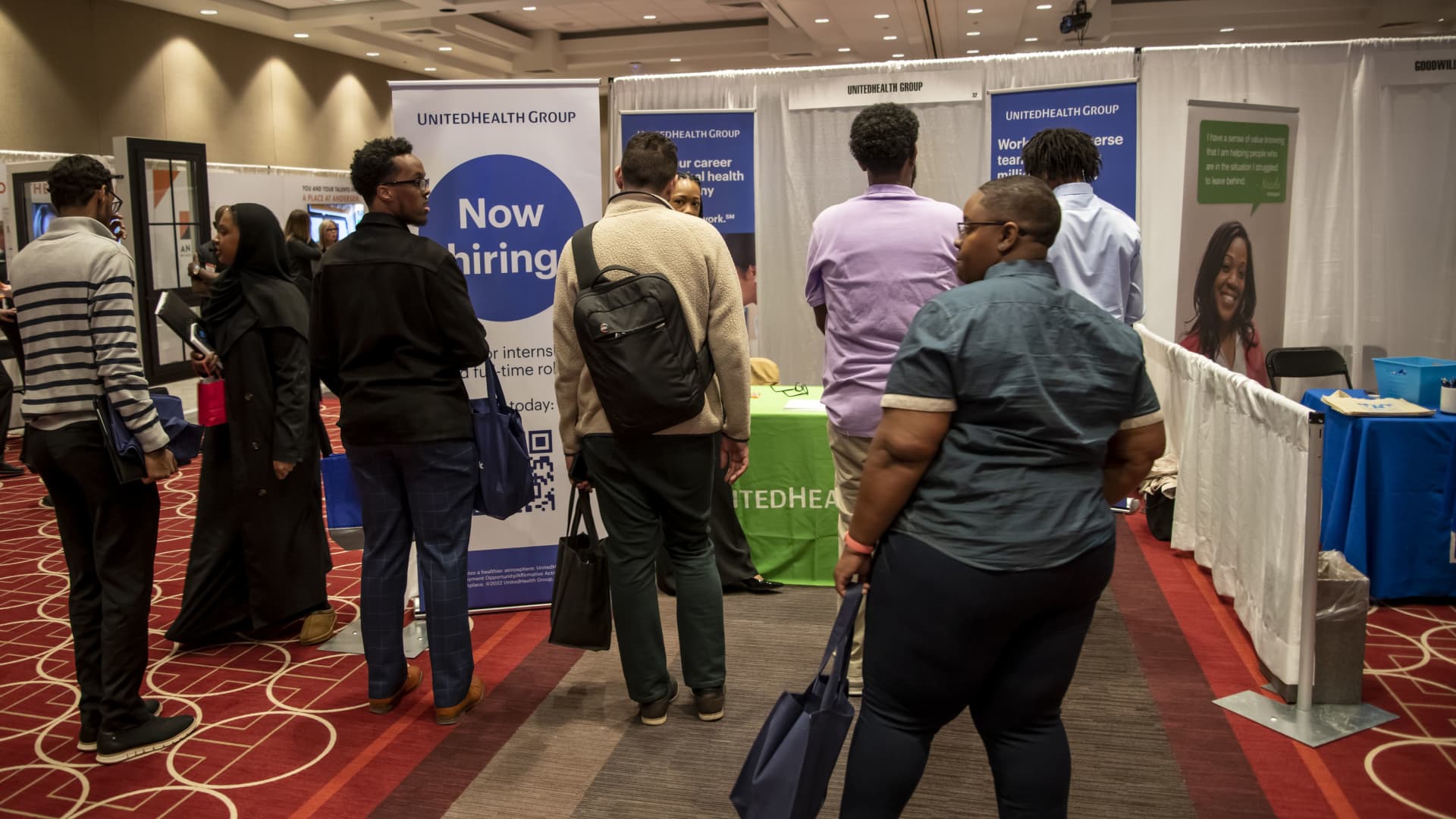

Initial claims for unemployment insurance totaled less than expected last week, countering other signs that the labor market is weakening.
First-time filings for jobless benefits came to a seasonally adjusted 233,000 for the week, a decline of 17,000 from the previous week’s upwardly revised level and lower than the Dow Jones estimate for 240,000, the Labor Department said Thursday.
The report comes with Wall Street on edge amid signs that job growth is slowing and even signaling a potential recession on the horizon. Stock market futures, which had been negative earlier, turned sharply positive following the 8:30 a.m. ET release while Treasury yields held higher.
While the top-line number helped allay some fears, the level of continuing claims, which run a week behind, edged up to 1.875 million, the highest since Nov. 27, 2021.
Jobless claims have been trending higher for much of the year, though still remain relatively tame. The recent uptick has been attributed to disruptions from Hurricane Beryl as well as summer shutdowns at auto plants.
The four-week average rose to 240,750, the highest in nearly a year. In the previous week, claims had jumped by 14,000, adding to worries that layoffs are on the rise.
“Claims pulled back in the latest week, adding to evidence that weather and seasonal auto plant shutdowns were responsible for the previous week’s dramatic rise,” said Robert Frick, corporate economist at Navy Federal Credit Union. “If you’re looking for additional weakness in the labor market, you’ll need to find it somewhere else.”
Concerns escalated over the state of the labor market following last Friday’s nonfarm payrolls report, which showed an increase of just 114,000 in July. At the same time, the unemployment rate rose to 4.3%, triggering the so-called Sahm Rule that gauges recessions by measuring changes in the jobless rate.
Markets have been highly volatile since then, with a huge three-day sell-off starting last Thursday that ignited worries of deeper troubles in the U.S. economy.
In turn, traders expect the Federal Reserve to begin cutting interest rates in September, with some even calling for an emergency intrameeting reduction to counter the recent weakness. Markets are assigning a strong probability of a half percentage point reduction for the first move and a full percentage point cut by the end of the year, according to the CME Group’s FedWatch tracker of fed funds futures contracts.

