


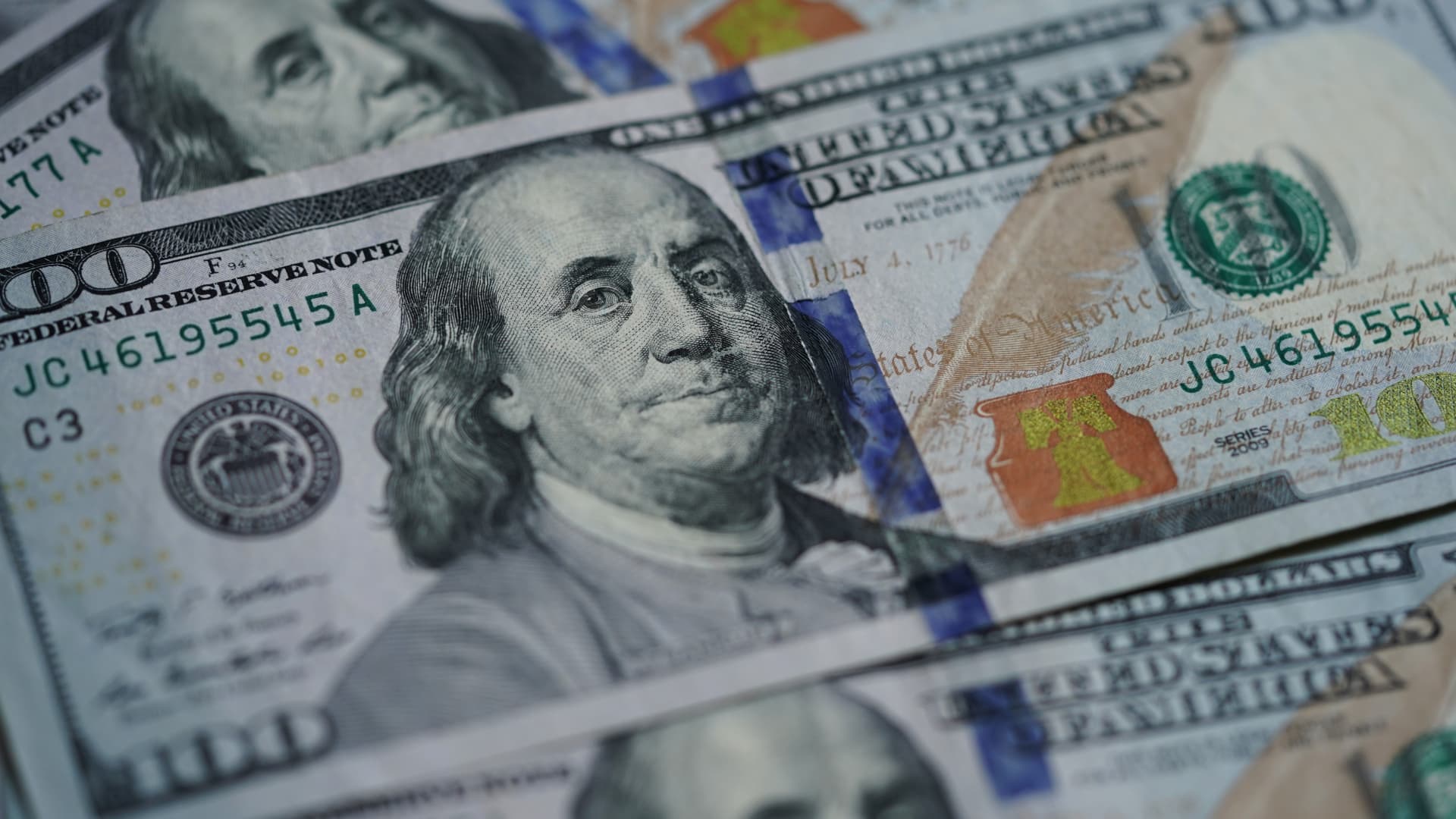
The U.S. has been “extremely trigger-happy” with stinging economic measures, and central banks may decide to diversify their portfolio of foreign reserves instead of relying heavily on the U.S. dollar, according to the co-director of the Institute for the Analysis of Global Security.
“Central banks are beginning to ask questions,” said Gal Luft of the Washington-based think tank, adding that they are wondering if reliance on the dollar and “putting all their eggs in one basket” is a smart idea.
“The United States has extended itself, has been extremely trigger-happy when it comes to the use of sanctions and other economic punishments,” he said.
The White House did not respond to a CNBC request for comment.
Luft said the U.S. took “unacceptable and unheard of steps” in recent weeks, such as effectively freezing Russia’s central bank reserves and disconnecting Russia from the interbank messaging system, SWIFT.
The overall picture is not good because what we’re getting today is a heart attack on top of a heart attack.
Gal Luft
co-director of the Institute for the Analysis of Global Security
He said one in 10 countries in the world is under some form of U.S. sanctions.
“That has a cumulative effect and as a result, we see the dollar playing less and less of a role and portfolios of central banks,” Luft said.
His comments come after a Wall Street Journal report that Saudi Arabia is in accelerated talks with China to accept yuan instead of dollars for oil that Beijing buys.
Oil is typically priced in U.S. dollars, and that has allowed Washington to run “huge deficits,” he told CNBC’s “Street Signs Asia” on Monday.
Sanctions, however, make governments want to move away from the U.S. dollar, Luft said.
He said the American political class has a “lack of awareness” about the consequences of their actions.
“It’s like a bunch of kids running around with guns shooting all over the place without realizing what they’re actually doing, without looking at the cumulative impact of all of this,” he said.
“On the one hand, you are sanctioning right and left. On the other hand, you want countries to buy your Treasurys and finance your debt. That’s not a sustainable scenario,” he said.
‘Heart attack’ in energy
Separately, Luft, who is senior advisor to the U.S. Energy Security Council, discussed the uncertainty in global energy markets.
“The overall picture is not good because what we’re getting today is a heart attack on top of a heart attack,” he said, pointing to the Covid pandemic and the Russia-Ukraine war, which could become “very nasty.”
“The combination of the two is really [a] double whammy,” he said.
Oil prices have fluctuated wildly over the past two years, plunging when the pandemic began and soaring when Russia invaded Ukraine in February.
Luft said there is a realignment in the world’s energy, financial and geopolitical systems, and the emergence of a “new world order.”
“The transition is never a happy one,” he said. “It’s always painful, but that’s the only way that the world can transform from one world order to another.”

