


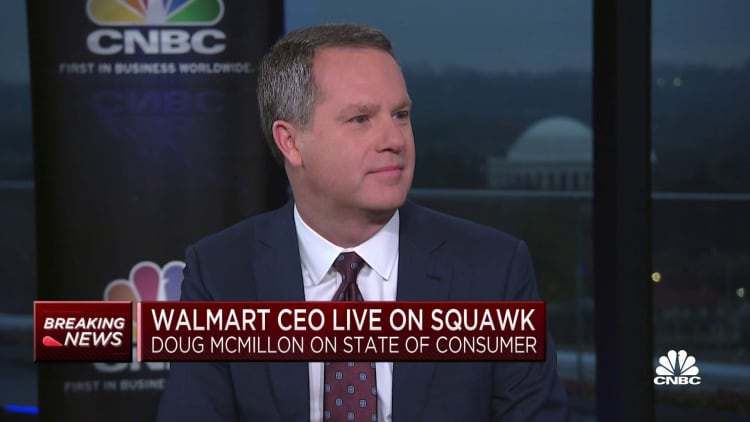
The American shopper is still feeling “stressed” by inflation, but the effects aren’t being felt evenly across categories, Walmart CEO Doug McMillon said Tuesday.
“We’ve got some customers who are more budget-conscious that have been under inflation pressure now for months,” he told CNBC’s “Squawk Box.” “That sustained pressure in some categories, I think, is something customers are having to deal with as we approach Christmas.”
Shoppers are being more selective about their purchases, McMillon said, and skipping some electronics, for example, in favor of staples. In the last couple quarters, he said much of company’s growth has come from people who are going to Walmart to save money.
Walmart is among a slew of retailers that has seen a shift in shopping patterns as inflation drives up the price of food, housing and more.
For the big-box retailer, that has led to challenges and opportunities. As the nation’s largest grocer, Walmart has used low-priced groceries to attract customers — including wealthier ones. About 75% of its market share gains in grocery came from shoppers with an annual household income of more than $100,000 in the past two quarters.
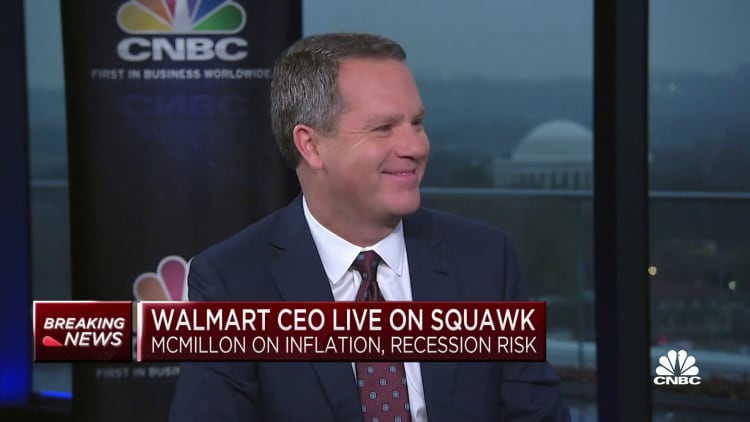
McMillon said Tuesday that prices for fresh food are more volatile and fluctuate more. Beef prices are down, for example, while chicken prices are still high and produce prices are relatively low relative to what they were before, he said.
“Dry grocery, processed foods and consumables are where the inflation’s most stubborn,” he said.
As it benefits from its grocery business, however, it has gotten tougher for Walmart to sell pricier items and discretionary items. Last month, Walmart Chief Financial Officer John David Rainey told CNBC that people are buying cheaper proteins such as hot dogs, beans and peanut butter instead of more expensive meats. They are holding out for sales when shopping for big-ticket items like TVs and buying less clothing and home goods, he said.
Walmart updated its forecast this summer to reflect that dynamic. It cut its profit outlook in July, as it aggressively marked down some merchandise and as consumers bought fewer high-margin discretionary items. But it raised its comparable sales projection because of stronger-than-expected grocery sales.
Last month, it gave a more cautious outlook than Wall Street expected. Walmart said it anticipates comparable sales for Walmart U.S. will rise about 3%, excluding fuel, in the holiday quarter. That was below Wall Street’s expectations of 3.5% growth, according to StreetAccount.


