


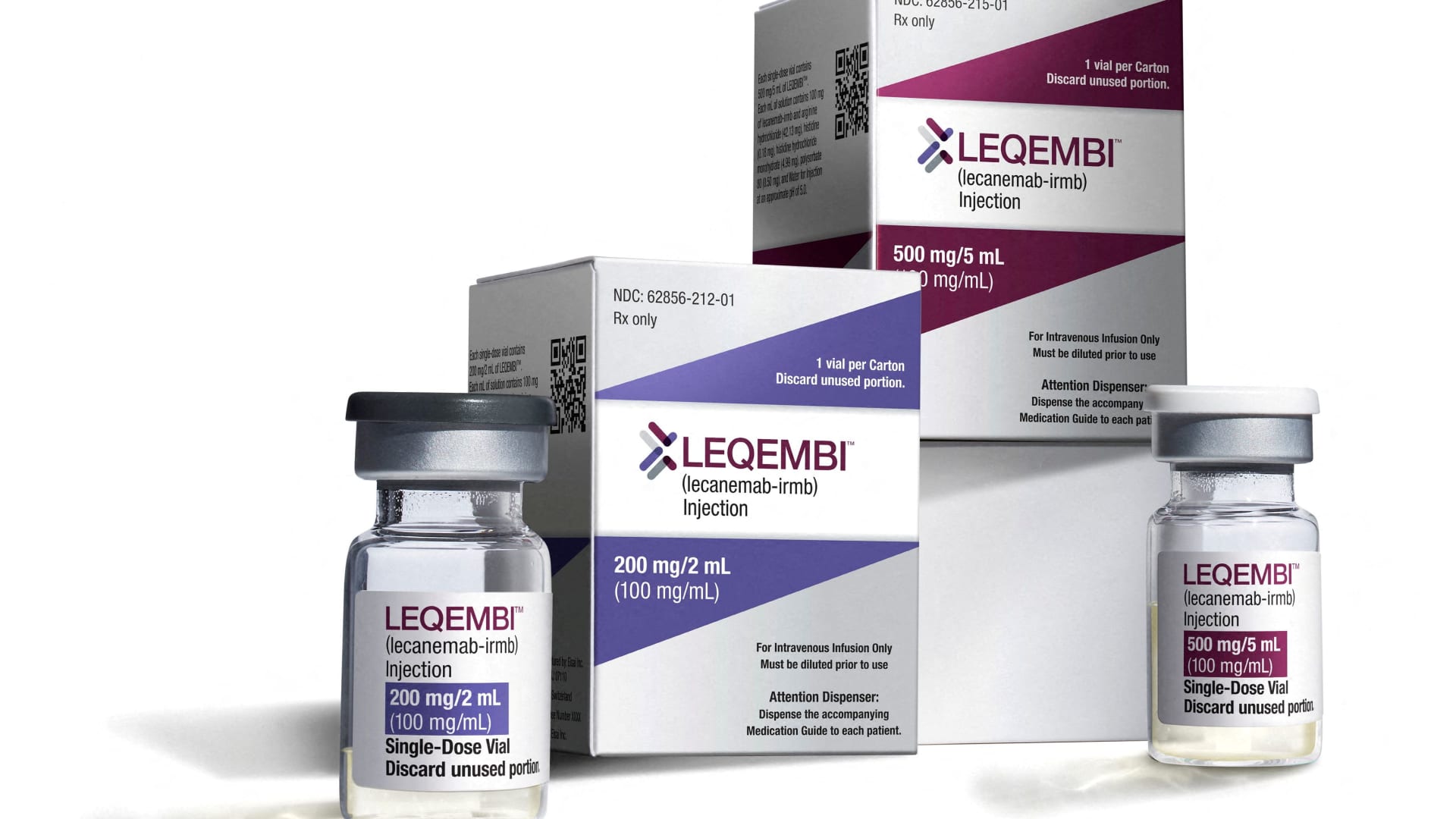
The Veterans Health Administration will cover Eisai and Biogen‘s Alzheimer’s treatment Leqembi, the companies announced Monday.
In a statement, drugmaker Eisai said veterans in the early stages of the disease who meet VHA criteria are eligible for coverage of Leqembi. The decision by VHA stands in contrast with Medicare, which has declined to cover the treatment except in very limited circumstances.
CNBC did not immediately hear back from VHA. A document on the agency’s website says veterans must be seniors, sign a consent form, have undergone an MRI in the past year, and have PET scan or spinal tap test results that are consistent with Alzheimer’s disease, among other criteria.
The VHA, under the Department of Veterans Affairs, is the largest health system in the country, providing care for veterans at nearly 1,300 facilities nationwide. The system serves 9 million veterans annually. Nearly 168,000 veterans had Alzheimer’s disease in 2022, according to federal estimates.
The Food and Drug Administration approved Leqembi on an expedited basis in January. However, Medicare is essentially not covering the expensive treatment, which Eisai has priced at $26,500 per year.
The insurance program for seniors will only cover treatments such as Leqembi for participants in clinical trials right now. Eisai has already completed its trial.
Join CNBC’s Healthy Returns on March 29, where we’ll convene a virtual gathering of CEOs, scientists, investors and innovators in the health-care space to reflect on the progress made today to reinvent the future of medicine. Plus, we’ll have an exclusive rundown of the best investment opportunities in biopharma, health tech and managed care. Learn more and register today: http://bit.ly/3DUNbRo
Medicare has agreed to provide broader coverage of Leqembi as soon as it receives full approval from the FDA. Eisai and Biogen expect the agency to make a decision on full approval in July.
Leqembi slowed cognitive decline in people with early Alzheimer’s by 27% in a late-stage trial. The treatment also carries risks of brain swelling and bleeding.
Leqembi is administered as an intravenous infusion twice monthly. It targets brain plaque associated with the disease.


