


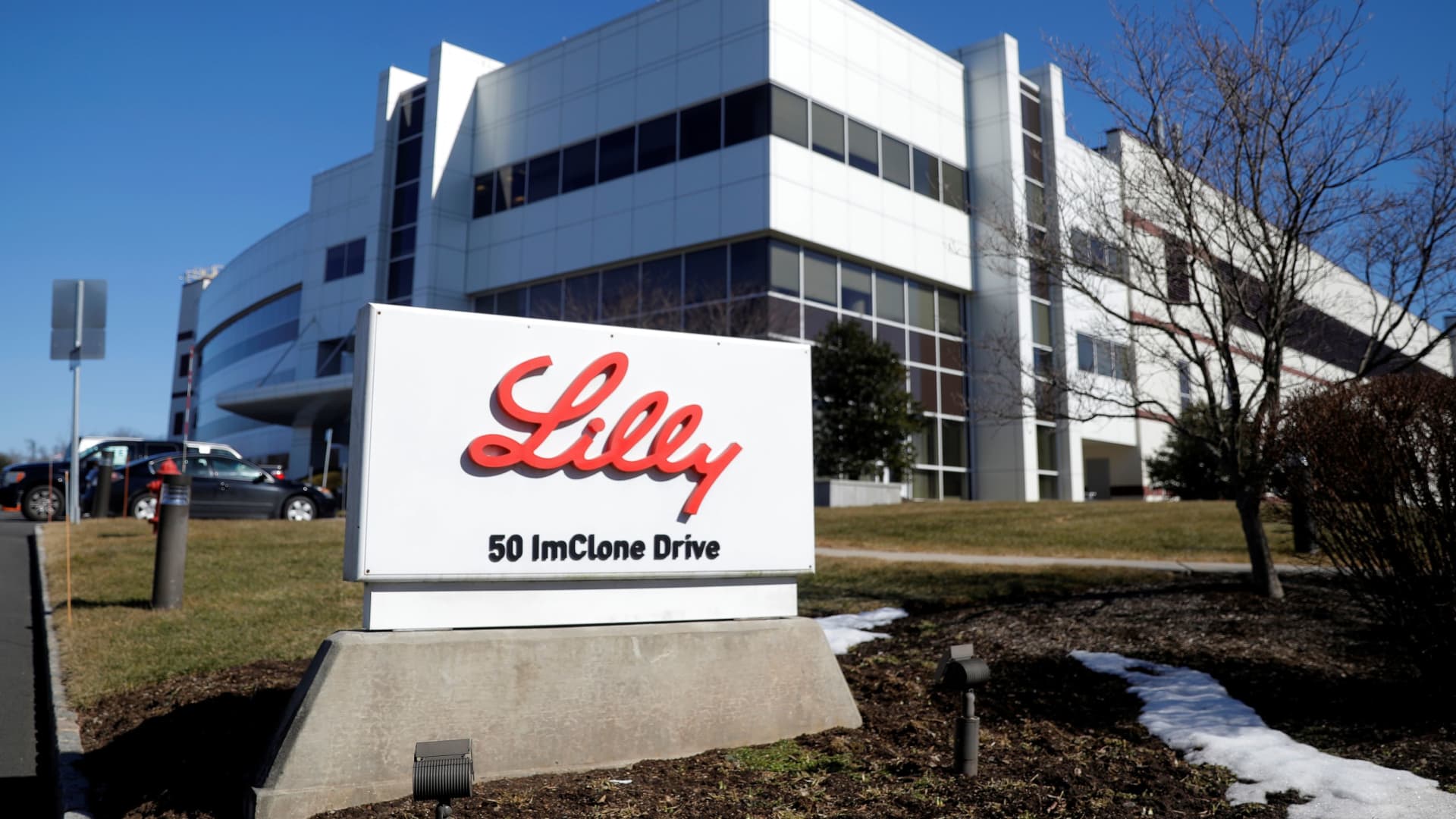
An Eli Lilly and Company pharmaceutical manufacturing plant is pictured at 50 ImClone Drive in Branchburg, New Jersey, March 5, 2021.
Mike Segar | Reuters
Uninsured Americans pay nearly $98 on average for a vial of Eli Lilly‘s generic insulin, even after the company pledged to cut the product’s list price to $25 per vial, according to a report released Thursday by Sen. Elizabeth Warren.
Eli Lilly earlier this year vowed to slash the list price of its generic insulin, Lispro, from $82.42 per vial starting on May 1. The Indianapolis-based pharmaceutical company is one of the world’s largest insulin manufacturers.
The Massachusetts senator’s report surveyed more than 300 chain and independent pharmacies in the U.S. between June 9 and 28 to determine whether Eli Lilly’s announced price cut “translated into real relief for patients.”
The survey found that a third of pharmacies charged uninsured patients $164 or more for a vial of Eli Lilly’s Lispro.
Seven pharmacies charged $200 per vial or more, and two sold the product for more than $300.
Chain pharmacies charged uninsured customers an average of $123 per vial for the generic insulin, compared with $63 on average at independent pharmacies.
Eli Lilly did not immediately respond to a request for comment on the survey.
The survey findings suggest that “Eli Lilly’s promises of affordable, accessible insulin have not been realized for uninsured patients across the country,” Warren said in a statement.
She said the data also demonstrate that Congress needs to take more steps to rein in excessive prices, such as capping insulin copays at $35 per month for all patients, regardless of their insurance status.
President Joe Biden’s Inflation Reduction Act currently caps insulin copays at $35 per month for people covered by Medicare.
“My new report confirms that far too many uninsured Americans cannot access or cannot afford to pay astronomical prices for life-saving generic insulin – lawmakers need to step up and take action,” Warren said in a press release.
Sen. Elizabeth Warren (D-MA) speaks during a Senate Banking Committee hearing on Capitol Hill on June 13, 2023 in Washington, DC. The committee held the hearing to review “The Consumer Financial Protection Bureau’s Semi-Annual Report to Congress.”
Michael A. Mccoy | Getty Images
Insured Americans typically pay a fraction of the list price for insulin. But uninsured people often have to pay the full cost, which can force them to ration or stop taking the life-saving diabetes treatment.
Nearly 30% of uninsured patients with diabetes reported skipping doses of insulin, taking less than prescribed or delaying purchases over the past year, Warren said, citing a 2022 study by researchers from Harvard and other institutions.
“No American should ever be forced to choose between life-saving medication, like insulin, and their ability to pay for food, shelter, and their everyday needs,” Warren said.
Earlier this year, Eli Lilly, Sanofi and Novo Nordisk committed to lowering the list prices of their most common prescribed insulins by at least 70% later in 2023.
Eli Lilly and Sanofi also capped monthly out-of-pocket insulin costs at $35 for people who have private insurance.
Together, the three companies control 90% of the global insulin market.
Their commitments drew applause from lawmakers and Biden, who was pleased that the companies finally answered calls to help make diabetes care more affordable in the U.S.
But Warren’s survey raises questions about how effective their cost-cutting efforts will be.
About 37 million people in the U.S., or 11.3% of the country’s population, have diabetes, according to the Centers for Disease Control and Prevention.
Approximately 8.4 million diabetes patients rely on insulin, the American Diabetes Association said.


