


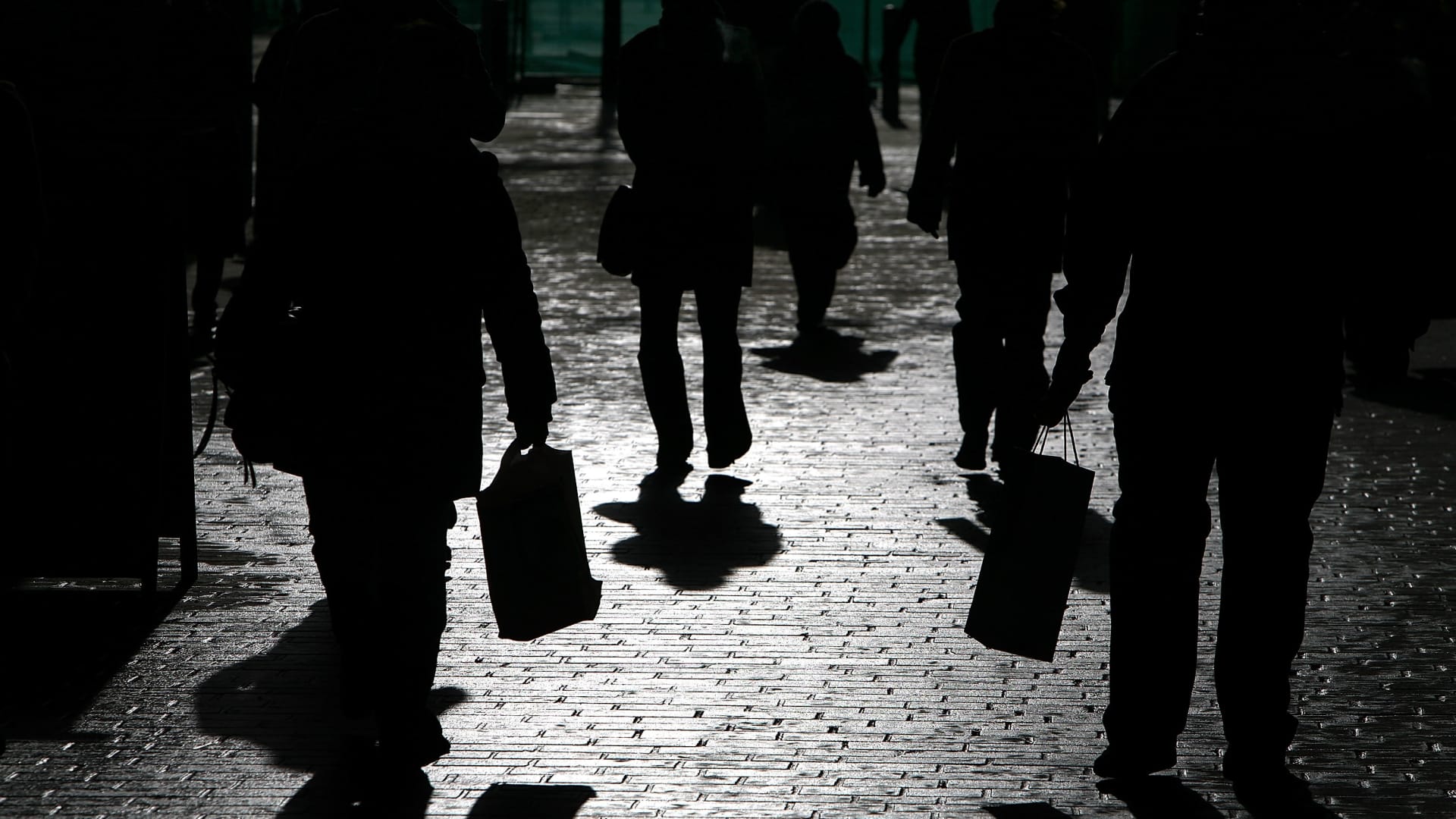
LIVERPOOL, UNITED KINGDOM – JANUARY 23: On the day that Britain officially enters a recession shoppers walk through Liverpool city centre on January 23, 2009 in Liverpool, United Kingdom. Figures announced today confirm that the UK is officially in a recession for the first time since the early 1990s after GDP fell in two successive quarters of 2008.
Photo by Christopher Furlong/Getty Images
LONDON — U.K. inflation came in at an annual 6.2% in February, its highest since March 1992, as soaring food, fuel and energy costs continue to deepen the country’s cost of living crisis.
February’s Consumer Price Index print was above consensus expectations among economists polled by Refinitiv for a 5.9% annual figure, and vastly outstripped January’s previous 30-year high of 5.5%.
On a monthly basis, CPI inflation was 0.8%, exceeding expectations for a 0.6% rise and marking the largest monthly CPI increase between January and February since 2009.
The Bank of England has hiked interest rates at three consecutive monetary policy meetings, raising the costs of borrowing from its historic low of 0.1% to 0.75%, as it looks to contain runaway inflation without stomping out economic growth.
The Monetary Policy Committee delivered a more dovish tone than expected by the market last week, highlighting the squeeze on household incomes amid a sharp rise in commodity prices following Russia’s invasion of Ukraine. Policymakers now expect inflation to peak at 8% in the second quarter of 2022.
The Consumer Prices Index including owner occupiers’ housing costs (CPIH) — the preferred metric of the Office for National Statistics — rose by 5.5% in the 12 months to February 2022, up from 4.9% in the 12 months to January.
“The largest upward contributions to the February 2022 CPIH 12-month inflation rate came from housing and household services (1.39 percentage points, principally from electricity, gas and other fuels, and owner occupiers’ housing costs) and transport (1.26 percentage points, principally from motor fuels and second-hand cars),” the ONS explained in its report on Wednesday.
Spring Statement
British Finance Minister Rishi Sunak is under pressure to address the cost of living crisis when he delivers his Spring Statement later on Wednesday.
A planned 10% increase to National Insurance (a tax on earnings) kicks in for many workers in April, while at the same time the U.K.’s energy price cap soars 54% to accommodate higher costs of oil and gas, exacerbating the squeeze on household income as consumer prices continue to head north and Russia’s war in Ukraine shows little sign of abating.
“This morning’s inflation data shows just how dire the situation is, and there is a clear need for the government to act to help save many from slipping into financial difficulty as their wages are quickly swallowed up,” said Paul Craig, portfolio manager at Quilter Investors.
“Markets and developed economies are continuing to battle soaring inflation alongside the uncertainty surrounding Russia’s war on Ukraine. Given the delicate market environment, investors will need to watch the data and markets closely and allocate accordingly.”
Dan Boardman-Weston, chief investment officer at BRI Wealth Management, noted that while fuel costs remain a major contributor to U.K. inflation, the weight of their contribution to the overall rate appears to be slowing.
“The data continues to point towards another few months of rises in the rate of inflation, but we expect this to ease as we head into the summer. Given the strength of the labour market and the overall economy, it seems inevitable that the Bank of England will continue down the path of further rate rises,” Boardman-Weston said.
“Raising rates at a time of high household bills and rising taxes could stifle the economic recovery by putting the consumer under too much pressure though. The Bank will need to carefully balance the need to try and tame inflation whilst not tipping the economy into a recession.”

