

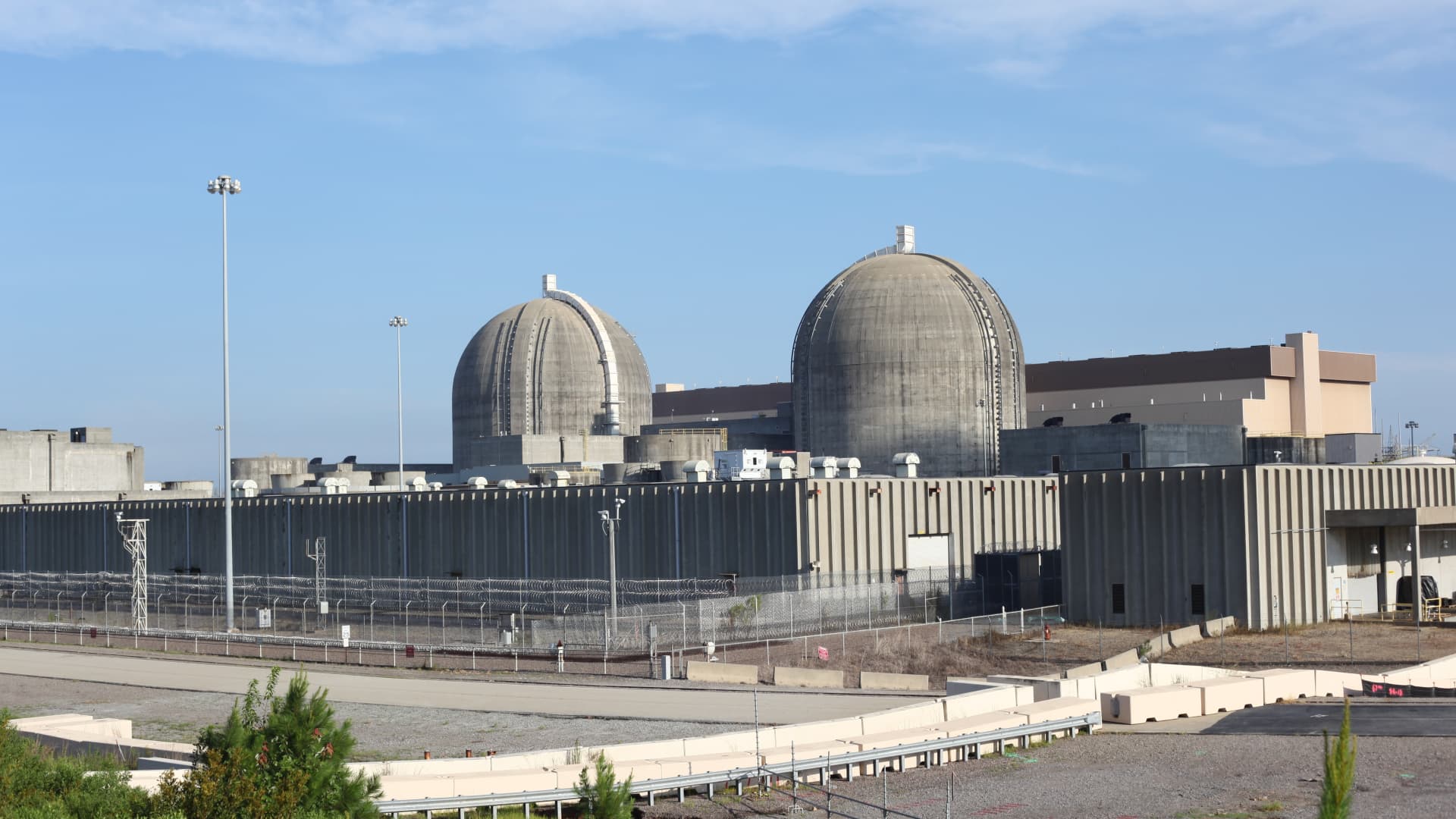
The Vogtle nuclear power plant is located in Burke County, near Waynesboro, Georgia in USA. Each of the two existing units have a Westinghouse pressurized water reactor (PWR), with a General Electric turbine and electric generator, producing approximately 2,400 MW of electricity. Two Westinghouse made AP 1000 reactors are under construction here.
Pallava Bagla | Corbis News | Getty Images
The Trump administration’s plan to spend tens of billions of dollars on Westinghouse nuclear plants could transform it into an independent, publicly traded company with the U.S. government as a major shareholder.
The Commerce Department signed a deal last week with Westinghouse owners Cameco and Brookfield Asset Management to spend $80 billion to build the company’s nuclear plants across the U.S.
Under the deal, the U.S. government is granted a participation interest in Westinghouse and can require an initial public offering on or before January 2029 if the company’s value surges to $30 billion or more.
The government could become an 8% shareholder in Westinghouse under this scenario, said Cameco Chief Operating Officer Grant Isaac on the company’s third-quarter earnings call Wednesday. It is not entitled to a stake in Cameco or Brookfield under the deal, Isaac said.
Cameco would consider spinning out Westinghouse as an independent company in 2029 depending on the circumstances, the executive said.
“There is definitely a unique interest in investing just in Westinghouse,” Isaac said. “Cameco is a funny proxy for that. Brookfield’s probably an even funnier proxy to invest in just Westinghouse.”
Cameco is one of the largest uranium miners in the world and Brookfield is one of the biggest investors in energy generation.
“We’re going to keep all options on the table,” Isaac said. “This partnership agreement does not force us to leave Westinghouse in 2029. We don’t have to sell any of our share — or we may if the value of Westinghouse is so significant come 2029 when that window opens up.”
U.S. government financing
The government’s interest in Westinghouse vests only if it makes a final investment decision with definitive agreements to build new reactors in the U.S. with a total value of $80 billion.
The U.S. could use tools like Department of Energy loans or financing from “other jurisdictions” to finance the projects among other options, Isaac said.
“We’re assured that there is a lot of interest in investing this minimum $80 billion in order to begin the process,” the executive said.
Westinghouse has designed a big modern nuclear reactor called the AP1000 that the Trump administration wants to deploy across the U.S. to meet rising electricity demand from data centers and manufacturing. It generates a gigawatt of electricity, which is enough power for more than 750,000 homes.
President Donald Trump signed an executive order in May that called for the U.S. to start construction on 10 large new nuclear reactors by 2030. Westinghouse CEO Dan Sumner said in July that the company would meet Trump’s call with the AP1000.
But Westinghouse has struggled in the past to deliver the AP1000 on time and on budget. It went bankrupt in 2017 from cost overruns at big nuclear projects in Georgia and South Carolina.
The first two AP1000 reactors in the U.S. came online at Plant Vogtle in Georgia in 2023 and 2024 but the South Carolina project was canceled.
Westinghouse was bought by Brookfield and Cameco in 2023, five years after it emerged from bankruptcy. Brookfield has a 51% stake in Westinghouse and Cameco owns 49% of it.
The nuclear industry needs a big order of reactors to stimulate the market and supply chains, Isaac said. The U.S. government is serving that role, the executive said.
“What the U.S. government has done is committed to step in and be that stimulant if you will, their commitment is to facilitate the financing,” he said.

