


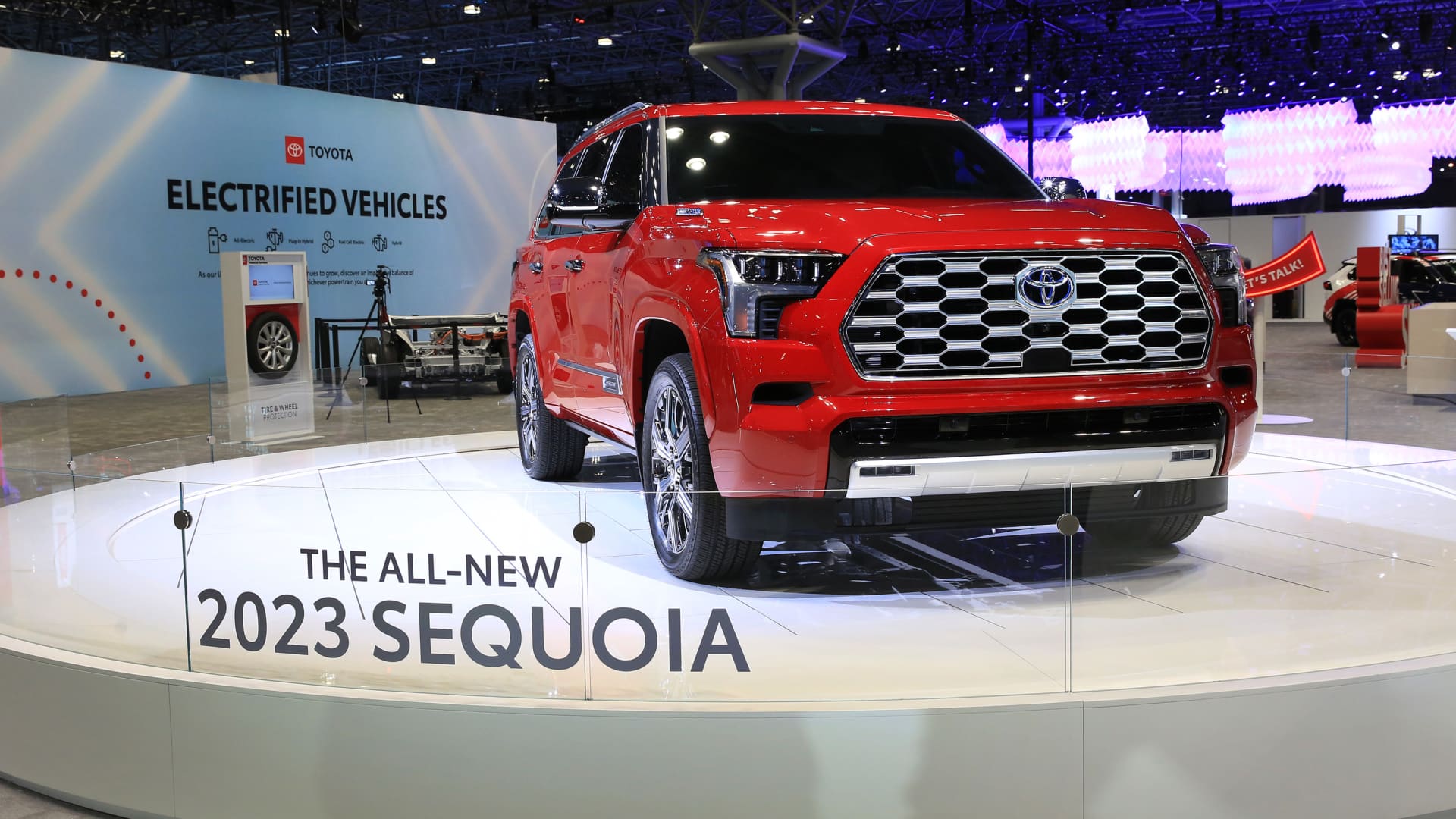
Toyota 2023 Sequoia on display at the New York Auto Show, April 13, 2022.
Scott Mlyn | CNBC
Toyota Motor on Wednesday warned investors that “unprecedented” increases in materials and logistics costs could cut the company’s full-year profit by as much as 20%.
The Japanese automaker said it expects materials costs to more than double to 1.45 trillion yen, or about $11.1 billion, in its fiscal year that started in April. Toyota said it plans to offset about 300 billion yen, about $2.3 billion, of those year-over-year increases through “cost reduction efforts.”
The global automotive industry has been battling supply chain problems for roughly a year and a half. A global shortage of semiconductor chips has sporadically shuttered factories and caused significant reductions in vehicle volumes.
Toyota was able to navigate the supply shortages better than some other automakers during the early days of the chip shortage, but higher inflation, increased costs and additional supply chain problems have added up.
Covid-19 continues to be a problem as well. Toyota on Tuesday said it would suspend operations on 14 lines at eight domestic factories for up to six days in May due to lockdowns occurring in China.
Toyota expects its operating profit to slip to 2.40 trillion yen ($19.7 billion) for the current fiscal year, down from 3 trillion yen ($22.9 billion) in its last fiscal year that ended in March. It also forecast net income to fall by 20% to 2.26 billion yen ($18.5 billion), despite expectations of record global retail sales during that time.
“It is very unprecedented,” Toyota Chief Financial Officer Kenta Kon said Wednesday about the raw material costs.
Kon said the company is working internally and with its suppliers to cut costs as much as possible to avoid “simply raising the prices” of its vehicles for consumers. He said that could include using less raw materials or switching to lower-priced parts.
“We have a sense of crisis, and we do realize we have to continue these efforts,” Kon said.
Toyota is the latest automaker to warn of rising costs. Tesla CEO Elon Musk has blamed inflation in raising the prices of its electric vehicles. General Motors and Ford Motor also have warned of significant cost increases this year.
Ford said it largely expects its pricing power, combined with an expected increase in production, to offset $4 billion in raw material headwinds. The automaker previously forecast those headwinds at $1.5 billion to $2 billion. It’s a similar story at GM, which last month doubled its forecasted commodity costs to $5 billion in 2022.


