



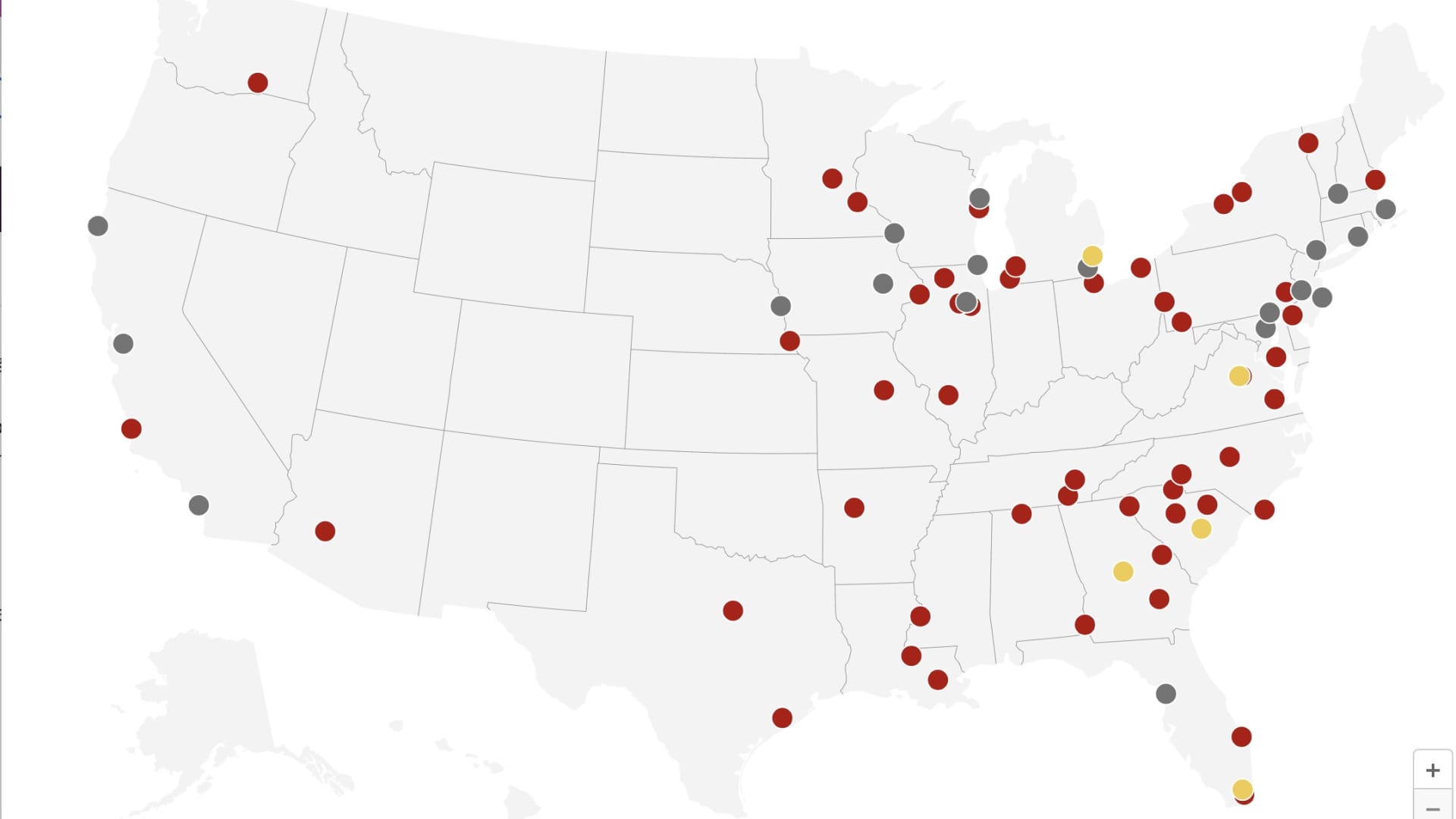
There are 93 commercial nuclear reactors operating in the United States at 55 locations in 28 states. The majority of nuclear reactors are in the eastern portion of the U.S.
Currently, 25 reactors are in some phase of decommissioning.
There are also licenses approved for another eight nuclear reactors to be constructed in the U.S. However, only two of those reactors, units 3 and 4 at the Vogtle plant in Georgia, are currently under construction, according to Scott Burnell, a spokesperson for the Nuclear Regulatory Commission.
Other companies hold the licenses to begin construction “but none of them have made the business decision to move forward,” Burnell said. The license doesn’t expire, though, so “as long as the supporting information remains valid, the construction authorization is good to go,” Burnell told CNBC.
Nuclear power is highly subject to local political sentiments.
In California, for example, strong anti-nuclear sentiment played a part in the decommissioning of the last operational nuclear power reactor in the state, Diablo Canyon.
In Illinois, by contrast, the state legislature voted to spend as much as $694 million to keep nuclear reactors open.
Another lingering and prominent issue for nuclear power is the lack of a permanent waste disposal solution. Nuclear power generation results in dangerous, radioactive waste. The scientific consensus is that nuclear waste should be stored deep in the ground where it can remain and, over many thousands of years, lose its radioactivity.
In the United States, there is no permanent nuclear waste disposal. Nuclear waste sits in dry casks at locations of current and former nuclear reactors. A mine at Yucca Mountain in Nevada was the closest the U.S. got to permanent disposal for nuclear waste, but the location was shut down, due in large part to the influence of Harry Reid, a Democratic senator from the state. Start-ups are working on several other possible solutions, including sliding long, thin canisters of nuclear waste deep into boreholes in the ground.
— Map created by Crystal Mercedes.

