


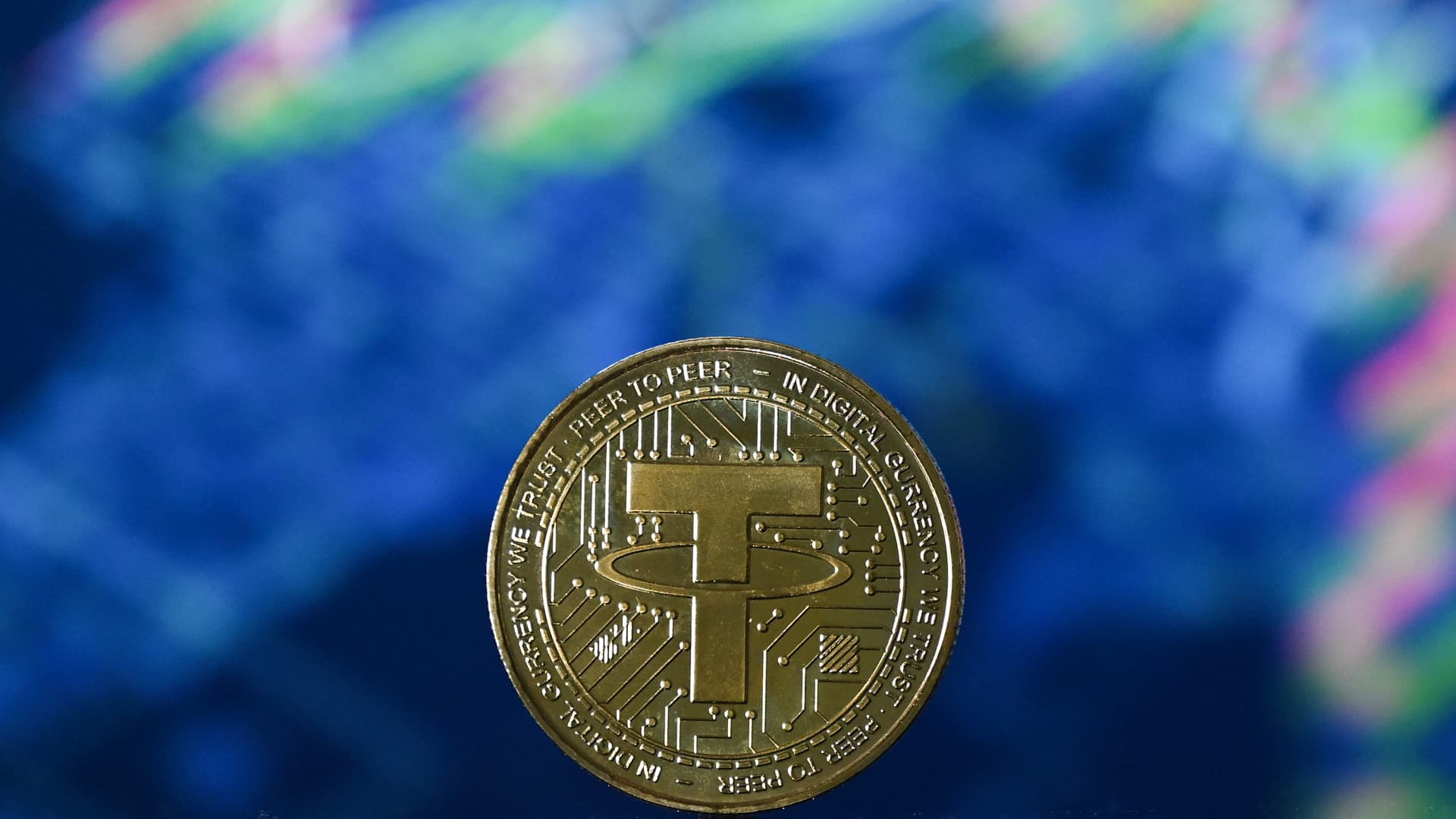
Tether previously claimed its stablecoin was backed 1-to-1 by U.S. dollars.
Justin Tallis | Afp | Getty Images
This week, backers of the failed cryptocurrency project Terra voted to revive the initiative, with a new luna blockchain and token – and without its controversial algorithmic stablecoin, TerraUSD.
The founders had been seeking the next step forward for the project that crashed as quickly as it took off. The collapse of the Terra project led to combined losses of about $60 billion between the stablecoin, also known as UST, and its sister cryptocurrency luna. Earlier this month, UST plummeted below its $1 peg, which incited a cryptocurrency sell-off.
Like many stablecoins, UST was pegged at a 1-to-1 ratio with the dollar. Minting one new UST required “burning,” or destroying, one luna. This structure allowed for arbitrage opportunities that were key to maintaining the peg: Users could always swap one luna for UST and vice versa at a guaranteed price of $1, regardless of the market price of either token at the time.
“What the Luna ecosystem did was they had a very aggressive and optimistic monetary policy that pretty much worked when markets were going very well, but they had a very weak monetary policy for when we encounter bear markets,” said Stuti Pandey, a Web3 investor and venture partner at Farmer Fund.
This isn’t the first time a decentralized algorithmic stablecoin failed. Many in crypto had hoped the Terra project might succeed. But it may be a long time before investors recover from this month’s Terra fiasco —and that could put the new project on shaky ground.
“There’s a big question mark. Whether that will be successful will take a lot of rebuilding trust with investors and builders,” Felix Hartmann, managing partner of Hartmann Capital, told CNBC.
“It will also take a lot of unthankful grind on the part of the founders of luna because they will no longer have the billion-dollar market caps that they had before: They will likely start at the ground floor again,” he added. “So it’s something worth watching, but perhaps the real fruition — if it ever happens — would be over a year or two. Certainly not this month.”
Regulatory hurdles also loom. Stablecoins have been top of mind for regulators for the same exact reasons highlighted by the TerraUSD crash: lack of transparency in the trading of stablecoins and the reserves backing them, as well as market participants’ reliance on them to enable trading in other crypto protocols..
“Algorithmic stablecoins as an idea are dead,” said Omid Malekan, a crypto industry veteran and adjunct professor at Columbia Business School.
“There are other ones out there not as big as UST and they’re all in some state of failure to maintain the peg right now,” he added. “That failure has sort of made the other more conservative stablecoins — the fiat-backed ones — seem very appealing in comparison. But the open question now is also what kind of a regulatory response the entire industry gets.”
—CNBC’s Ryan Browne contributed to this story.