




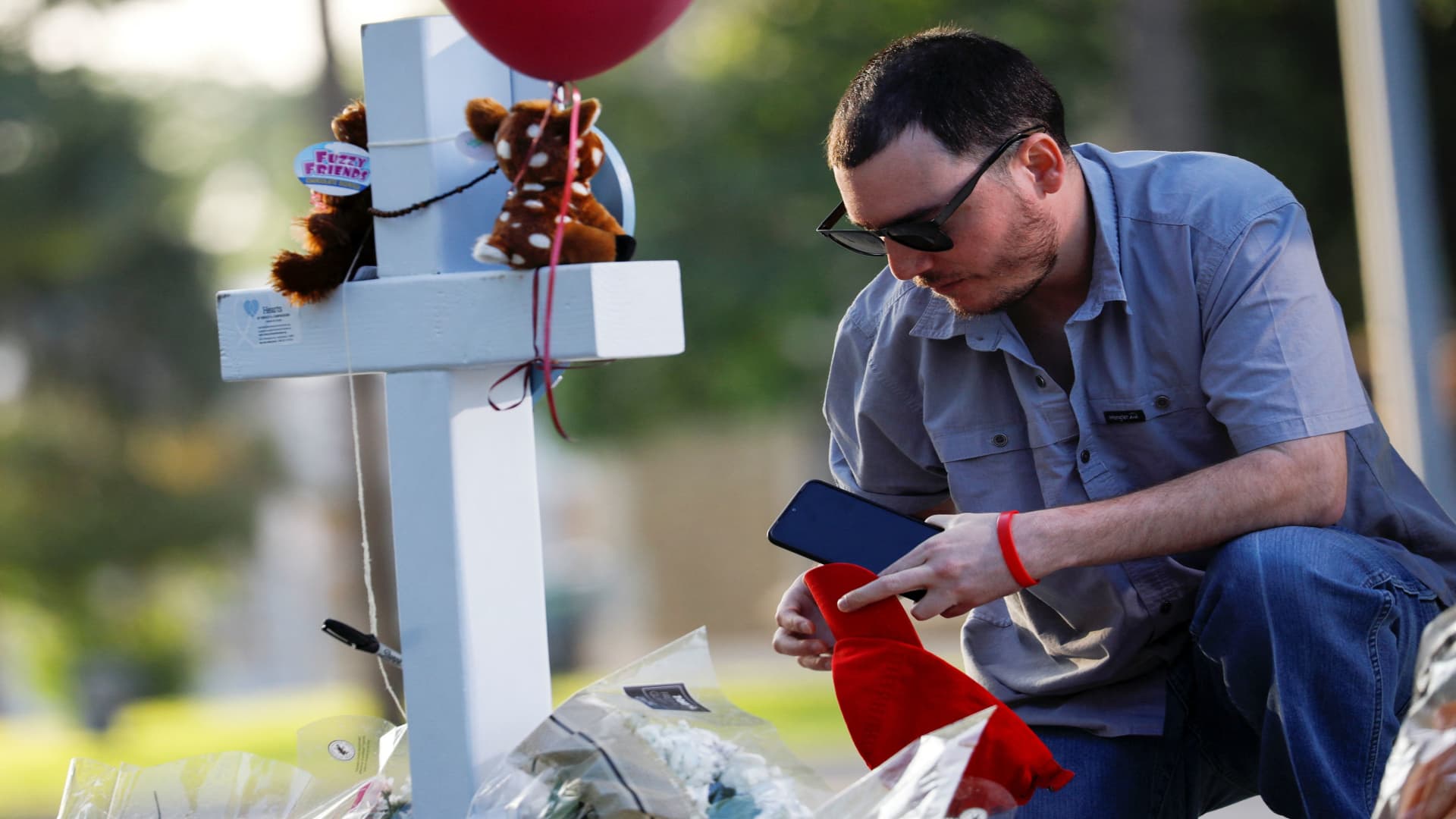
For many, the tragedy that unfolded on Tuesday afternoon in Uvalde, Texas, brought on an unwelcome and all-too-familiar constellation of emotions: sadness, anger, shock, frustration and helplessness.
The school shooting in south Texas, which left 19 children and two teachers dead, came only 10 days after 10 people were shot and killed in a Buffalo, New York, grocery store. It also came two years into a pandemic that has claimed more than one million American lives so far.
Losing a loved one involves a particular kind of grief. Deaths of people you’ve never met can elicit a different — but no less palpable — kind of community-level response.
It’s known as “collective grief.” And experts say it’s rewiring our brains, impairing our ability to reason and make good decisions on a large scale.
What is collective grief?
Collective grief occurs when a group of people — like a city, country or those belonging to a particular race or ethnicity — share an extreme loss, says Melissa Flint, PsyD, an associate professor of clinical psychology at Midwestern University Glendale who specializes in thanatology (the study of death, dying and bereavement) and traumatic loss.
“When major events like the Texas shooting happen, there is a recognition of enormity and widespread tragedy without a ‘reason’ to help us make sense of it,” Flint tells CNBC Make It. “We share collective grief because we have empathy.”
But collective grief is more than multiple people being sad about the same thing. “It’s the experience of sharing grief with others,” says Nora Gross, PhD, a visiting assistant professor of sociology at Boston College. “When we all have a sense that we are feeling something similar to other people — even other people we don’t know — in the midst of an extreme tragedy, crisis or change.”
Collective grief isn’t limited to events with a death toll, either. “We can also be collectively grieving for the loss of a way of life, a foreclosed future or a set of unrealized ideals — as in the pandemic, climate grief or our collective grief over the scourge of gun violence in our country,” Gross explains.
How do our brains process collective grief?
Events like school shootings often make people realize that untimely death is possible in their own lives, rather than something that only happens to other people.
“We internalize the threat, which leads to grief, anxiety, fear and so much more,” Flint says. “Stress hormones flood our bodies, and we feel out of control. Without us realizing it, a fight, flight or fear response becomes what controls our reactions.”
In that sense, she says, collective grief and trauma are tightly linked. And according to a growing body of research, trauma can effectively “rewire” the brain — at least temporarily — affecting people’s ability to reason, and impairing their day-to-day decision-making abilities.
If a single tragedy can result in all of that, it’s hard to imagine the collective impact on the country of more than two years of constant losses from the Covid-19 pandemic, police killings, domestic terrorism and other mass shootings.
“The collective trauma of the past several years has slowly begun to erode our resilience and our hope,” says Flint. “Our brains have not practiced what it takes to cope with these enormous losses, one after another, after another. The cumulative effect of this has yet to be seen.”
Expert strategies for managing and coping
Processing collective grief starts with being able to recognize what you’re feeling, and understanding that your emotions — from sorrow and anger to a complete lack of control — are all valid, Flint says.
“Whatever you are feeling, feel it,” she says. “Talk about your feelings. Find support. It’s OK to not be OK.”
Here are four more tips from Flint, who, in addition to her academic work, has a private practice where she works with clients dealing with grief and traumatic loss:
Find a release
Bottling up your emotions rarely ends well. Creative outlets can help.
“Journal, do your art, fall into your music, write or read poetry: Do whatever allows the conduit of the immensity of your pain to be released,” Flint says. “Vent the internal ‘pressure cooker’ that has become our shared response to repeated, unnecessary, life-shattering events.”
Consider attending a public memorial
Some people prefer to grieve privately. For others, grieving publicly can be an important part of the healing process.
“Vigils can be powerful connections with others who are also hurting deeply on behalf of these families, and the broader situation going on in our nation,” Flint says.
Be mindful of your media consumption
You can remain informed without allowing the news cycle to destroy your mental health. Take a break from doomscrolling and watching TV news coverage of tragic events.
And if you have small children, Flint says, be careful about exposing them to your stressors: “Our littlest ears … are very scared and confused now.”
Do something
Grief can make people feel helpless. Taking action may help. Collective grief can even turn into collective action, spurring organizations like March for Our Lives and the Black Lives Matter movement in recent years.
“Be a part of solutions where you can, like donating blood, or providing monetary support for organizations that align with your values,” Flint says.
Sign up now: Get smarter about your money and career with our weekly newsletter
Don’t miss:

