The end of the Covid health emergency won’t slow FDA clearance of shots and treatments

The end of the Covid health emergency won’t slow FDA clearance of shots and treatments


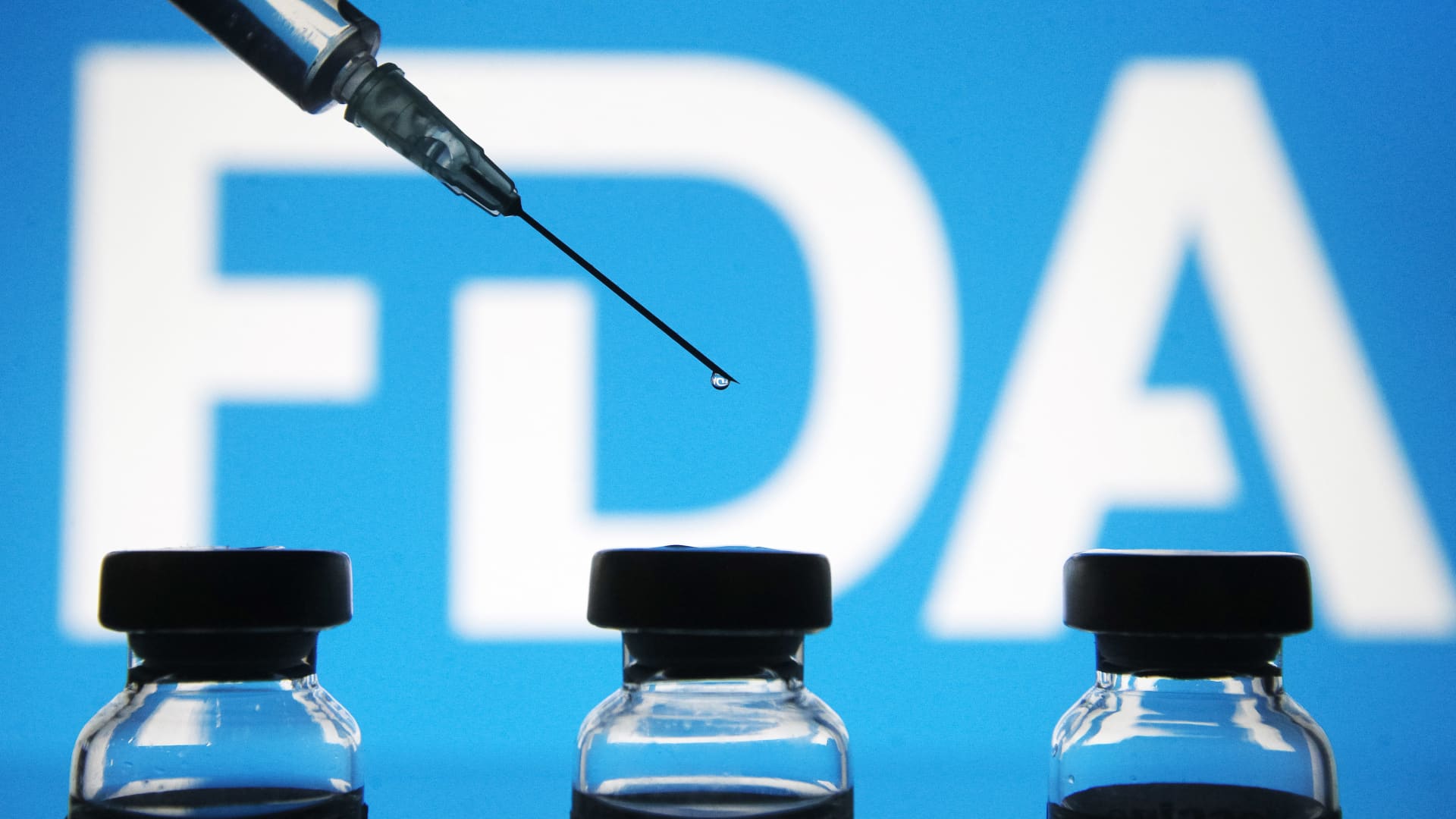
Vials and a medical syringe seen displayed in front of the Food and Drug Administration (FDA) of the United States logo. FDA finds the COVID-19 vaccine.

Pavlo Gonchar | LightRocket | Getty Images

The Food and Drug Administration on Tuesday said its emergency authorizations of Covid vaccines, tests and treatments will not be impacted by the end of the public health emergency this spring.

President Joe Biden is planning to terminate in May the public health and national emergencies declared in response to the Covid pandemic three years ago, the White House said Monday. The public health emergency gave U.S. health regulators expanded powers to respond faster to the pandemic.

The FDA’s emergency powers, however, aren’t directly tied to public health declaration, according to the agency.

Former Health Secretary Alex Azar made separate determinations in February and March of 2020 under the Food, Drug and Cosmetics Act that the circumstances of the pandemic justified the authorization of vaccines, treatments and tests for emergency use.

The FDA used its emergency powers to authorize the Pfizer, Moderna, Johnson & Johnson and Novavax vaccines. The agency also authorized the oral antivirals Paxlovid and molnupiravir, several antibody treatments as well as numerous tests and other medical devices on an emergency basis.

“Existing emergency use authorizations (EUAs) for products will remain in effect and the agency may continue to issue new EUAs going forward when criteria for issuance are met,” The FDA wrote in post on Twitter Monday.

Emergency authorizations allow the FDA to roll out medical products before they receive the agency’s full approval. This allows the agency to respond more swiftly to public health crises.

CNBC Health & Science

Read CNBC’s latest global health coverage:


Source

Making U.S. biotech more competitive with China’s could help rare disease patients, experts say
Health

Making U.S. biotech more competitive with China’s could help rare disease patients, experts say

The growth of China’s biotechnology sector has been staggering. Beijing is pumping money into the industry, backing research efforts and helping launch a new wave of labs and incubators in the country. That’s a problem for the U.S. biotech industry and also affects rare disease patients who are waiting for a cure. Among the experts […]

Read More
Healthy Returns: Novo Nordisk CEO on GLP-1 pricing, and more insights from the JPM conference
Health

Healthy Returns: Novo Nordisk CEO on GLP-1 pricing, and more insights from the JPM conference

A version of this article first appeared in CNBC’s Healthy Returns newsletter, which brings the latest health-care news straight to your inbox. Subscribe here to receive future editions. Good morning from San Francisco! It’s day three of the annual JPMorgan Healthcare Conference – the biggest gathering of biotech and pharma execs, investors and analysts in […]

Read More
OpenAI acquires health-care technology startup Torch
Health

OpenAI acquires health-care technology startup Torch

OpenAI has acquired the health-care technology startup Torch, the company announced on Monday. Torch was building a “unified medical memory” for artificial intelligence that aimed to bring a patient’s health data, which is typically siloed and stored across a number of different vendors and formats, into one place. Torch’s employees will join OpenAI as part […]

Read More