


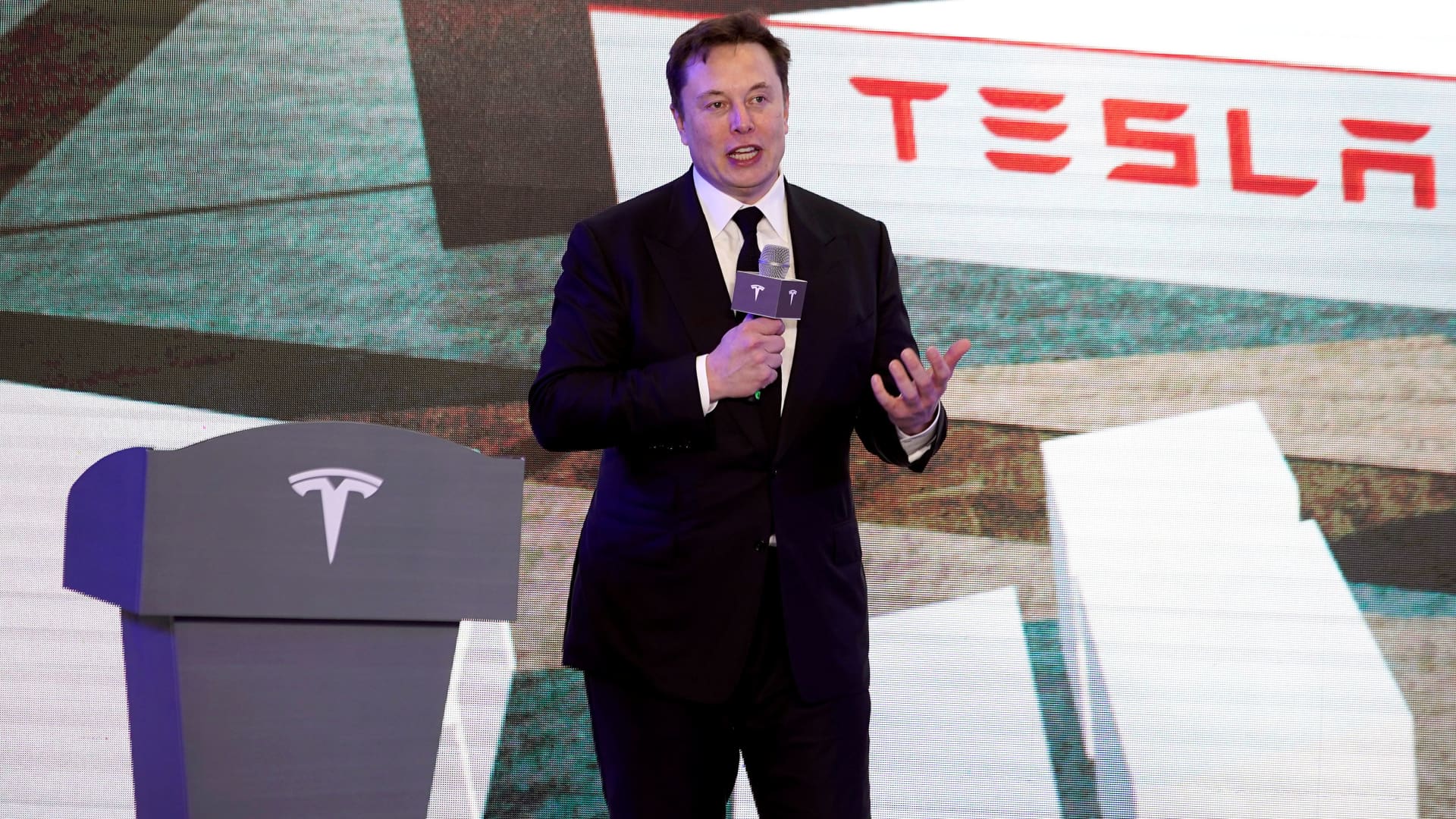
Tesla CEO Elon Musk speaks at an opening ceremony for Tesla China-made Model Y program in Shanghai on Jan. 7.
Aly Song | Reuters
In a regulatory filing out Friday, Elon Musk-led automaker Tesla announced a change to its corporate bylaws that will limit shareholders ability to sue the company if investors believe the company’s board or executives committed any breach of fiduciary duties.
The filing says the new bylaw went into effect as of May 15, and that Tesla has adopted “an ownership threshold requiring any shareholder or group of shareholders to hold shares of common stock sufficient to meet an ownership threshold of at least 3% of Tesla’s issued and outstanding shares in order to institute or maintain a derivative proceeding.”
Tesla’s current market cap stands over $1 trillion. A 3% stake of common stock and all outstanding shares would be worth more than 30 billion dollars.
Tesla did not immediately respond to a request for comment on the change to its bylaws.
According to Ann Lipton, an experienced corporate and securities law trial attorney who now teaches at Tulane Law School, the company is taking advantage of a Texas state law that allows corporations to limit shareholder lawsuits against insiders for breach of fiduciary duty. The law permits companies that are incorporated in Texas, as Tesla is currently, to require a shareholder to own 3% before bringing a claim.
“Obviously, for a company of Tesla’s size, that would be a formidable barrier to anyone bringing a lawsuit for breach of fiduciary duty,” she said in an email.
By comparison, when Tesla was incorporated in Delaware, a shareholder who held just nine shares of Tesla stock was the plaintiff in a shareholder derivative suit that resulted in a judge ordering CEO Elon Musk’s 2018 CEO compensation package to be rescinded, Lipton noted.
Delaware Chancery Court Chancellor Kathaleen McCormick found that Musk, rather than Tesla’s board, had controlled the company and that the board’s compensation committee misled shareholders before seeking a vote to approve that pay plan. They also failed to negotiate with Musk over the terms of the deal, instead working “alongside him, almost as an advisory body,” the judge ruled.
The Tornetta decision, named after Tesla shareholder Richard Tornetta who brought the suit, prompted Musk to say, “Never incorporate your company in the state of Delaware.” Tesla moved its site of incorporation to Texas in June 2024 after attaining shareholders’ approval to do so after that loss in court.
Tesla has since appealed the Tornetta decision and Delaware’s state supreme court will decide if Musk can keep the shares granted to him through the 2018 CEO pay plan or not. That pay plan had been worth around $56 billion.