


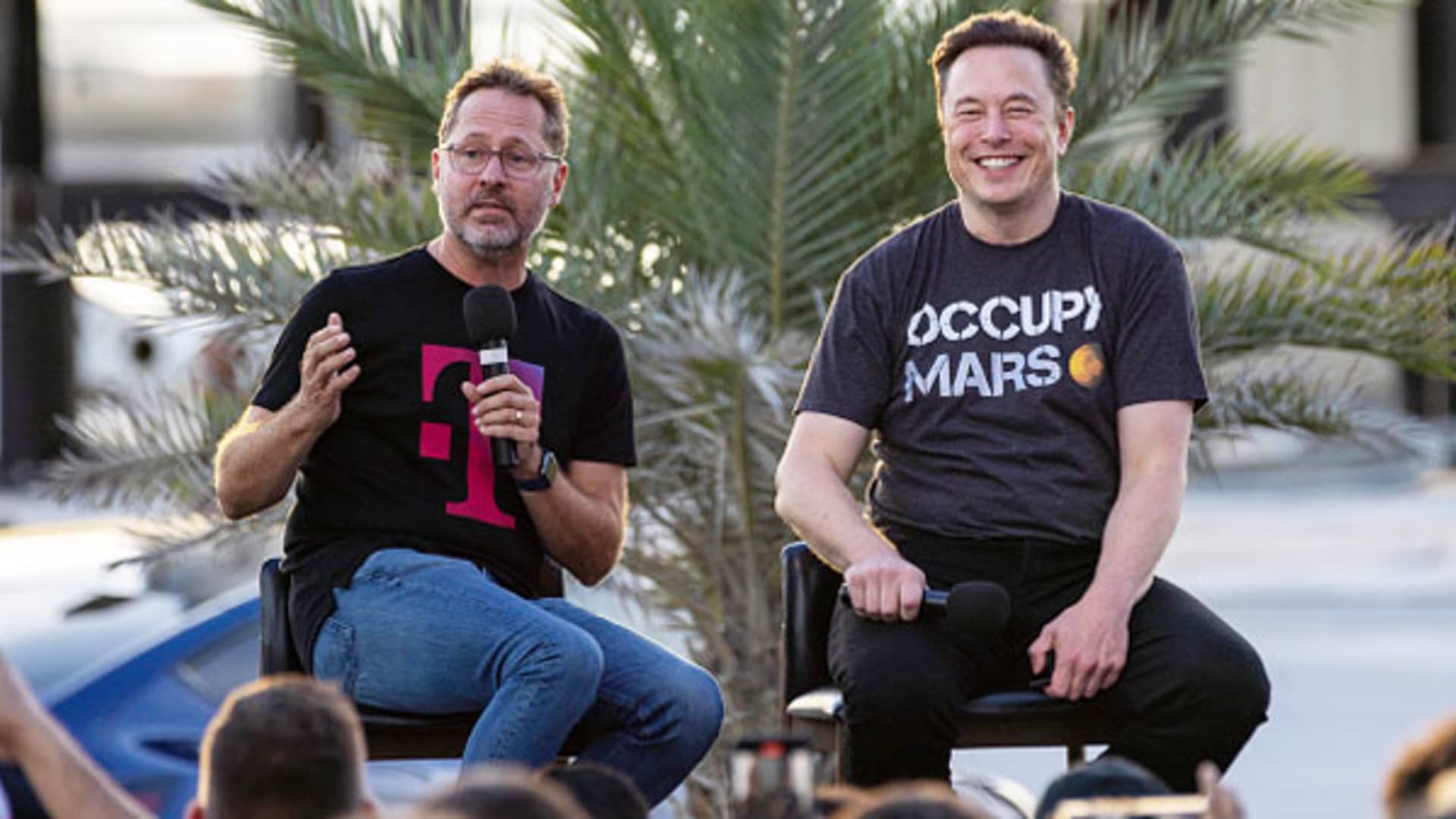
SpaceX founder Elon Musk and T-Mobile CEO Mike Sievert on stage during a T-Mobile and SpaceX joint event in Boca Chica Beach, Texas, on Aug. 25, 2022.
Michael Gonzalez | Getty Images
SpaceX successfully sent text messages via Starlink satellites using T-Mobile’s network, it announced Wednesday, as Elon Musk’s company aims to bring its direct-to-device cell service to market in the coming year.
The recent test comes as major players pursue the market to connect unmodified phones directly to satellites, a nascent subsector of the space economy.
Sign up here to receive weekly editions of CNBC’s Investing in Space newsletter.
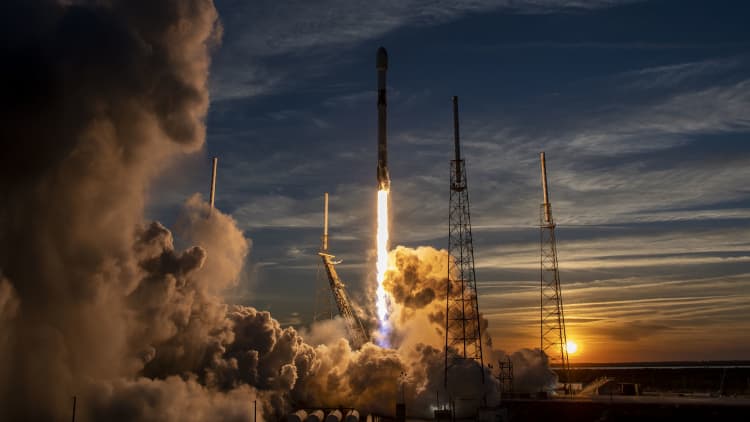
SpaceX last week launched the first six Starlink satellites equipped with direct-to-device, or D2D, capabilities, after receiving authorization from the Federal Communications Commission last month to test the technology.
The company said it performed the texting demonstration on Monday — in which SpaceX “sent and received our first text messages to and from unmodified cell phones on the ground to our new satellites in space” — and declared the test “validates” that “the system works.”
The company said “there is incredible demand and high interest” in adding D2D capabilities to its Starlink network, noting its partnerships with mobile operators including T-Mobile, Canada’s Rogers, Australia’s Optus and Japan’s KDDI.
SpaceX plans to begin offering D2D text service this year and expects to expand with voice, data and internet of things services in 2025. So far, the company has grown Starlink internet service to a network of more than 5,000 satellites in orbit, boasting more than 2.3 million customers worldwide.
Several smartphone makers, service providers and satellite companies have partnered on rolling out D2D service. For example, Apple is spending heavily to provide its “Emergency SOS with Satellite” service, which it rolled out with iPhone 14 models, thanks to work with satellite operator Globalstar.
Qualcomm ended its partnership with satellite communications company Iridium late last year, with the latter on Wednesday pivoting to a new effort it calls “Project Stardust.” Iridium plans to test its D2D service in 2025 and begin rolling it out by 2026.
Don’t miss these stories from CNBC PRO:


