


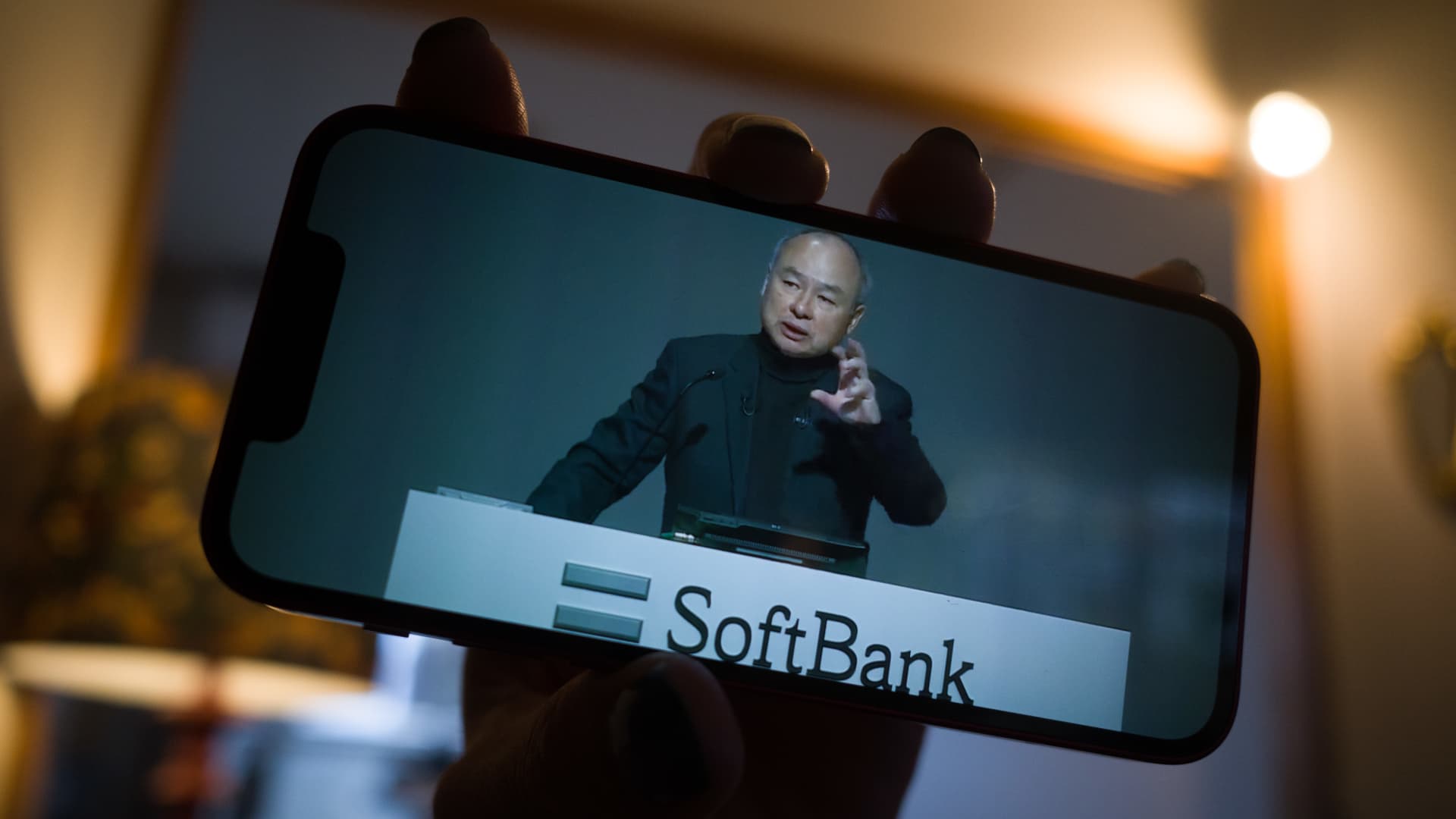
SoftBank Founder Masayoshi Son said there is “confusion in the world” and in the markets due to a number of factors including Russia’s invasion of Ukraine, high inflation and central bank moves to raise interest rates. These factors have contributed to a record annual loss at SoftBank’s Vision Fund.
Kentaro Takahashi | Bloomberg | Getty Images
SoftBank on Thursday reported a record loss at its Vision Fund investment unit, as technology stocks have been hammered by rising interest rates and Beijing’s regulatory crackdown has hurt its China holdings.
The Japanese giant’s Vision Fund posted a 3.5 trillion yen loss ($27.4 billion) for its financial year ended Mar. 31, the biggest loss since the investment fund began in 2017.
Vision Fund’s woes contributed to a record 1.7 trillion yen annual loss for the entire SoftBank group. Its shares closed 8% lower in Japan Thursday.
SoftBank’s Vision Fund invests in high growth stocks and is the brain child of founder Masayoshi Son as a way to reposition the company into an investment firm.
But global markets have been in turmoil as investors contest with rampant inflation and the U.S. Federal Reserve raising interest rates that have caused investors to flee high growth tech stocks.
The ongoing Russian war on Ukraine and a resurgence of Covid-19 in China and the subsequent lockdown of the financial mega-city Shanghai, has fueled concerns over global growth and added extra pressure on markets.
Son said during an earnings presentation Thursday that these factors have caused “confusion in the world” and in the markets, according to an official translation.
South Korean e-commerce firm Coupang, which went public last year in the U.S. and is down nearly 60% this year, was one of the companies that contributed to the Vision Fund’s loss. Singaporean ride-hailing giant Grab and U.S. delivery firm Doordash were among the other woeful performers in the portfolio.
SoftBank also recorded write-downs in valuations for some of the private companies that it invests in.
Son said the company will go into “defense” mode as a result of the headwinds. This will include having “stricter” criteria for new investments and being more “conservative when it comes to the pace of new investments.”
China investments fall
SoftBank has a heavy exposure to China through its investments in e-commerce giant Alibaba and ride-hailing company Didi.
Both companies have seen sharp falls in their share prices due to Beijing’s sweeping crackdown of the domestic technology sector and tighter regulation in areas from data protection to antitrust.
In April 2021, which falls into SoftBank’s last financial year, Alibaba was slapped with a $2.8 billion antitrust fine. Its shares are down around 31% year-to-date.

