


Sri Lanka faces a “dangerous situation” with continuing social unrest and must avoid a “disorderly default,” the former chief economist of the South Asia regions at the World Bank, Shanta Devarajan told CNBC Friday.
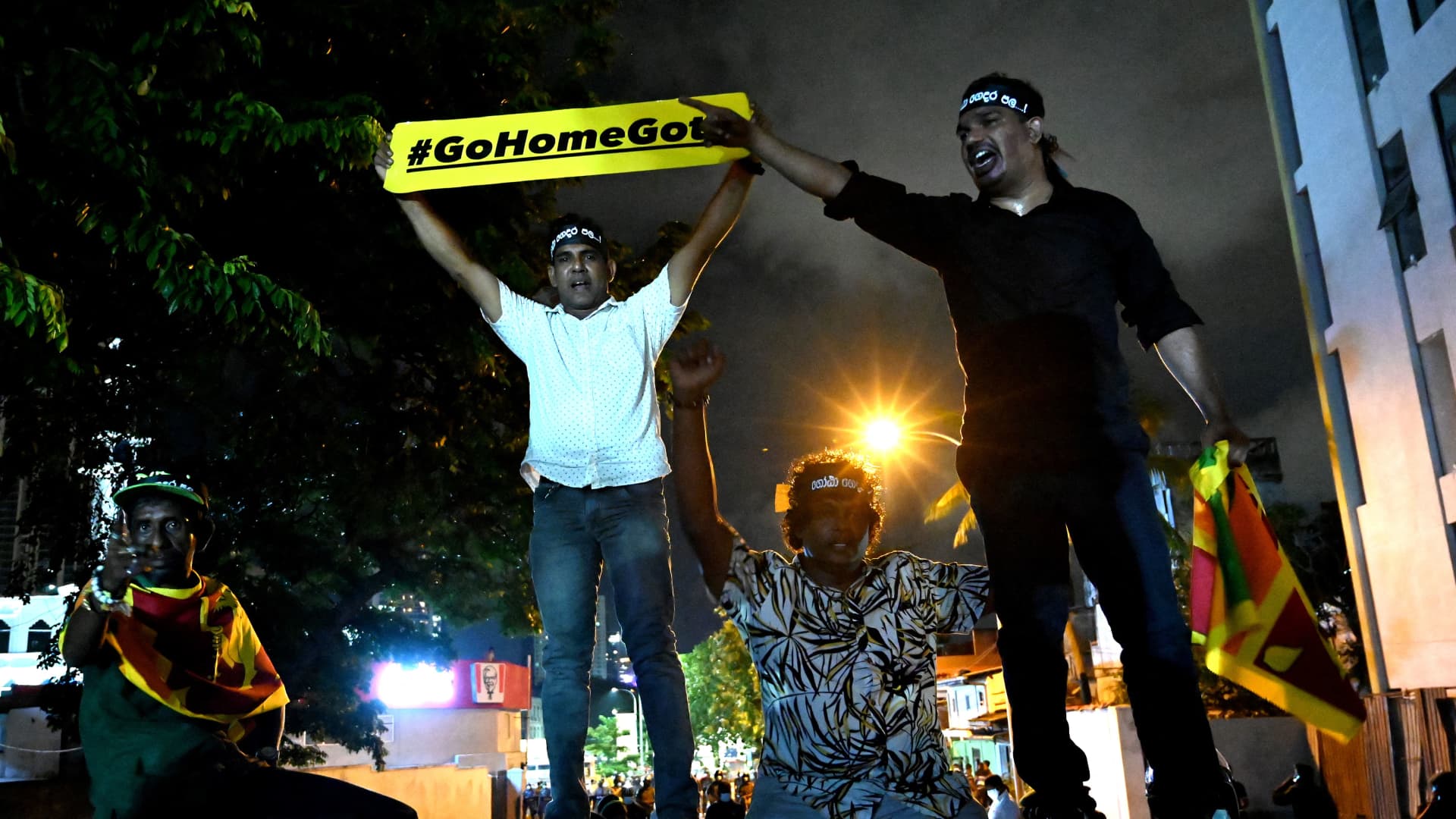
Shortages of food and fuel, along with record inflation and regular blackouts, have brought thousands of Sri Lankans to the streets as the country faces its most painful downturn since independence from Britain in 1948.
“Social turmoil is the biggest risk. That’s why I keep emphasizing the point about cash transfers. As you can see on the streets — the people are angry,” said Devarajan, who is now part of a new government advisory panel formed to tackle the country’s debt crisis.
Devarajan said a cash transfer program aimed at helping the poor, coupled with a reduction of subsidies on food and fuel, will be critical to averting a collapse of Sri Lanka’s debt-ridden economy.
In the past week, protesters and opposition parties alike have called for the resignation of Prime Minister Mahinda Rajapaksa, accusing his government of economic mismanagement.
A foreign currency shortage has left Sri Lanka struggling to import essential goods, even as the coronavirus pandemic has cut off vital tourism revenue. Foreign exchange reserves shrank 16% to $1.93 billion in March, Reuters reported citing central bank data.
Protesters gesture during a rally against the rise of prices and shortage of fuel at the entrance road of the Sri Lanka prime minister’s official residence in Colombo on April 7, 2022.
Ishara S. Kodikara | AFP | Getty Images
Cautioning against a “disorderly default” on debts by cash-strapped Sri Lanka, he said any austerity measures would also have to be accompanied by efforts to educate the public.
“This is a very dangerous situation. And if you want to introduce austerity in the middle of that situation, you have to manage it very carefully,” said the professor of the practice of development at Georgetown University.
“You have to do two things: One, make sure that the poor are protected — the bottom 40% of the population — [through a] targeted cash transfer. Two, have a public information campaign so that people understand that these measures are needed to avoid an even bigger crisis.”
Ratings agencies have warned of a potential default on billions of dollars in foreign debt, and authorities are struggling to secure more commercial loans because of the credit downgrades.
According to central bank data obtained by Reuters, Sri Lanka currently has about $2 billion in foreign exchange reserves against $7 billion in total debt due this year, including $1 billion worth of notes maturing in July.
“We need to make sure that Sri Lanka does not have a disorderly default,” Devarajan told CNBC’s Asia Squawk Box.
Other members of the advisory panel formed Wednesday include former governor of the Central Bank of Sri Lanka, Indrajit Coomaraswamy, and a former IMF official, Sharmini Coorey.
This is very important because most of the subsidies, like the fuel and electricity subsidies, are enjoyed by the rich but an increase in the price of fuel will hurt the poor.
Shanta Devarajan
ex-chief economist of the South Asia regions, World Bank
Devarajan said Sri Lanka must also increase taxes, cut expenditures and restructure state-owned enterprises in addition to decreasing the subsidies on food, fuel and electricity.
He added that this has to be accompanied by direct aid to the poor in the form of cash transfers.
“This is very important because most of the subsidies, like the fuel and electricity subsidies, are enjoyed by the rich but an increase in the price of fuel will hurt the poor. The government, somehow, needs to accompany that with a cash transfer program,” he said.
Amid the deepening economic crisis, the chairman of Sri Lanka Port Authority claimed port operations were running smoothly.
Prasantha Jayamanna dismissed reports of disruptions at Colombo port, saying that operations there were normal.
“We have not stopped a day of work. Things are moving smoothly,” he told CNBC on Friday.
He said there was growth in output figures in 2021. “Last year, we had the highest throughput. And the momentum is continuing this year,” he said, adding that port congestion was not an “issue at all.”
