


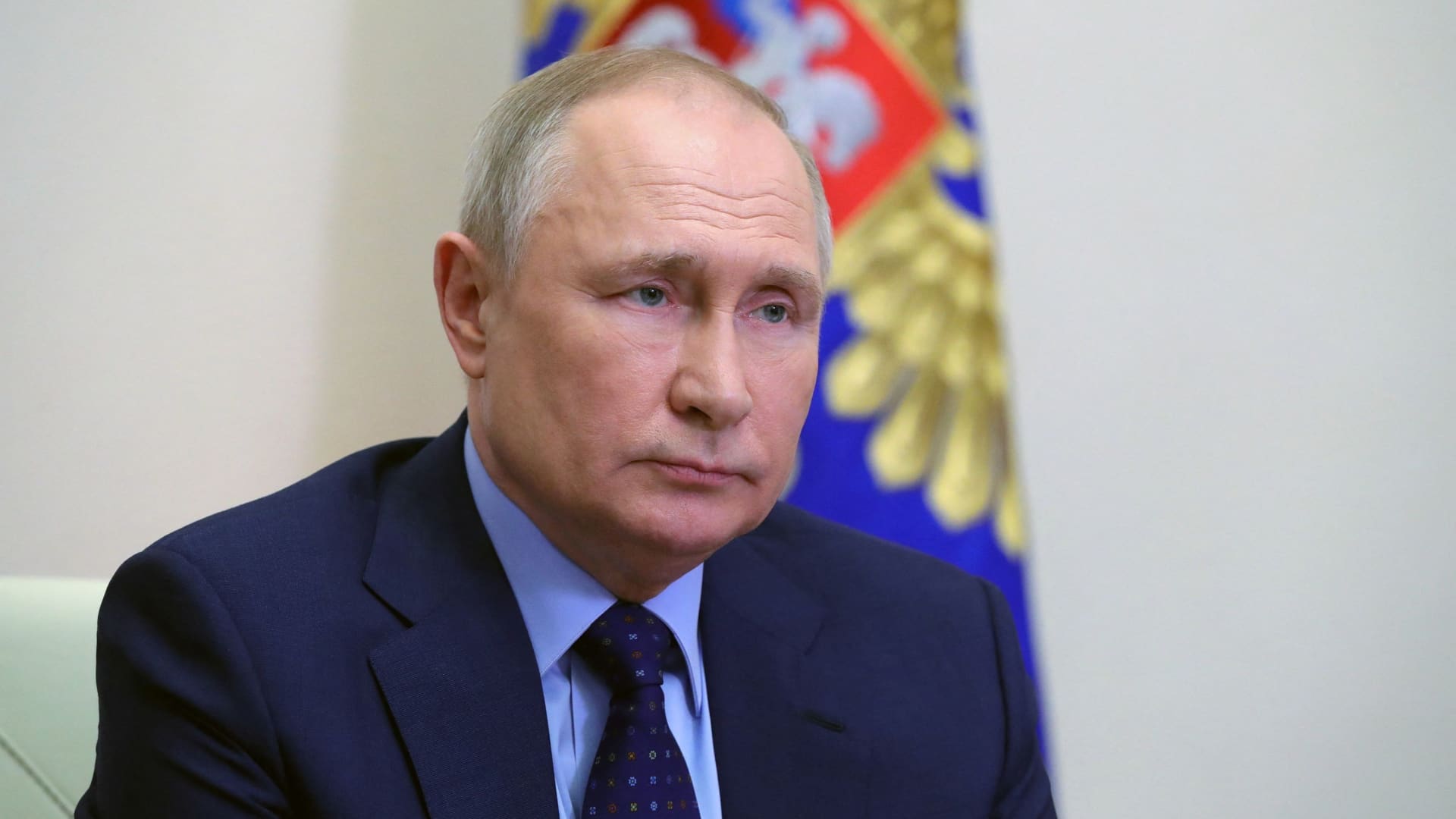
Russian President Vladimir Putin chairs a meeting with members of the Security Council at the Novo-Ogaryovo state residence outside Moscow, Russia April 7, 2022.
Mikhail Klimentyev | Sputnik | Reuters
The Senate voted unanimously on Thursday to revoke Russia’s “most-favored-nation” trade status, an economic downgrade that opens the door to new damaging tariffs on Moscow over its invasion of Ukraine.
The chamber approved the measure in a 100-0 vote.
The bill, which now moves to the House, is a formal step to sever normal trade relations with Russia and allow import controls on key products like platinum, chemicals, iron and steel. The U.S. has already severed its normal trade relationship with Moscow in practice: the Biden administration moved to ban imports of oil, vodka, diamonds and seafood from Russia last month.
“Formally revoking normal trade relations with Russia is precisely the right thing for the Senate to do, because it will land another huge blow to Putin’s economy,” Senate Majority Leader Chuck Schumer, D-N.Y., said on the Senate floor Wednesday. “It’s a key part of any strategy for holding Putin accountable for his savage attacks on innocent civilians.”
Most favored nation status ensures that any member of the World Trade Organization receives equal trade treatment from other members and grants each designee immunity from a raft of steep import penalties.
The office of House Majority Leader Rep. Steny Hoyer, D-Md., said earlier Thursday that the chamber expects to take up the Senate’s legislation following its passage.
Should the House pass the Senate’s version of the legislation, it would travel to President Joe Biden’s desk for his signature into law.
“There are two categories you can be characterized under U.S. law: One gets lower tariffs, and one gets higher,” said Clete Willems, a partner at law firm Akin Gump and former U.S. attorney at the WTO.
“All other WTO members get this lower [tariff] rate — the average is about 2.8%,” he added. “And then for non-MFN, the average is around 20%. And so this legislation will change the tariff treatment of all of those products.”
As of 11 a.m. in Washington, Congress had also begun to vote on a separate bill to codify a promise Biden made last month to ban the import of Russian energy products into the United States.
Many nations, including the Group of Seven, have promised to work to end the West’s economic relations with Russia as the U.S. and its allies open investigations into what are likely to be deemed war crimes committed by Russian forces in Ukraine.
The Biden administration and its partners have worked to limit the Kremlin’s access to global financing organizations like the International Monetary Fund and the World Bank. The Treasury Department the Federal Reserve have also worked in tandem to block Russia’s access to currencies other than the ruble, as well as target individuals and families close to Russian President Vladimir Putin with penalties.
Treasury Secretary Janet Yellen says the combined penalties are designed to dent the ruble, ruin the Russian stock market and otherwise sap Moscow’s economy over time. Through the moves, the U.S. hopes to undermine Putin’s authority.
The bill the Senate passed Thursday morning should been considered “additive,” attorney Willems said, and damaging in the context of an international, coordinated effort.
“It’s one among many moves that together start to have a real impact on the Russian economy,” he said. “The president will have the authority to raise tariffs and other select products. And the key imports we get from them beyond oil are platinum, chemicals, iron and steel, plywood, some kinds of engines and titanium.”
The U.S. has worked in concert with its allies to hamper the Russian economy.
European Union representatives on Thursday are set to approve an embargo on Russian coal. The timing of the phase-in period was still up for debate — especially between Poland and Germany — as of Thursday morning ET.
The EU is the most important Russian export market, as its members purchased about 40% of Moscow’s traded goods in 2019.
The latest economic sanctions come as Russia’s unprovoked war in Ukraine draws the globe’s outrage.
NATO foreign ministers and G-7 leaders on Thursday met with Ukraine’s Foreign Minister Dmytro Kuleba, who asked Western partners for “weapons, weapons, weapons.”
The U.S. House voted Wednesday evening in favor of legislation that accuses the Russian military, under Putin’s direction, of committing a litany of wrongdoings, including the intentional targeting of civilians and nonmilitary structures like schools and hospitals.