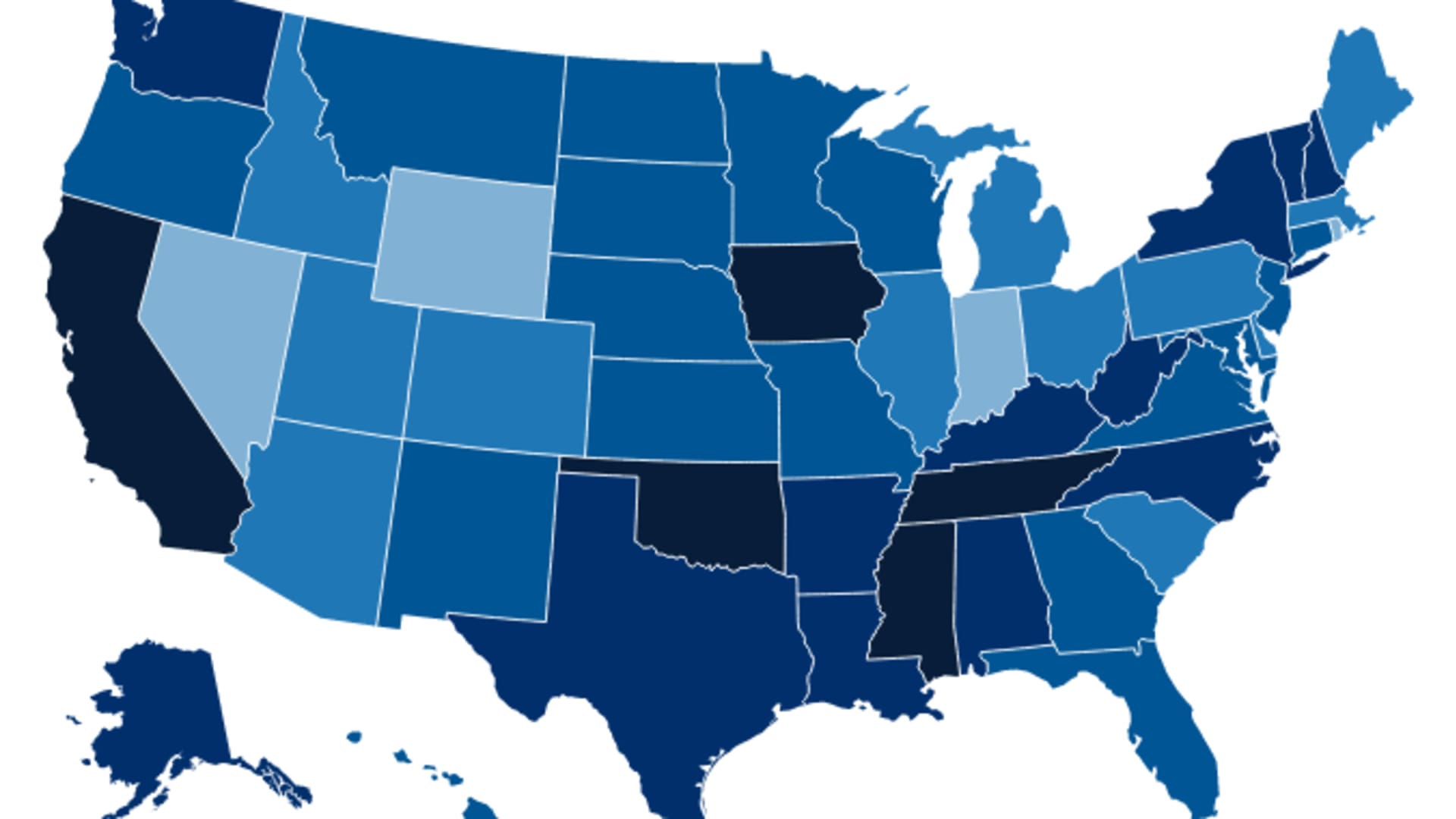
Ninety percent of counties across the U.S. have experienced a flood, wildfire, hurricane or other federally declared climate disaster between 2011 and 2021, according to a report published Wednesday that calls for urgent investment in climate adaptation and hazard mitigation.
During that same period, 29 states on average endured at least one federally declared disaster, according to the report by Rebuild by Design, a nonprofit that helps communities prepare for and recover from disasters. In 2021 alone, the U.S. suffered from 20 separate billion-dollar disasters.
related investing news


The report, which uses data from sources like the Federal Emergency Management Agency, analyzed which parts of the country have experienced the greatest number of disasters, which states are receiving more money to rebuild than others and which areas have endured the longest power outages.
States that were hit with the most disasters include California, Iowa, Mississippi, Oklahoma and Tennessee, which each experienced at least 20 disasters during the last decade, the report said. However, states with lower disaster counts that received the most disaster recovery funding per person include New York, New Jersey, North Dakota and Vermont.
Additionally, counties that on average experienced more than a disaster every year over the last decade are located in Kentucky and Louisiana. Louisiana, which is positioned on the Gulf Coast and is more prone to hurricanes and tropical storms, has received more federal disaster aid per person than any other state.
“We studied this data for many months and in that time continued to find things that were frankly shocking,” said Amy Chester, managing director of Rebuild by Design and co-author of the report.
For instance, Nevada has had only three federal disaster declarations over the last decade and Arizona has had just six. However, those states had the worst rankings for heat-related deaths between 2018 and 2021.
“It took us a bit of time to understand why some of the states with lower disaster counts were low,” Chester said. “We then realized that places like Arizona and Nevada have experienced extreme heat, which is the top climate killer, however heat waves do not get federal disaster declarations.”
As heat waves become more frequent and dangerous as the climate changes, extreme heat is the number one weather-related cause of death in the U.S. Heat events have never been the cause of a federal disaster disaster declaration since they do not cause major property damage, which is the threshold to determine such a declaration.
The financial losses resulting from recent disasters are also greater than the amount of federal recovery funds provided for recovery efforts, the report said. Losses from major disasters over the past five years have surpassed $759 billion, but the amount of federal disaster recovery funds obligated or provided during the same period totaled $103 billion — less than 14% of the losses or need for repair and replacement, the report said.
The authors of the report argued that in order to avoid future losses, the country must prioritize mitigation and resilience projects with higher return on investment ratios and proposed that states impose a 2% surcharge on insurance premiums to pay for such plans.
“Most of our federal policies come in after a disaster,” Chester said. “It’s time to move those investments into adapting our infrastructure to meet our current and future needs — before communities suffer.”