


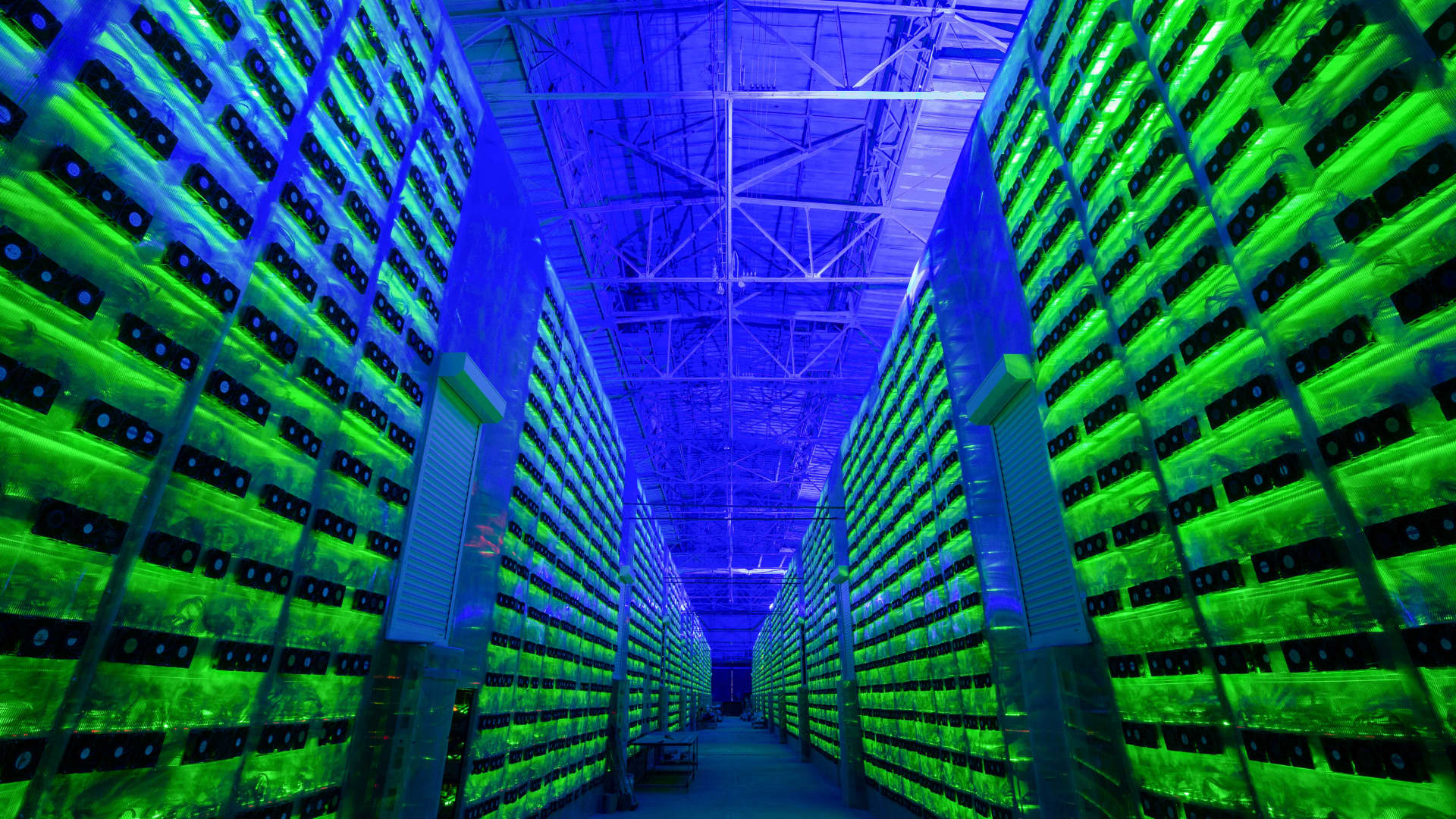
Illuminated mining rigs operate inside racks at the CryptoUniverse cryptocurrency mining farm in Nadvoitsy, Russia.
Bloomberg | Bloomberg | Getty Images
Sanctions imposed on Russia over the country’s unprovoked invasion of Ukraine could hamper the growth of its multibillion-dollar crypto sector, according to experts.
This week, U.S. officials targeted Russian bitcoin mining firm BitRiver in its latest round of sanctions aimed at hurting Russia’s economy. The Treasury Department’s Office of Foreign Assets Control says it is concerned Russia may monetize its vast oil reserves and other natural resources for power-intensive crypto mining as a way to raise funds and get around western sanctions.
“This is a powerful signal from OFAC that it will use every tool in its arsenal to prevent Russia from evading sanctions through crypto,” David Carlisle, vice president of policy and regulatory affairs at crypto compliance firm Elliptic, said in an emailed note.
The sanctions will cripple BitRiver and its various subsidiaries, blocking them from accessing U.S. crypto exchanges or mining equipment. Crypto mining — the process of validating new digital currency transactions — requires specialized computers that consume lots of energy.
The move shows U.S. officials are “deeply concerned that Russia could leverage its natural resources to conduct crypto mining to evade sanctions,” something Iran and North Korea have been known to engage in the past, Carlisle said.
The potential exploitation of bitcoin production for Russian sanctions evasion remains a key concern for global regulators, including the International Monetary Fund.
“Crypto mining, while nowhere near a replacement for the assets frozen by Russian sanctions, avoids the fiat-to-crypto ‘on-ramps’ and crypto-to-fiat ‘off-ramps’ at centralized virtual currency exchanges, thereby bypassing sanctions screening,” said Anand Sithian, counsel at Crowell & Moring and a former trial attorney in the criminal division of the Department of Justice’s asset forfeiture and money-laundering section.
Russia’s crypto market
Separately, Binance, the world’s largest crypto exchange, said it is limiting its service for Russian users in response to the fifth wave of EU sanctions on Moscow.
Russian Binance accounts with over 10,000 euros in digital currency will be prevented from making deposits or trades and can only withdraw funds, the company said.
“While these measures are potentially restrictive to normal Russian citizens, Binance must continue to lead the industry in implementing these sanctions,” Binance said in an update on its website. “We believe all other major exchanges must follow the same rules soon.”
Russia is home to a huge cryptocurrency market. The Kremlin estimates Russians own roughly 10 trillion rubles ($124 billion) worth of digital assets.
It’s not clear where this data comes from, but there is growing evidence that Russians are turning to crypto as an alternative to the ruble as the currency crashes in response to the country’s economic isolation.
According to data from CryptoCompare, ruble-denominated crypto trading volumes reached 111.4 billion rubles ($1.4 billion) in March, much higher than in earlier months. Activity has dipped in April, with total month-to-date volume reaching only 19.2 billion rubles. Binance was the most popular exchange for ruble-crypto volume in March, accounting for 77% of trades.
In the six months ending March 2022, ruble-crypto trading volume topped 420 billion rubles, or more than $5 billion, according to CryptoCompare.
Third-biggest bitcoin mining hub
Meanwhile, Cambridge University figures show the country is a powerhouse in the field of crypto mining.
In August 2021, Russia accounted for about 11% of the global processing power used for minting new units of bitcoin, according to the Cambridge Centre for Alternative Finance, making it the third-biggest mining hub behind Kazakhstan.
Given Kazakhstan’s political unrest led to internet shutdowns that knocked bitcoin miners offline, there’s a chance Russia’s share of the sector may be even higher now.
However, there could end up being an exodus of miners from Russia to the “stans” — Kazakhstan, Kyrgyzstan, Tajikistan, Turkmenistan, and Uzbekistan — where they may “utilize stranded gas to power their operations,” Charles Hayter, CEO of CryptoCompare, told CNBC.
The Russian government has a “love-hate relationship” with digital assets, Hayter said. While Russia’s central bank is pushing for a ban on the use and mining of cryptocurrencies, President Vladimir Putin wants to regulate them instead.
According to Hayter, the Russian regime and its oligarchs “might see digital assets as a way to fund activities outside of Russia.”