


Shares of Polestar are set to debut under the ticker “PSNY” on Friday, making it the latest electric vehicle maker to go public via a merger with a special purpose acquisition company, or SPAC.
Polestar said its stock will begin trading on the Nasdaq exchange after it completed its merger with the SPAC Gores Guggenheim. Polestar CEO Thomas Ingenlath said the company will use the roughly $850 million raised from the deal to fund its three-year plan to build new vehicles and eventually become profitable.
But Ingenlath said Polestar, which began as a joint venture between Sweden’s Volvo Cars and Chinese auto giant Geely in 2017, has progressed beyond startup status.
“We go public as an operating and successful business — not to raise capital to build a business,” Ingenlath told CNBC in a recent interview. “It’s because the next three years will be super-fast growth, the company is geared up for that with the product portfolio.”
SPAC deals have become a more popular way for companies to go public in recent years. The disclosures required are simpler than those in a traditional initial public offering. Unlike in a traditional IPO, companies participating in a SPAC merger are allowed to present forward-looking projections to investors, which can help justify a lofty valuation. But there’s no guarantee that those forecasts will come true.
So far, most SPAC mergers with electric vehicle companies haven’t worked out well for investors. Even the relatively more successful cases of Lucid Group, Fisker and Nikola are currently trading at 67%, 69% and 92% below their post-merger highs, respectively. EV truck maker Rivian, which went public via a traditional IPO, has also struggled. Its shares are down 84% from its post-IPO high.
But Polestar could have several advantages over competitors. Volvo Cars still owns 48% of the company, and Polestar already has more than 55,000 vehicles on the road in China, Europe and the U.S. It has a factory up and running in China and an assembly line set to begin production later this year in a South Carolina factory shared with Volvo.
Over the next three years, the company plans to add three vehicles to its current model, the compact Polestar 2 crossover built in China. The additions are a large SUV, the Polestar 3; a midsize crossover, the Polestar 4; and a large sedan, the Polestar 5, which is intended to serve as the brand’s flagship vehicle.
All will be fully electric and all will be offered in the U.S., Europe and China. Polestar plans to build its vehicles in all three regions. By the end of 2025, Ingenlath expects Polestar’s three-year road map will take the company to annual sales of about 290,000 vehicles.
Ingenlath said Polestar may need to raise more cash before it turns profitable — a milestone he expects to reach before 2025. If so, he said the company will likely issue bonds rather than selling more stock.
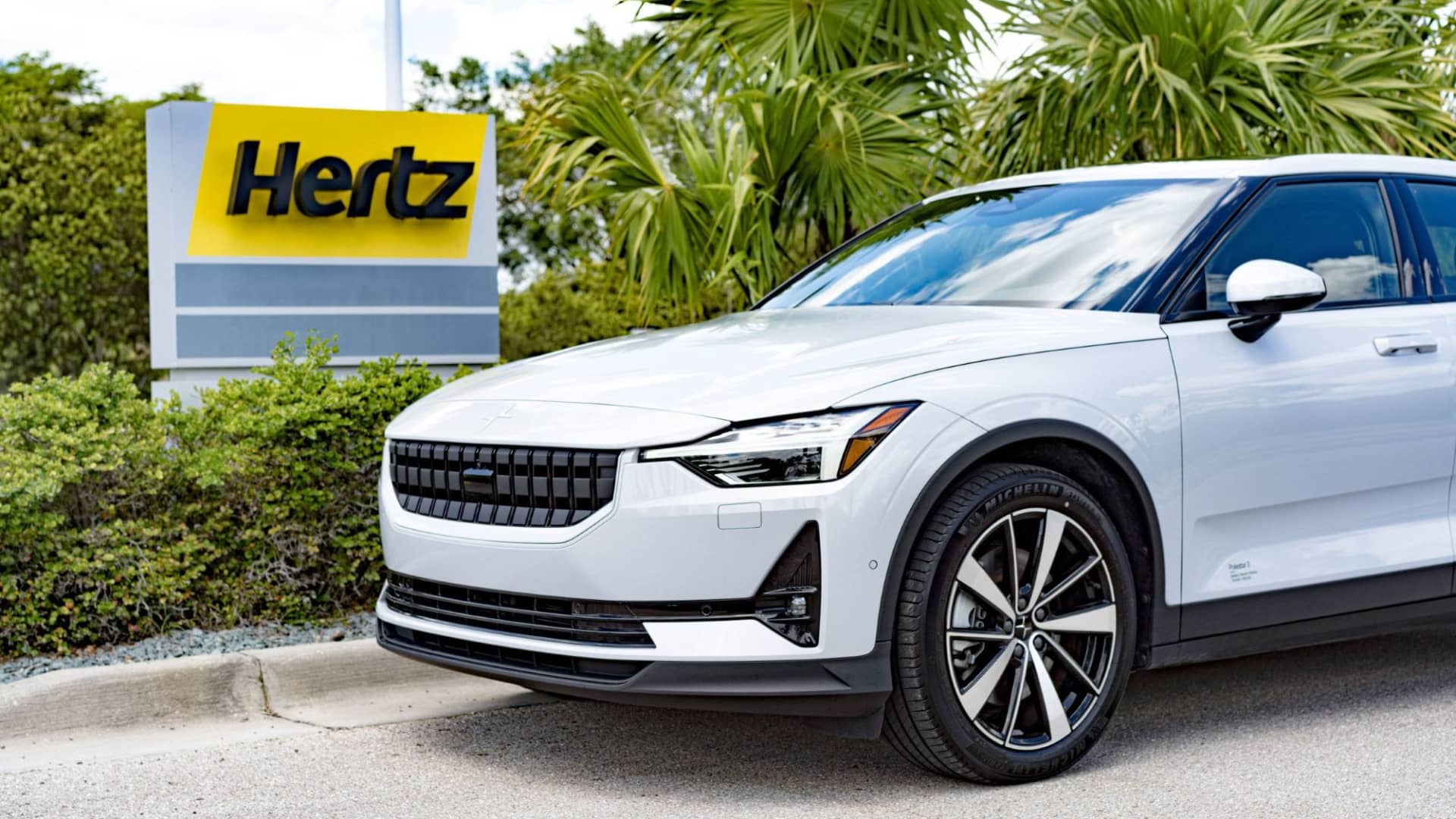
So far, Ingenlath said, the company’s plan is on track. It has received more than 32,000 orders for the Polestar 2 since the start of the year, with those orders coming from 25 different countries. Polestar also got an order from rental-car giant Hertz for 65,000 vehicles over the next five years, a deal Ingenlath said is primarily intended to give consumers an opportunity to try the company’s EVs.
Polestar’s plan is to be operating sales and service networks in 30 countries by the end of next year, but Ingenlath said the company would likely reach that milestone sooner.


