


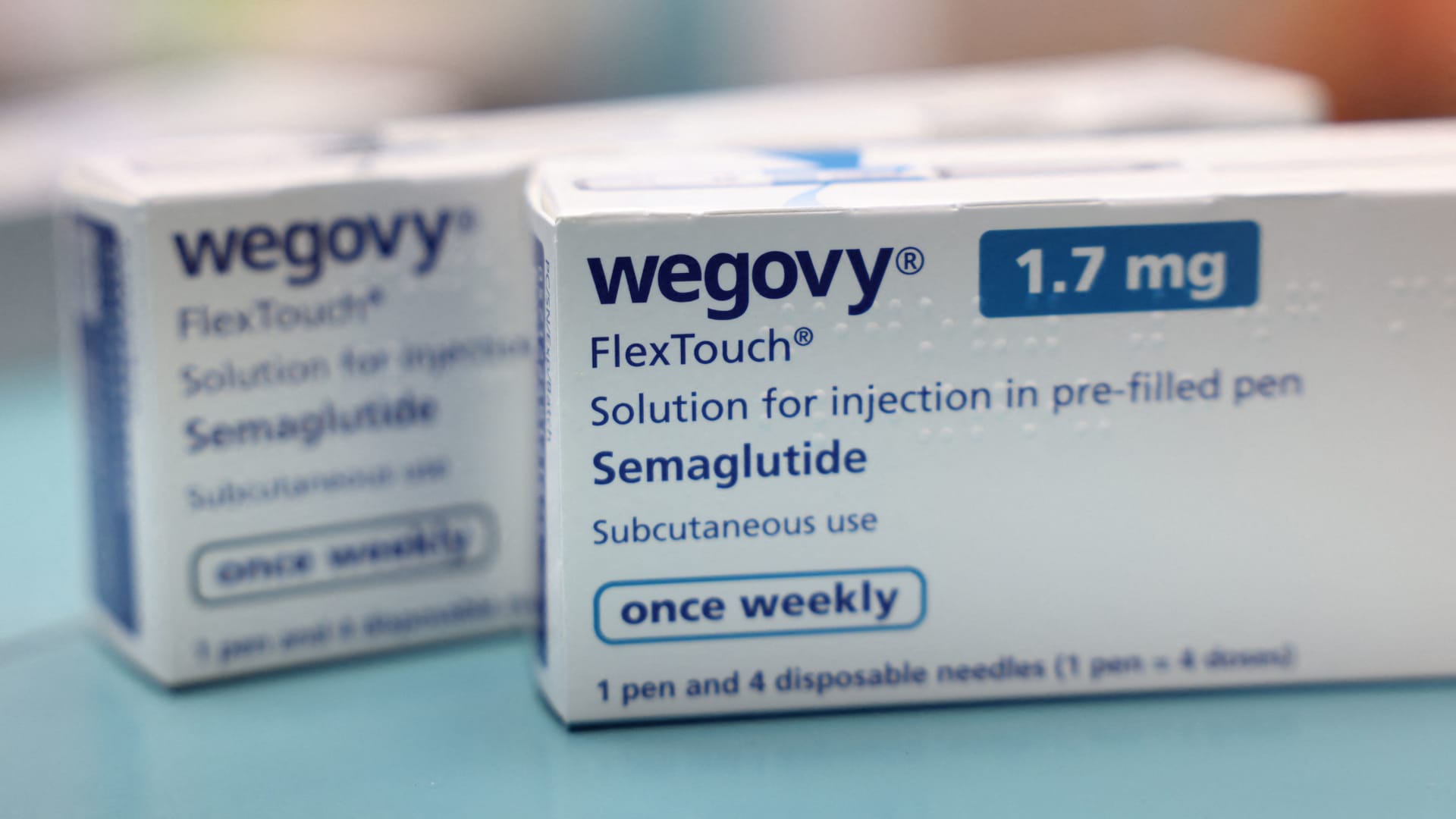
Boxes of Wegovy made by Novo Nordisk are seen at a pharmacy in London, Britain March 8, 2024.
Hollie Adams | Reuters
Patients taking Novo Nordisk‘s obesity drug Wegovy maintained an average of 10% weight loss for up to four years, according to a new analysis published Tuesday from the longest clinical trial to date on the treatment.
The highly popular drug also reduced the risk of heart disease regardless of a patient’s weight, a second analysis on the same trial found. Both analyses were presented at the European Congress on Obesity in Venice this week.
The findings shed light on the long-term effects of Wegovy and add to growing evidence of the weekly injection’s broad health benefits. That could boost Novo Nordisk’s case for insurers and governments to cover the costly but effective drug.
Insurance coverage is limited for Wegovy, part of a class of medications called GLP-1s. Those obesity and diabetes treatments have soared in popularity over the last year and work by mimicking a hormone produced in the gut to suppress a person’s appetite. Neither Novo Nordisk or Eli Lilly, which has its own weight loss drug, have been able to produce enough supply to meet the insatiable demand for their treatments.
The two analyses build on data published in November from Novo Nordisk’s SELECT trial. The findings from that trial showed that Wegovy slashed the risk of heart attacks, stroke and other serious cardiovascular complications by 20% in people who have obesity or are overweight and also have cardiovascular disease.
The U.S. Food and Drug Administration approved Wegovy for that purpose in March.
The SELECT trial, which included more than 17,000 patients from more than 40 countries, tested Wegovy for its cardiovascular benefits.
Participants were not required to track diet and exercise because it was not an obesity study. Patients in the trial lost around 10% of their total body weight on average after 65 weeks on Wegovy, according to the first analysis published in the journal Nature.
Patients continued to take the weekly drug over a period of three years and four months and sustained their weight loss for up to four years. Other research has shown that many people regain weight after stopping the drugs.
The second analysis showed that patients in the trail reaped the heart benefits of Wegovy regardless of their weight when they started on the drug and regardless of how much weight they lost on it.
For example, the reduced risk of serious cardiovascular events for those on Wegovy, compared with placebo, was similar among people who lost 5% or more of their body weight, those who lost less than that or even those who gained weight.
The finding suggests Wegovy helps improve a patient’s heart health through methods beyond weight loss, the study authors concluded.
Notably, the weight loss in the trial was less than the average 15% weight loss observed in an earlier study on Wegovy’s effect on obesity.
But the researchers in the first analysis noted that the previous study was designed specifically for weight loss and included structured lifestyle changes, such as diet and exercise. The population that study followed was also different from the SELECT trial.
Safety results from the two analyses were consistent with the previous data from the SELECT trial. More people on Wegovy than people who got a placebo decided to stop participating in the trial because of side effects.
Patients also experienced side effects consistent with other GLP-1 medications, such as nausea, diarrhea, vomiting and constipation.


