


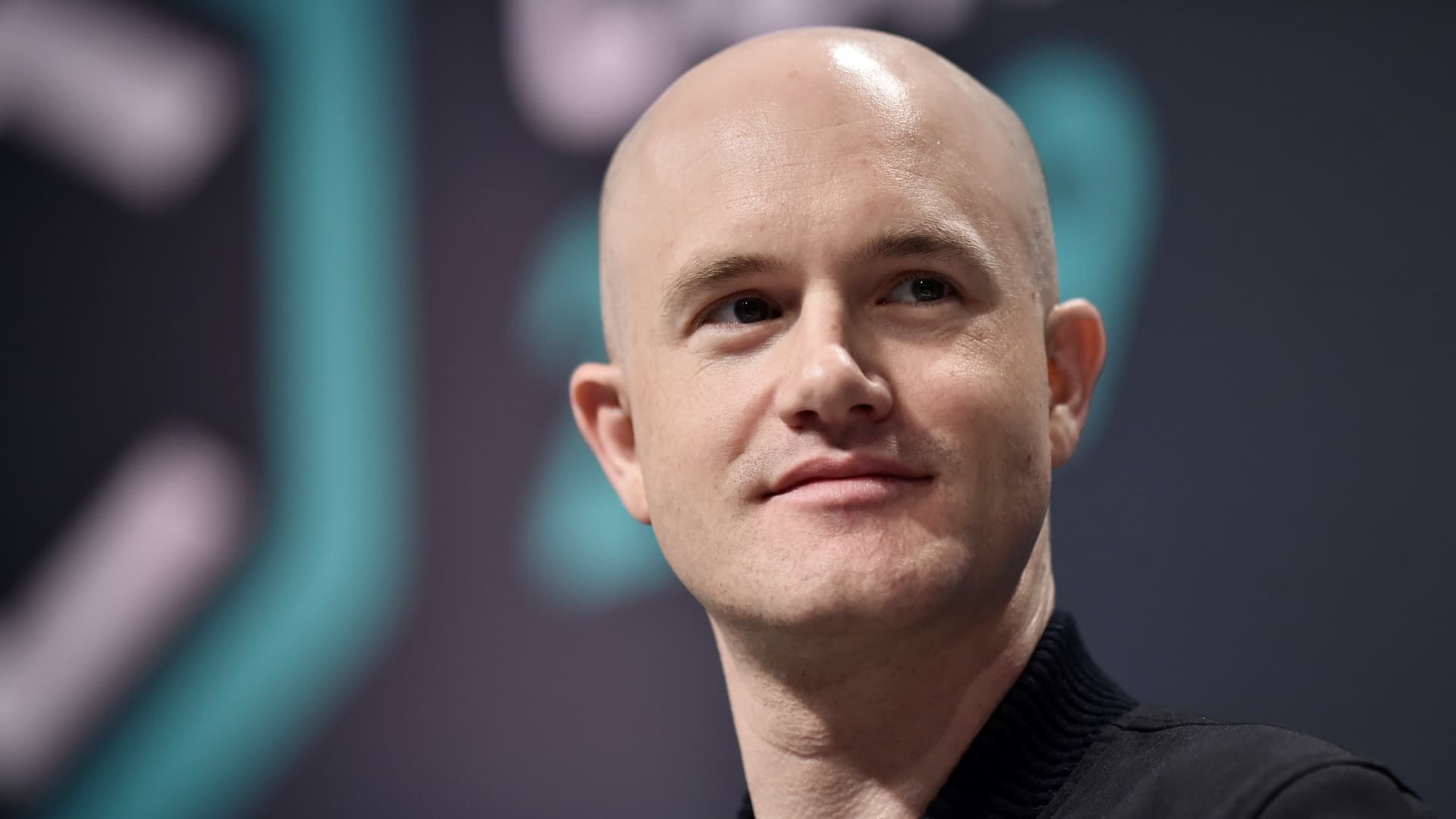
Coinbase Founder and CEO Brian Armstrong attends Consensus 2019 at the Hilton Midtown on Might 15, 2019 in New York Metropolis.
Steven Ferdman | Getty Illustrations or photos
FTX — until finally just lately one of the major crypto exchanges in the world — declared bankruptcy Friday immediately after revelations about its organization methods led to a surge of consumer withdrawals, with out ample cash to satisfy those people withdrawals.
Coinbase won’t have any content exposure to FTX, but I have a large amount of sympathy for absolutely everyone involved in the present-day condition. It truly is stress filled any time there is likely for consumer loss in our industry, and a lot of individuals are shedding a lot of revenue as a outcome of FTX’s struggles.
connected investing information

It really is also important to be crystal clear about why this took place — and what requirements to improve if we want to protect against a little something like it from happening yet again.
FTX’s downfall appears to be the final result of dangerous, unethical organization tactics, including conflicts of fascination between deeply intertwined entities, and selections to lend purchaser assets with out permission. It can be value noting that these routines transpire in common economical marketplaces as nicely — and in reality, blockchain know-how will make it less difficult to monitor and prosecute more than time.
In the wake of this week’s events, we are now seeing calls for much more regulation of the crypto business, with tighter constraints on obtain and innovation. The difficulty is that, so significantly, U.S. regulators have refused to give distinct, practical rules for crypto that would protect people.
Crypto regulation in the U.S. has been challenging to navigate, and regulators have so significantly failed to deliver a workable framework for how these solutions can be provided in a safe, transparent way. This implies that a swathe of crypto-primarily based economic products and solutions like lending, margin buying and selling, limited advertising and other tools that are completely lawful and controlled in classic fiscal markets are all but outlawed in the U.S. Entrepreneurial groups building new decentralized products are afraid to build out of the U.S. for worry of litigation. They you should not want to crack the policies, and ideal now they never know what the rules are.
As a consequence, American consumers and highly developed traders alike have been engaging with dangerous, offshore platforms outdoors the jurisdiction — and security — of U.S. regulators. These days, more than 95% of crypto trading activity comes about on overseas exchanges.
Section of the cause FTX was ready to do what it did was because it operates in the Bahamas, a little island region with very minor regulatory oversight and potential to oversee money services enterprises. Did regulators power FTX to conduct itself in the way it did? No. But they did build a circumstance where FTX could take perilous threats with no repercussions.
In its place of placing in area apparent guidelines for crypto, U.S. regulators have centered on regulation by enforcement — likely following U.S.-primarily based corporations for not pursuing the rules with no truly establishing what people regulations are. Coinbase itself fell target to this follow earlier this calendar year, when the SEC accused the corporation of listing unregistered securities, a cost that we strongly deny. It is really undesirable for U.S. competitiveness, and lousy for Individuals who eliminate revenue when abroad corporations collapse.
All of this assists demonstrate why additional heavy-handed regulation would just make the problem of crypto corporations and crypto customers going abroad worse. In its place, we need smarter regulation that guards individuals and would make the U.S. a more appealing spot for crypto organizations to function.
In spite of the prevailing notion that crypto providers really don’t want to be controlled, numerous — if not most — providers have been doing work with policymakers for years. Individuals of us who care about the foreseeable future of crypto want to make smart regulation for centralized exchanges and custodians in the U.S. and other regions.
Above the lengthy-phrase, the crypto marketplace has an opportunity to develop a greater procedure applying decentralized finance and self-custodial wallets that do not count on trusting third events like exchanges. As a substitute, prospects will be in a position to belief code and math, and almost everything can be publicly auditable on the blockchain. Until then, nonetheless, regulators need to create apparent guidelines that carry crypto back on-shore, inspire innovation, and protect individuals.
The U.S. has constantly prided alone on getting at the vanguard of new systems and industries. With much more than 200 million world-wide crypto end users and nations starting to pilot digital currency programs and acknowledge bitcoin as lawful tender, crypto’s time has appear.
Now, the U.S. has a choice: take the direct by providing clear, organization-ahead regulation, or threat dropping out on a key driver of innovation and financial equality.
Brian Armstrong is the CEO and Cofounder of Coinbase.

