


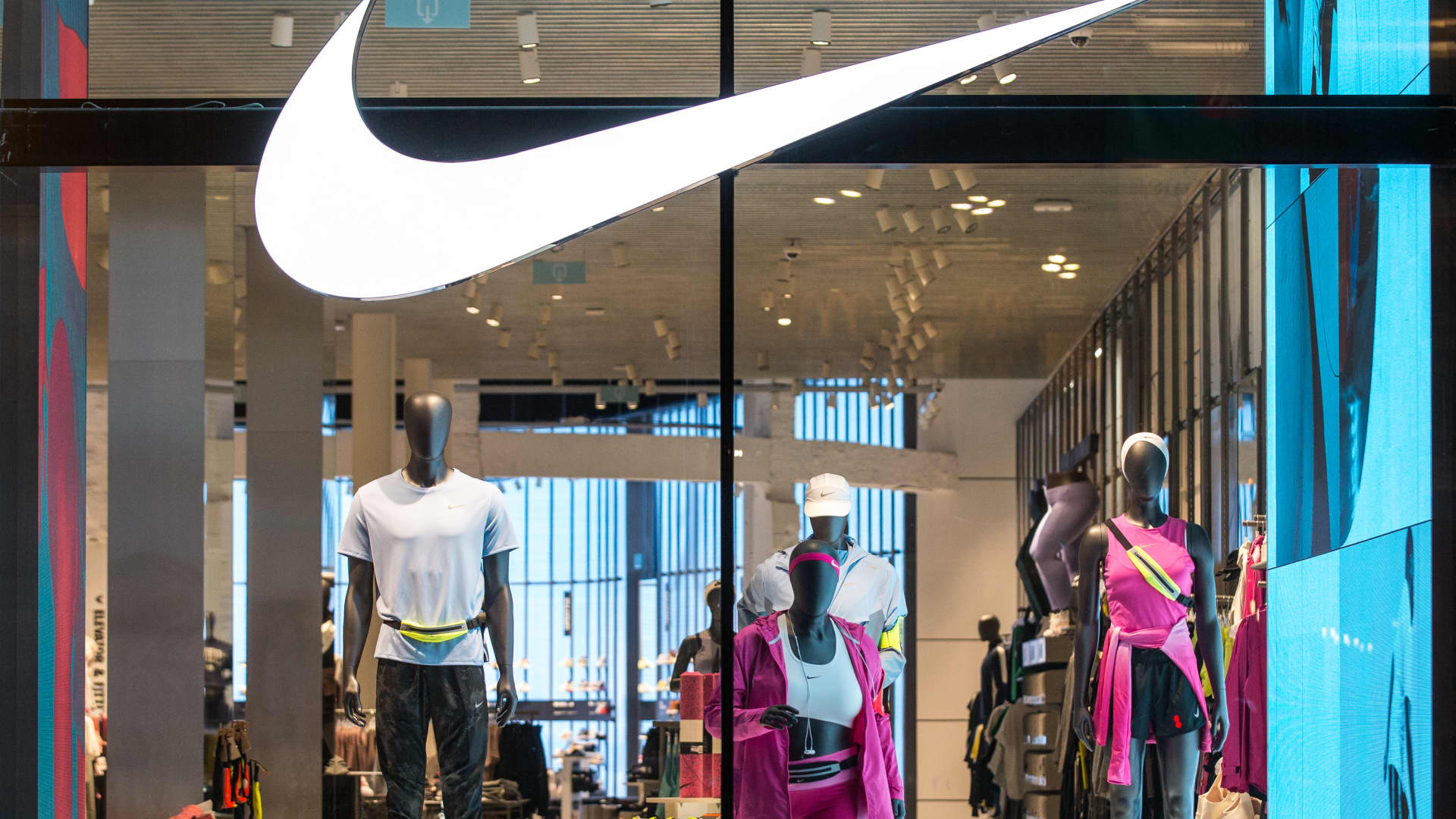
Illuminated trademark of the American athletic footwear and apparel corporation Nike, Inc. seen on the Nike Store window in Antwerp, Belgium. (Photo by Karol Serewis/SOPA Images/LightRocket via Getty Images)
Karol Serewis | Lightrocket | Getty Images
Nike CEO John Donahoe acknowledged Friday that the company moved too far away from wholesale partners like Macy’s and DSW in its quest to become a retailer that primarily sells merchandise to shoppers through its own stores and website.
“We recognize that in our movement toward digital, we had over-rotated away from wholesale a little more than we intended,” Donahoe told CNBC’s Sara Eisen from Paris. “We’ve corrected that. We’re investing heavily with our retail partners. They were all here over the last couple of days; they’re very excited about the innovation pipeline.”
Over the past several years, Nike has worked to transform its business from a brand that primarily sold its sneakers and clothes in department stores and specialty athletic shops to one that does the bulk of its sales direct to consumers.
The strategy allowed Nike to earn far more from its sales and gain better insights about its customers through data collection. Over the last four years, Donahoe said Nike tripled its mobile and digital business from about 10% of overall sales to 30%.
However, it’s a tough strategy to pull off and one that can pressure margins in the short term. Shifting to a direct model is capital-intensive and saddled Nike with the headaches of returns and owned inventory, which had typically fallen on wholesale partners.
On top of that, department stores and specialty shops are massive customer acquisition engines. Without them, brands have to spend more on marketing, which has become more expensive and challenging to do online.
Some analysts have said Nike’s decision to shun wholesale partners was a mistake. They argued it set the company back and is part of the reason why it fell behind on innovation and products. It also had a negative impact on Foot Locker, which has long relied on Nike to drive sales and now doesn’t receive the same assortment of products that it once did.
In its push toward a direct model, Nike temporarily cut ties with retailers like Macy’s and DSW, but it restored those partnerships last year as it began to shift its tone on wholesalers.
The change comes at a difficult time for Nike, which has faced criticism for falling behind on innovation and losing market share to upstarts like On Running and Hoka. In December, it announced a broad restructuring plan to reduce costs by about $2 billion over the next three years. It also cut its sales guidance as it warned of softer demand in the quarters ahead.
Two months later, Nike said it was shedding 2% of its workforce, or more than 1,500 jobs, so it could invest in its growth areas, such as running, the women’s category and the Jordan brand.
During Friday’s interview, Donahoe reiterated that consumers today “want to get what they want, when they want it, how they want it” — a refrain he has used over the past year when discussing Nike’s shifting sales strategy.
“There’s not digital shoppers versus physical retail shoppers. There’s not shoppers who only shop in mono-brand stores versus multi-brand shoppers,” Donahoe said. “Consumers want to get what they want across multiple channels. … The consumer will have a choice to come to Nike directly digitally, to come to a Nike door or to go to one of our wholesale [partners].”


