


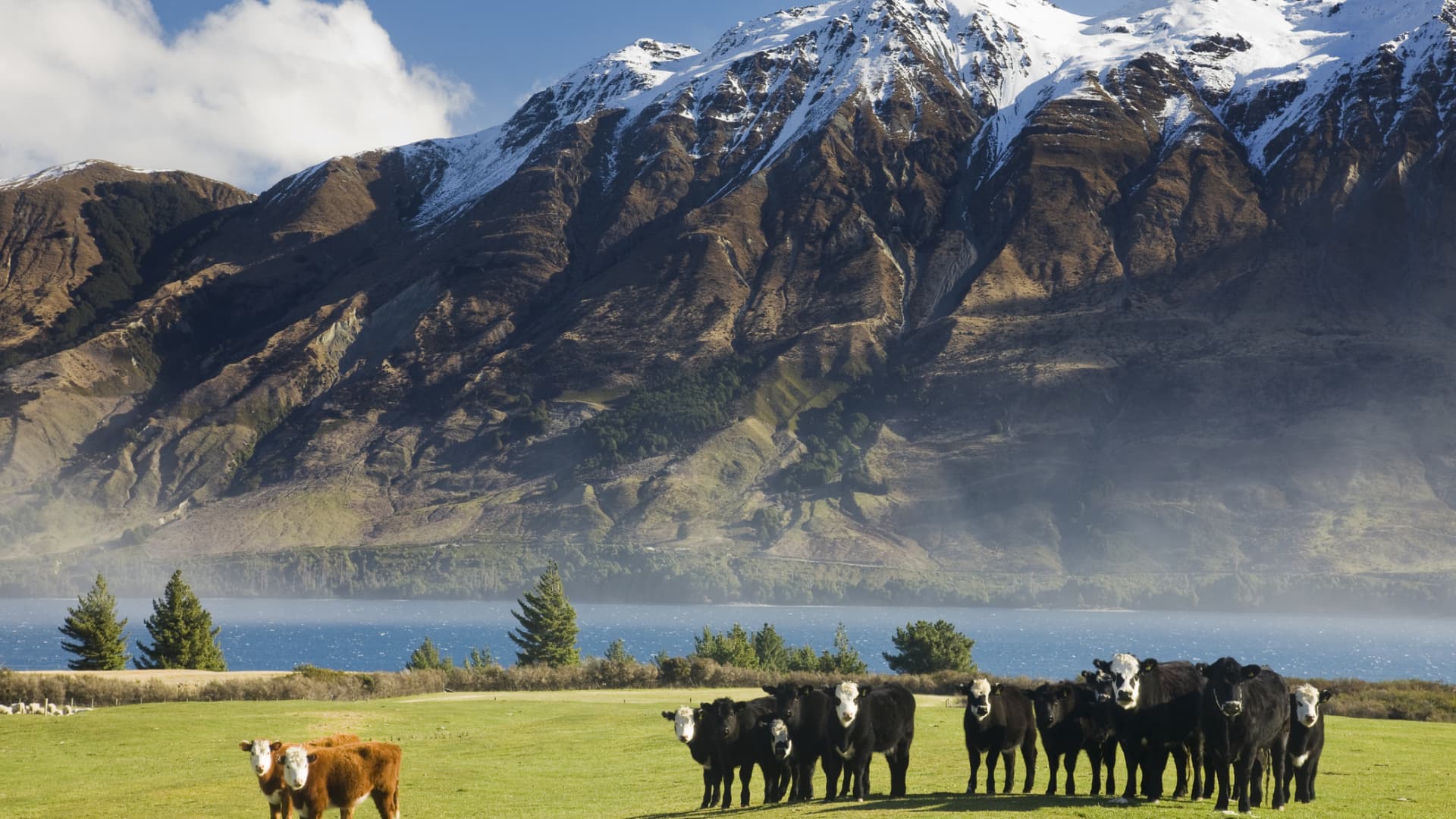
Cattle photographed in New Zealand. Agriculture plays a major role in New Zealand’s economy, especially when it comes to exports.
David Clapp | Stone | Getty Images
New Zealand plans to tax agricultural emissions — including those related to the burps, urine and dung from livestock like cows and sheep — in a move its government hopes will help the country meet climate change goals.
The aim is for the “agricultural emissions-pricing system” to come into force in 2025. A consultation looking at how levies are set, transition assistance and sequestration — which the document defines as “the process of removing carbon dioxide from the atmosphere” — was launched this week, and will run until Nov. 18.
The government said revenue from the levy would be “recycled back into [the] agriculture sector through new technology, research and incentive payments to farmers.”
The idea of introducing such a system by the middle of this decade was contained within an emissions reduction plan published in May 2022, as well as a recommendation published in June by the He Waka Eke Noa – Primary Sector Climate Action Partnership.
In a statement Tuesday, New Zealand’s Prime Minister Jacinda Ardern backed the plans. “This is an important step forward in New Zealand’s transition to a low emissions future and delivers on our promise to price agriculture emissions from 2025,” she said.
“No other country in the world has yet developed a system for pricing and reducing agricultural emissions, so our farmers are set to benefit from being first movers,” Ardern went on to say.
Agriculture plays a major role in New Zealand’s economy, including exports, but it accounts for a considerable chunk of the country’s emissions.
In the consultation document, authorities said greenhouse gas emissions from agriculture — carbon dioxide, nitrous oxide and methane — were responsible for more than half of New Zealand’s gross emissions.
According to the document, carbon dioxide stems from urea, while nitrous oxide comes from livestock dung and urine. Methane is emitted through belching and, to a lesser extent, gas.
While the plans have the backing of figures such as Ardern, they have not been universally welcomed. On Tuesday, Federated Farmers of New Zealand reacted furiously to the government’s proposals, stating that they would “rip the guts out of small town New Zealand.”
Others reacting to the news included Andrew Morrison, the chairman of Beef+Lamb New Zealand, who focused on the issue of sequestration.
“We need to further analyse these changes carefully, but one area of immediate concern is the proposed changes to sequestration, which is of real importance to sheep and beef farmers,” he said.
“We know we have a role to play in addressing climate change and our farmers are among the first to feel the effects of it,” Morrison added.
“However, if farmers are to face a price for their agricultural emissions from 2025, it is vital they get proper recognition for the genuine sequestration happening on their farms.”
In an email to farmers, Morrison and Sam McIvor, the organization’s CEO, offered more insight into their views on the plans. “New Zealand is the first country in the world to look to put a price on agricultural emissions,” they said.
“While we recognise our role in reducing emissions, we are one of the most carbon efficient producers in the world and we will not accept a system that disproportionately puts our farmers and communities at risk,” they added.


