


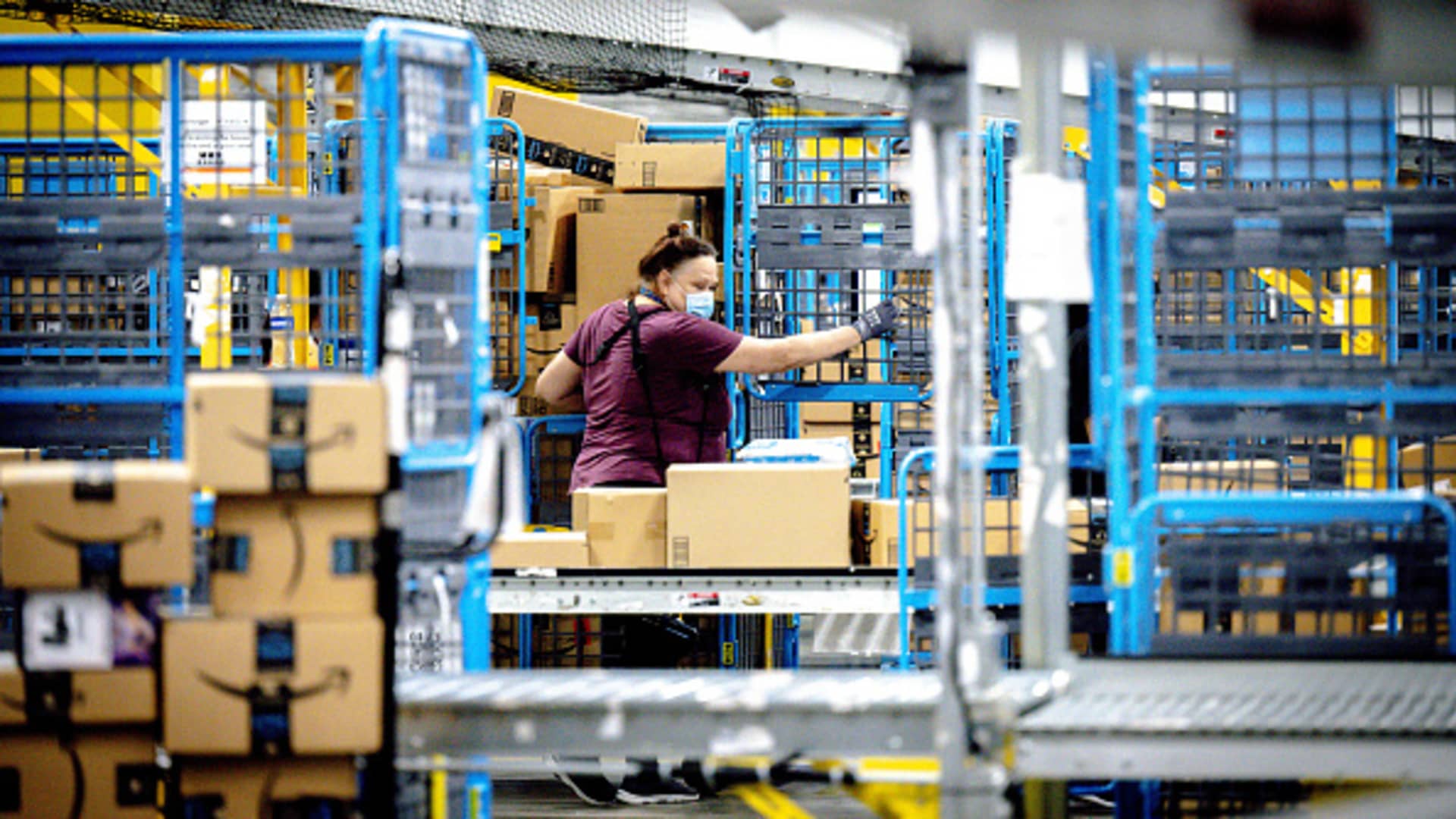
A worker sorts out parcels in the outbound dock at Amazon fulfillment center in Eastvale, California on Tuesday, Aug. 31, 2021.
Watchara Phomicinda | MediaNews Group | The Riverside Press-Enterprise via Getty Images
New York state lawmakers on Friday approved a bill targeting Amazon’s use of productivity quotas in warehouses, the latest sign that public officials are taking aim at the online retailer’s labor practices.
The State Assembly passed the bill, called the Warehouse Worker Protection Act, after it was approved Wednesday by the State Senate. It now heads to the desk of New York Gov. Kathy Hochul, who hasn’t indicated yet whether she will sign the measure.
The legislation requires Amazon and other companies that operate warehouses to provide workers with documentation of their production quotas, and notify them of any changes to their expectations. It also prohibits companies from imposing quotas that prevent workers from taking meal, rest or bathroom breaks.
The bill comes two months after an Amazon warehouse in New York voted in favor of joining a union, the first time that’s happened at one of the company’s U.S. facilities. Workers at the warehouse, located on Staten Island, are being represented by the Amazon Labor Union (ALU), a grassroots group of current and former company employees.
New York isn’t the first state to take such action against Amazon and its peers for quotas. In September, California signed into law a similar bill. And earlier this year, lawmakers in Washington and New Hampshire introduced bills that target warehouse production quotas.
Amazon relies on sophisticated algorithms to track productivity rates among its warehouse workers, logging the number of packages they pick, pack and stow each hour. If workers take a break from scanning packages for too long, Amazon’s internal system will log it as “time off task” and generate a warning, which can lead to firings.
Amazon’s productivity quotas have been a frequent target of worker advocacy groups and Amazon’s own employees, who argue its relentless focus on speed leads to on-the-job injuries at warehouses. Multiple studies by the Strategic Organizing Center, a coalition of labor unions, attributed high injury rates among warehouse and delivery workers to Amazon’s “obsession with speed.”
Workplace quotas have become increasingly common in warehouses as same-day and next-day delivery becomes the standard, the bill states.
“Those quotas generally do not allow for workers to comply with safety guidelines or to recover from strenuous activity during productive work time, leaving warehouse and distribution center employees who work under them at high risk of injury and illness,” the law says.
Representatives from Amazon didn’t immediately respond to a request for comment.
Amazon has previously said it has made safety a greater priority within the company, including introducing programs that aim to educate employees on how to avoid workplace injuries. Amazon executives have also denied that the company uses production quotas in its warehouses.
“It’s a misconception that Amazon has quotas. We do not,” said Heather MacDougall, Amazon’s workplace safety head, at an event with the National Safety Council on Thursday. “We are committed to ensuring that performance expectations and safety operations can coexist.”
The ALU is pushing for more reasonable quotas, along with better pay and benefits.
WATCH: Inside the rapid growth of Amazon Logistics and how it’s taking on third-party shipping

