


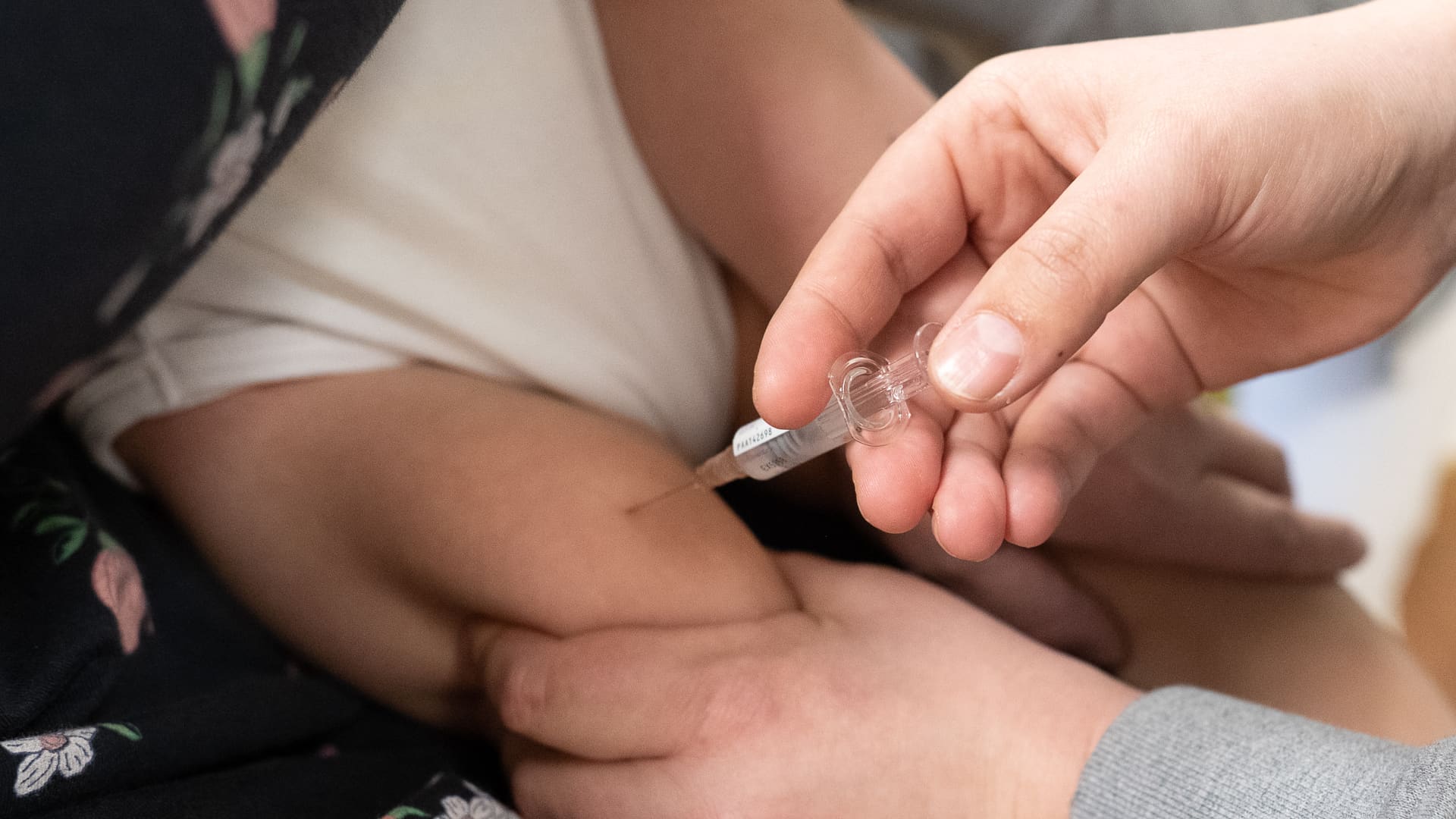
A doctor vaccinates an infant against respiratory syncytial virus (RSV) in a treatment room of her paediatric practice.
Swen Pförtner | Picture Alliance | Getty Images
Two new immunizations promise to protect babies from respiratory syncytial virus – if people can find them.
Providers are scrambling to offer Pfizer’s vaccine, Abrysvo, to pregnant patients and Sanofi’s monoclonal antibody, Beyfortus, to babies. The immunizations, both of which protect infants from complications of RSV, were recently approved and are starting to roll out just as the respiratory virus season gets underway.
The tight timeline leaves little room to resolve logistical hurdles like insurance coverage, and the steep price for the immunizations is making some providers wary of stocking up without a guarantee they’ll get paid for administering them.
These hurdles threaten to prevent babies from receiving protection this winter and to hinder the launches of both drugs.
“We want to start protecting babies now,” said Michael Chamberlin, a doctor at Pediatric Associates of Mt. Carmel in Cincinnati, Ohio, adding the provider hasn’t received answers from insurers about whether they’re covering Beyfortus — and at what rate.
“We need this information now, and when we contact insurance companies, we’re just not getting that information,” Chamberlin said.
RSV typically feels like a cold for adults but can be dangerous for newborns, seniors and adults with chronic medical conditions. Complications from the virus are the leading cause of hospitalization among newborns.
Until now, the only preventative treatment was another monoclonal antibody called Synagis that’s given once a month during RSV season, which generally runs from fall through spring. It costs about $1,000 a dose and is recommended only for babies at high risk for severe illness.
The two new options work a little differently from one another but are both meant to protect more newborns from RSV. Pfizer’s Abrysvo is a vaccine given during pregnancy to stimulate an immune response that’s then passed onto the fetus. Sanofi’s Beyfortus is a monoclonal antibody that’s given directly to babies and provides them with immediate protection. Both cut the risk of severe disease or hospitalization by more than 50%.
“Whether it’s a neighbor, or a friend, or an older sibling that was hospitalized, everybody knows what [RSV] is,” said Erin Bakke, whose 4-month-old son Graham received a Beyfortus shot this week. “I know that [RSV]’s a threat to little babies, and so to have an opportunity to prevent illness in the first place is really exciting.”
Laura Riley, chair of obstetrics and gynecology at Weill Cornell Medicine and New York-Presbyterian, originally wasn’t planning to administer Abrysvo in her office. The shot carries a list price of $295, making it more expensive than other maternal vaccines like one for whooping cough, for example, that costs about $50.
“It’s not an inexpensive endeavor,” Riley said.
But Riley said she heard from patients struggling to get vaccinated at pharmacies that were already administering the shot to seniors. And once she realized how difficult the process could be, she decided people clearly weren’t going to get vaccinated unless she made it easy for them and offered it right in the office.
Pfizer said any access issues are likely due to the quick turnaround from when Abrysvo was recommended for use during pregnancy. The vaccine was formally recommended for use during pregnancy earlier this month, the final step that some pharmacies and insurers wait for before administering or paying for new shots. Abrysvo was approved for use in people 60 and older in May.
Health insurers have one year from when the CDC’s advisors recommend an immunization to start paying for it. Sanofi said more than 90% of infants are already covered by health plans, and Pfizer said it’s seeing early positive momentum. But insurers acknowledge that people may still face delays as they update their policies.
“Coverage during the one-year implementation period will vary from plan to plan as system, technical and coding issues may arise,” Kelly Parsons, a spokesperson for the Blue Cross Blue Shield Association, said in a statement.
Pediatricians of Dallas, where Graham Bakke received his Beyfortus shot, bought about 200 doses of the monoclonal antibody to see if insurers would accept the claims before ordering enough for the roughly 1,000 babies it ultimately expects to immunize against RSV this season, said James Watson, a doctor at the office.
Insurers are reimbursing the office, Watson said, albeit at a lower rate than the shot costs. It’s a price the office is willing to pay.
“It’s the important thing to do,” Watson said. “If we lose a little money, we’ll see you for other things, and that’s just part of the game.”
— CNBC’s Patrick Manning contributed to this report.


