


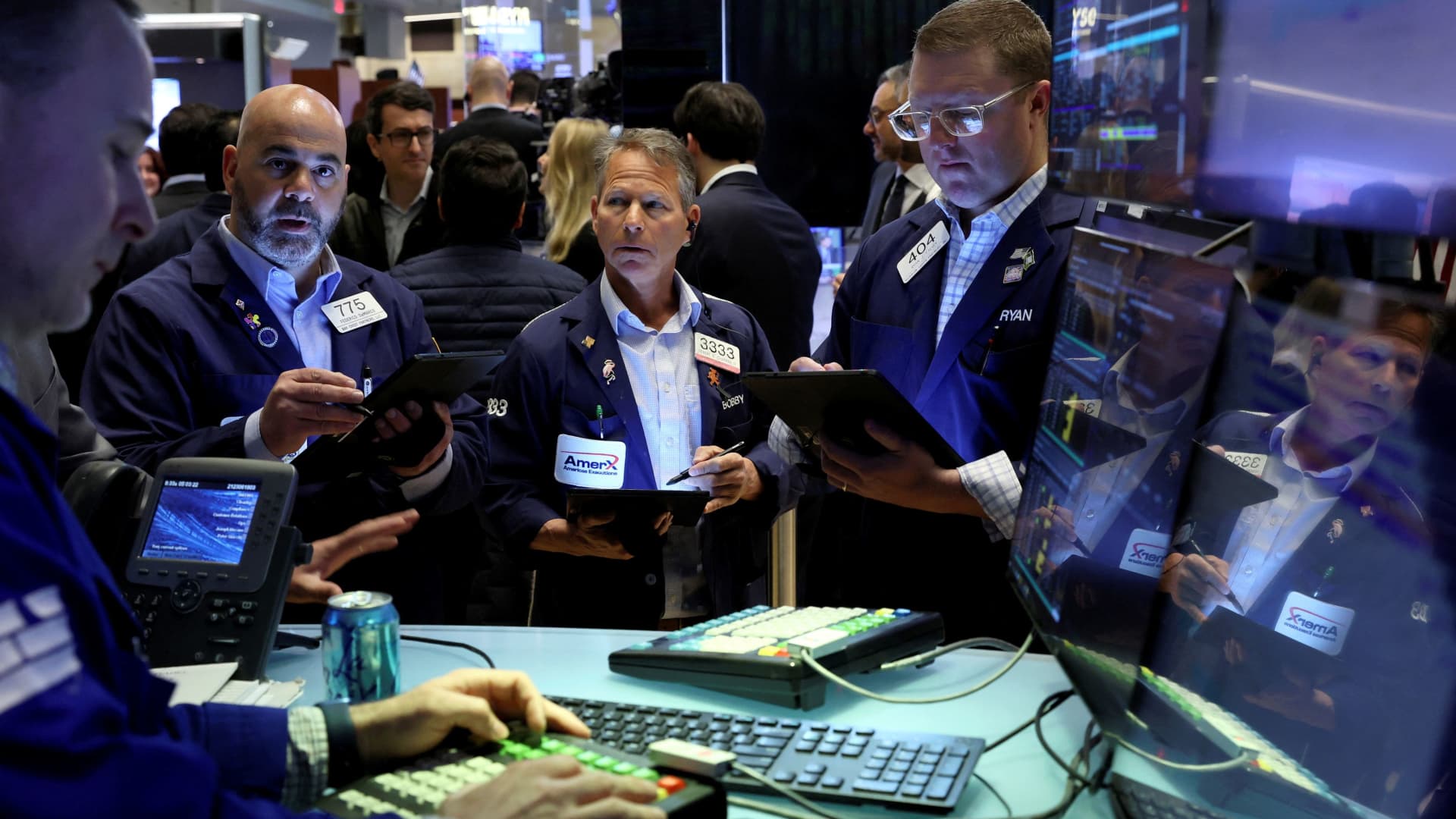
Traders work on the floor of the New York Stock Exchange (NYSE) in New York City, U.S., May 3, 2022.
Brendan Mcdermid | Reuters
Wealthy investors are more likely to add to their stock holdings or shift out of certain sectors rather than sell if stocks continue to decline, according to a new survey.
More than one in four, or 26%, of U.S. millionaire investors surveyed said they would add to their investments if financial markets decline further, according to the UBS Investor Sentiment survey. Only 19% said they would decrease their investments, and 25% said they would make no changes.
The survey, of 900 investors and 500 business owners with at least $1 million in investible assets, found that 30% of investors said they would shift sectors if markets decline. When asked how likely they would be to invest in certain asset classes, the largest number, 37%, said stocks. They also plan to invest more in commodities, with 32% favoring gold and 31% favoring oil.
“I think it’s another case of investors doing good job of not overreacting,” said Jeff Scott, head of client insights at UBS Global Wealth Management. “It doesn’t mean they won’t make tactical changes. But they’re not selling out as the market has declined. We encourage people to have a financial plan and stick to it.”
Granted, the survey of investors was taken between April 5 and April 18, before the most recent market drops. Yet wealthy investors don’t seem to be loading up on more cash. The average holdings of cash and cash equivalents actually fell slightly to 19% of investable assets, compared to 20% in the February Investor Sentiment.
Those who are holding a large amount of cash are worried about the affects of inflation. Among those holding more than 10% of their assets in cash, two thirds are “highly concerned about inflation’s impact on the real value of their cash,” according to the survey.
A majority of investors cite inflation as a leading investment concern, just behind politics and geopolitical risk. A majority, 51%, also said volatility is higher than usual, with the S&P down 13% so far this year and the Nasdaq down 21%.
While the market swings, concerns about rate hikes and inflation are taking center stage, Scott said wealthy investors are taking some comfort in receding fears over Covid-19.
“The pandemic is not over, but it does seem like there is a greater sense of returning to normalcy,” he said. “At least in the U.S. that is somewhat counter-balancing the increased concerns about Russia, Ukraine and inflation.”


