


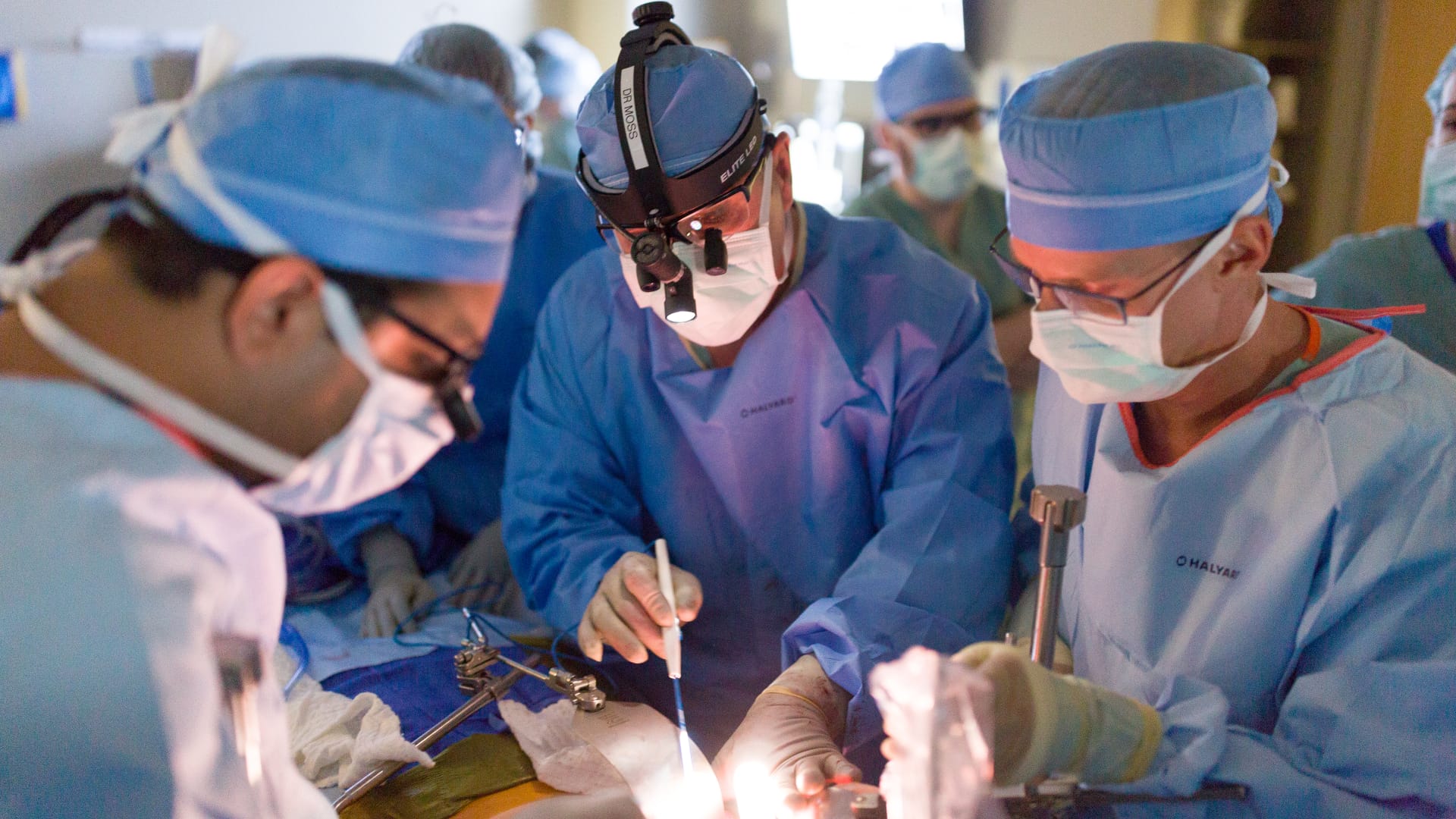
There are more than 100,000 people in the United States waiting for an organ transplant, according to the United Network for Organ Sharing, known as UNOS.
“I was born Type 1 diabetic,” said Patrick McGlone, who received a dual kidney-pancreas transplant in June 2021. “There was always the word transplant thrown around. But I never thought it’d be a possibility.”
It can be a long wait because of the organ shortage. Only a little more than 50% of people waiting for an organ will receive one within five years, according to UNOS.
UNOS is a private, nonprofit organization that compiles all of the clinical information for candidates in the U.S. in need of a transplant into what it calls its computer waiting list. It has handled the government contract for managing the organ-donation process since 1986 and coordinates with all of the other entities involved.
The organ-donation system in the U.S. is designed to save as many lives as possible without wasting any organs, but there are inequalities within the system that do raise questions of fairness.
People of color, people of lower socioeconomic status and women receive transplants at a lower rate than the general population and are also more likely to wait longer for an organ than patients with similar medical issues.
“The biggest equity challenge in transplant is the same as it is for everywhere in American health care: It’s getting access to the hospital in the first place,” said Brian Shepard, a former CEO of UNOS. “Transplant is not immune from any of those inequities.”
“I think a lot of people think about organ transplants and they think, oh, that’s a problem for older folks,” said Arthur Caplan, director of the division of medical ethics at the NYU Grossman School of Medicine. “If you increase the number of transplants that we do, you can have a much more productive workforce. It saves money. … So it’s a pocketbook issue for all of us.”
“It’s weird to say the surgery saved me money,” said McGlone. “Diabetes care, between the supplies and the constant visits and the lab work and all the things you need to do. There’s a lot of [out-of-pocket costs] even with good insurance.”
The industry recognizes the importance of finding alternatives to using organs from deceased human donors to address the national shortage. One method is to encourage kidney donations from living donors.
“People have different opinions on this, but it was honestly the easiest process for me and everybody,” said Katharine Manor, who donated her kidney on behalf of her mentor. “It was just really easy for me.”
“You might think we could have a campaign and encourage more people to do this, and you can,” said Caplan. “But in reality, most of us sitting around are not going to give up a kidney to somebody we don’t know. It’s a big deal.”
Currently, there is research being done into using animal organs, such as pigs, as well as building mechanical organs to try to make up for the scarcity.
“Even though we’re all fascinated by transplant, the ultimate goal is to get rid of it,” Caplan said. “What you want to do is either repair using cell engineering or artificial organs that can just simply substitute for the natural organs that failed.”
Watch the video above to learn more about how the organ transplant system works and what we can do to increase supply while also addressing the inequalities.


