


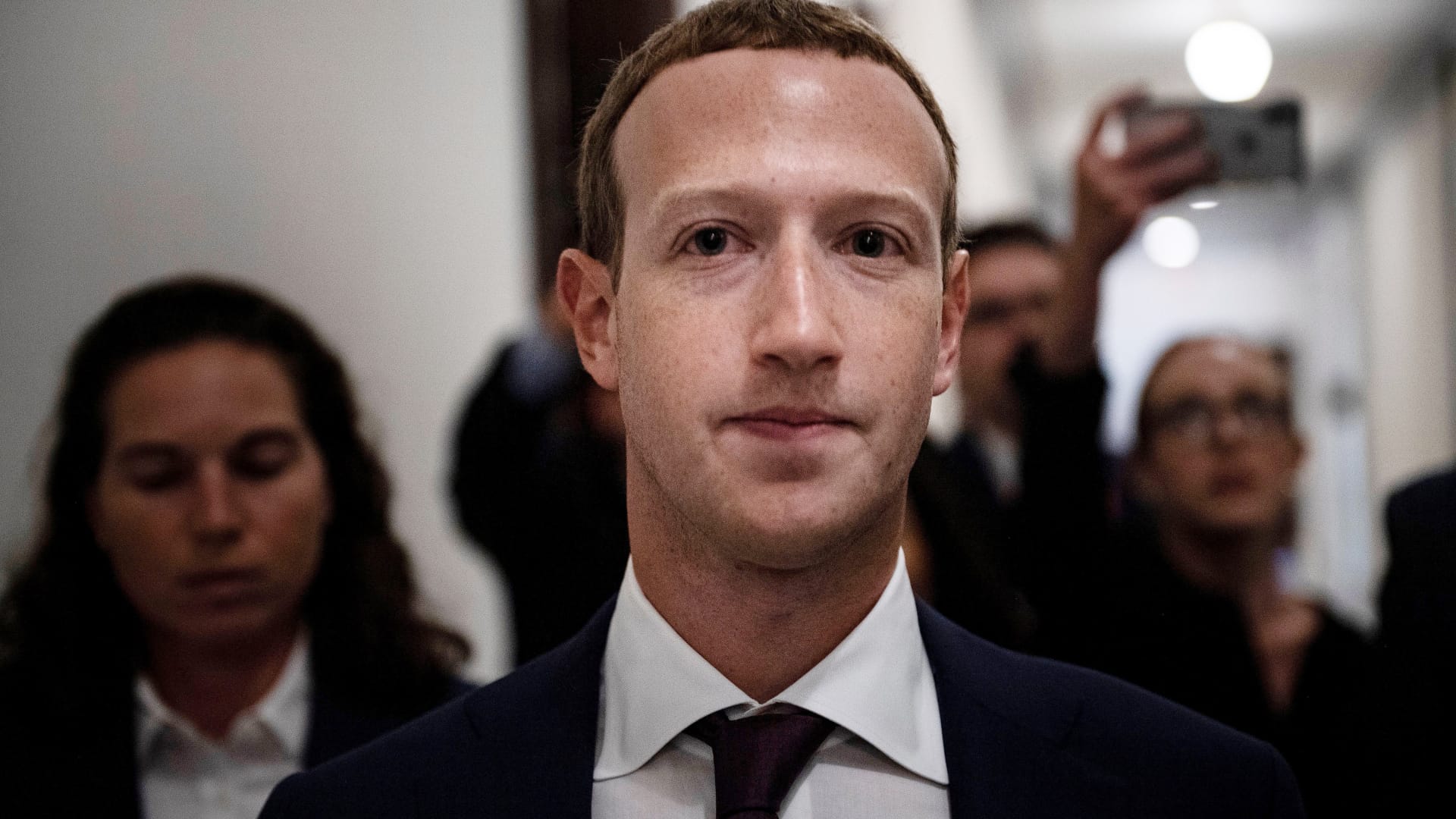
Most people know Facebook’s dorm-room origin story. But according to Mark Zuckerberg, you might have learned the wrong lesson from it.
On a recent episode of the “Lex Fridman Podcast,” hosted by MIT computer scientist Lex Fridman, Zuckerberg said his initial ability to launch Facebook back in 2004 wasn’t because he dropped out of college or abandoned any of his other interests. Rather, the Meta CEO said, it was due to the personal connections he made while he was still in school.
Who you spend time with in college, Zuckerberg said, is “the most important decision” any student can make on campus. “You become the people you surround yourself with,” he explained. “I think probably people are too, in general, objective focused, and maybe not focused enough on the connections and the people who they’re basically building relationships [with].”
Zuckerberg met his Facebook co-founders — Eduardo Saverin, Dustin Moskovitz, Chris Hughes and Andrew McCollum — while the five were students at Harvard University in the early 2000s. Their business went on to revolutionize social media and become one of the world’s largest companies: Meta has a market capitalization of $582.58 billion, as of Friday afternoon.
The group ultimately split up in an infamously messy fashion, roughly detailed in the 2010 film “The Social Network.” But Zuckerberg said on the podcast that he still tries to prioritize relationships over objectives today. That applies especially to hiring, he said: When evaluating a job candidate, he imagines what it would be like to work for that person, instead of being their boss.
“I will only hire someone to work for me if I could see myself working for them,” he said.
Zuckerberg said the strategy creates a work environment that’s both more cohesive and more productive: If you work with people who share your values on a human level, you’ll be more likely to smoothly achieve your work goals together. It’s all about finding personal compatibility, he said, not unlike “choosing friends or a partner.”
The prioritization of relationships over objectives could also help explain a few of Zuckerberg’s more controversial decisions at Meta’s helm. For example, in a leaked 2016 memo first surfaced by Hacker News, Zuckerberg defended then-board member Peter Thiel, a major benefactor of Donald Trump’s 2016 presidential campaign.
Zuckerberg wrote that keeping Thiel on the board was more important than any perceived blowback the company might receive, arguing that Facebook “can’t create a culture that says it cares about diversity and then excludes almost half the country because they back a political candidate.”
The move may have had consequences. Many of Zuckerberg’s critics believe his allegiance to Thiel, an early Facebook investor, may have affected how Facebook monitored — or ignored — misinformation on the social media platform leading up to the 2016 and 2020 elections.
In 2019, a Wall Street Journal investigation revealed that Thiel was among those who pressured Zuckerberg to not fact-check political ads on his platform. That year, three longtime board members left the company. Both Democrat and Republican lawmakers have since criticized how Facebook manages content on its platform.
Sign up now: Get smarter about your money and career with our weekly newsletter
Don’t miss:
Millennials and Gen Z are planning to spend thousands on cryptocurrency, NFTs and metaverse land as holiday gifts
Ex-Disney CEO Bob Iger’s next step: Investing in a metaverse start-up run by a 29-year-old
