


Major retailers and brands have driven $14 billion in revenue to Black-owned businesses since May 2020.
In the last three years, Nordstrom, Macy’s, Sephora, Ulta Beauty and 25 others have partnered with nonprofit organization Fifteen Percent Pledge. The group asks companies to reflect the Black community that makes up 15% of the U.S. population by dedicating 15% of their shelf space to Black-owned brands.
Prior to taking the pledge, many of the group’s current partners had less than 3% of their shelf space dedicated to Black-owned brands. Now all partners are committed to attaining their 15% pledge over a 10-year contract.
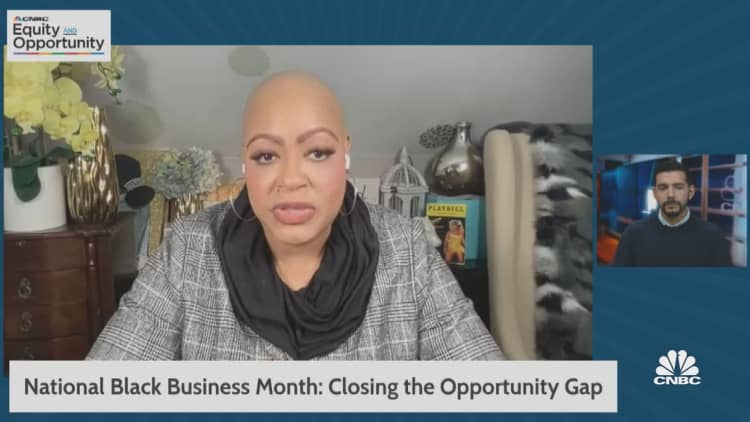
“Let’s create an opportunity to chart a path forward that’s more inclusive and gives Black entrepreneurs who have been historically and systemically excluded an opportunity to build generational wealth,” said LaToya Williams Belfort, executive director of the Fifteen Percent Pledge.
Fifteen Percent Pledge has committed to generating $1.4 trillion in wealth for Black entrepreneurs by 2030.
Sephora was the first multibillion dollar retailer to commit to the pledge, just two days after founder and Brooklyn-based entrepreneur Aurora James posted her call to action in the days after George Floyd’s murder.
“So many of your businesses are built on Black spending power,” James said in her Instagram post. “So many of your stores are set up in Black communities. So many of your posts seen on Black feeds. This is the least you can do for us.”
With that, the group launched in 2020 as a way for corporations to support Black business amid an outpouring of corporate diversity, equity and inclusion commitments to close the racial wealth gap that remains significant.
Calculations based on Federal Reserve data from March 2023 show that Black household wealth in the U.S. totals $6.25 trillion — or only 5% of white households’ total wealth of $115.65 trillion. Meanwhile, only 4% of America’s largest companies had successfully closed the racial pay gap in 2022, according to CNBC partners at JUST Capital.
Committing to change, more than two-dozen companies have “taken the pledge,” including 20 apparel and furniture retailers, three lifestyle publications — including Vogue & InStyle — and cannabis dispensary chain MedMen.
Feeling the impact
Over 625 Black-owned businesses and brands have developed relationships with large corporations that have signed on to the initiative.
Christina Tegbe, founder of African luxury beauty brand ’54 Thrones’ inspired by the richness, diversity, and culture of Africa and its people.
54 Thrones
“We launched in retail in 2020 with Nordstrom,” said Christina Tegbe, founder of Black beauty brand 54 Thrones and partner of the Fifteen Percent Pledge.
Since the increased attention in 2020, the company has grown exponentially, Tegbe said.
“From 2016 to 2019 we had a cumulative four-figures in sales,” said Tegbe. “After May 2020 and with the work being done by 15 Percent Pledge, we saw ourselves having five-figure days.”
Tegbe said her company is still self-funded, but the pressure Fifteen Percent Pledge put on retail to search out and nurture Black-owned brands gave her company the exposure it deserved. 54 Thrones is now among the Black-owned brands on the shelves at Sephora, Nordstrom, Credo Beauty and Gwyneth Paltrow’s company Goop.
In August 2022, Nordstrom piloted its first Black Business Month program by creating a “Buy Black” pop-up market to highlight brands like Tegbe’s and others it carries year-round. Strong support for the initiative generated $14 million in sales of Black-owned or founded brands at Nordstom in that month alone.
Looking to repeat its success, Nordstrom is launching a new multi-city initiative on Friday. The pop-up will help promote Black-owned brands and move closer to the company’s commitment to deliver $500 million in retail sales from brands owned, operated or designed by Black and Latinx individuals by 2025.
“We really want companies that have a large economic footprint that want to be more inclusive, and create a more inclusive society going forward,” said Williams Belfort.
Pushback against DEI goals
Corporate America has committed to supporting diversity, equity and inclusion, but recent pushback from lawmakers to limit corporate DEI initiatives makes it a tricky field to navigate.
On Tuesday, a conservative legal organization sued Target in Florida federal court on behalf of an investor, saying the retailer misrepresented the adequacy of its risk monitoring over LGBTQ-themed merchandise during Pride month.
The lawsuit is the latest legal battle between conservative legal groups and lawmakers against corporations with policies designed to better support racial and gender inclusion.
Last week, Bud Light parent company Anheuser Busch InBev saw a significant decline in second-quarter U.S. sales after boycotts from consumers who opposed an advertising partnership with transgender influencer Dylan Mulvaney.
Tegbe said the backlash is worrisome.
“It’s concerning,” she said. “The thought of companies pulling back and wanting to do things behind closed doors.”
Despite her concern, Tegbe remains hopeful that the majority of consumers want to see and purchase products by diverse founders.
“With any great change or revolution it has to be done in a way that [companies] are unapologetically taking a stance,” she said.
The pledge’s executive director Williams Belfort said the proof of the initiative’s success is in the numbers.
“The data shows that giving opportunity to black entrepreneurs, driving revenue for retailers, and creating a more robust economy is good economics for us all,” she said.

