


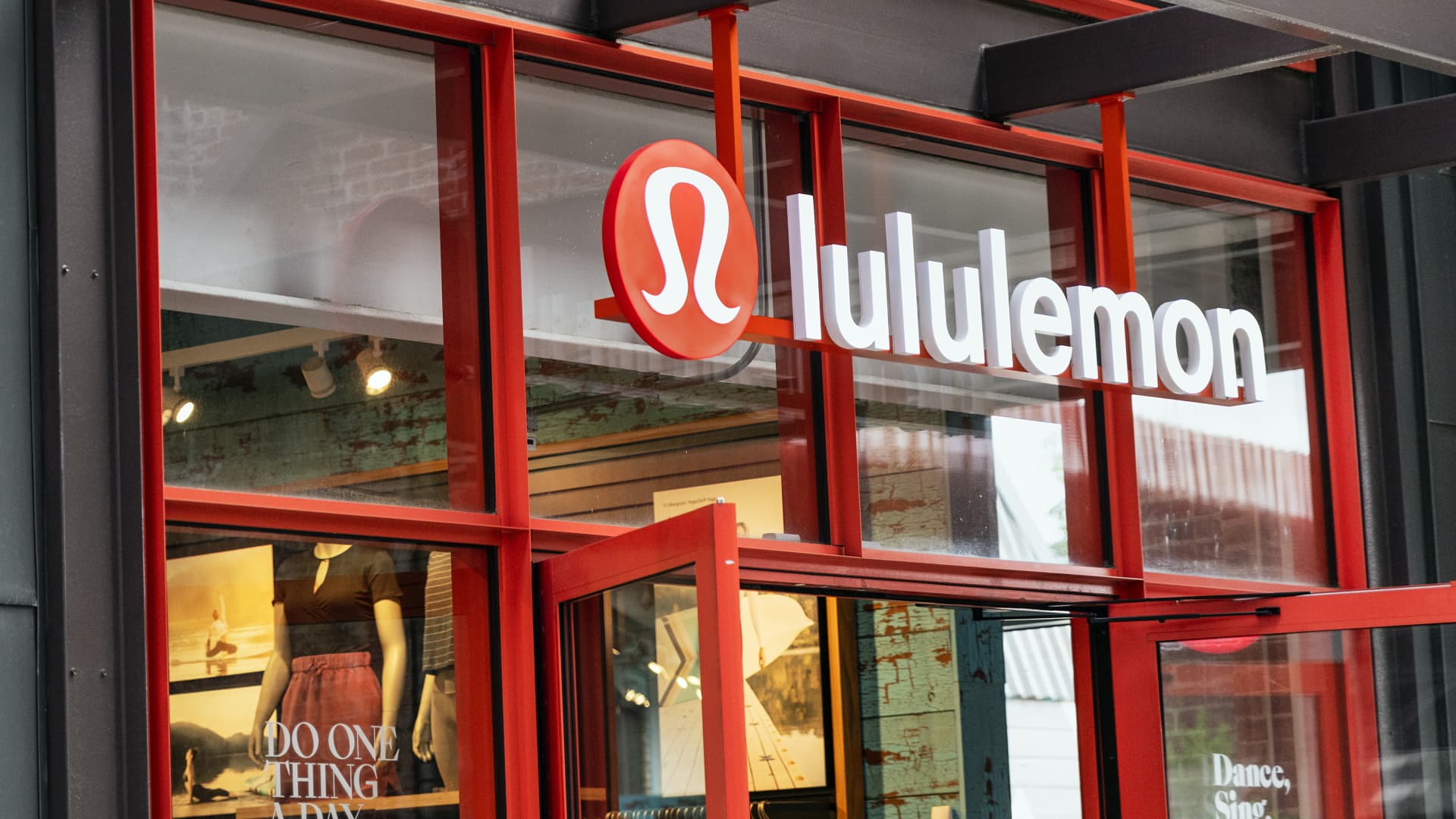
Lululemon Athletica store exterior, Ponce City Market.
John Greim | LightRocket | Getty Images
Lululemon is launching a membership program — and it’s about more than workout clothes.
The athletic apparel retailer will debut two tiers of memberships, one free and one paid, in a bid to build a stronger base of loyal customers. The offerings come with exclusive access to items, events and fitness classes.
Lululemon says the move could help the retailer lower its cost to acquire customers, as it creates the “most immersive fitness marketplace” in the industry.
While Lululemon certainly isn’t the first retailer to launch a unique loyalty program, not many apparel businesses offer an option that customers pay for each month. Lululemon could set an example for others to follow as the company and its peers seek new revenue streams beyond the rack.
The free membership option will give users early access to Lululemon product drops and exclusive items, as well as invitations to in-person community events, the company announced Wednesday during an analyst day event.
The second option will cost members $39 per month, the same price as an all-access subscription to Lululemon at-home fitness platform, Mirror. Current Mirror users will be rolled into this new subscription tier at no additional charge, the company said, which will also offer workout content from a number of studios that Lululemon is partnering with, including Rumble, Y7, Pure Barre and DogPound.
Paid subscribers will also receive all of the perks included in the free tier, when both options officially debut in the fall.
“We want to continue to add as much value as we can in that $39 membership tier as possible,” said Michael Aragon, chief executive officer of Lululemon’s Mirror, in his first media interview since joining the company. “It’s becoming a growth engine for Lululemon overall.”
Aragon, a former Amazon executive, took over the chief executive role for Mirror in mid-January. His job is to also oversee Lululemon’s broader digital fitness aspirations. Lululemon acquired Mirror for $500 million in 2020, at a time when connected fitness companies such as Peloton, Tonal and Hydrow were seeing explosive growth with consumers stuck at home and gyms seen as unsafe.
Lululemon has since rolled out Mirror shop-in-shops, where customers can test out one of Mirror’s $1,495 devices, in roughly 200 locations across North America.
With its membership push, Lululemon hopes to introduce the Mirror brand to a wider audience, while also giving current Mirror subscribers more bang for their buck.
Lululemon experimented with a loyalty program in 2018, before the Covid pandemic and the retailer’s Mirror deal. In the trial — which ran in a handful of cities across the U.S. and Canada — members were charged $128 annually for perks such as free shipping, workout classes and special events.
Nikki Neuburger, Lululemon’s chief brand officer, said the company was able to learn from the pilot what its customers value most: priority access to merchandise, invitations to events and unique fitness content.
“The goal here is to create one connected community across Lululemon and Mirror,” she said.
According to Neuburger and Aragon, Lululemon is attracting new customers through Mirror who hadn’t shopped at the retailer before. Mirror subscribers also spend “significantly more” on average than the typical Lululemon customer, they said.
“These deals aren’t just about content deals,” said Aragon. “It’s about getting [people] into the Lululemon lifestyle, and that includes wearing our gear.”
Lululemon’s expanded fitness offering could make the retailer a closer rival to a company like ClassPass, now owned by Mindbody, which lets users sign up for workout classes from a number of boutique studios as well as national chains — on a subscription basis.
It’s not entirely uncommon for athletic apparel brands to venture down this path, either. Alo Yoga, known for its yoga apparel and endorsed by reality TV celebrity Kendall Jenner, has a $20-per-month subscription program to its own yoga classes. Gap’s Athleta brand teamed up with Obe Fitness to add a fitness component to its loyalty program.
Lululemon also on Wednesday announced new financial targets for 2026, forecasting annual revenue of $12.5 billion by 2026.
Its shares closed the day down nearly 5%, at $385.40. The stock has fallen roughly 1.5% year to date.

