


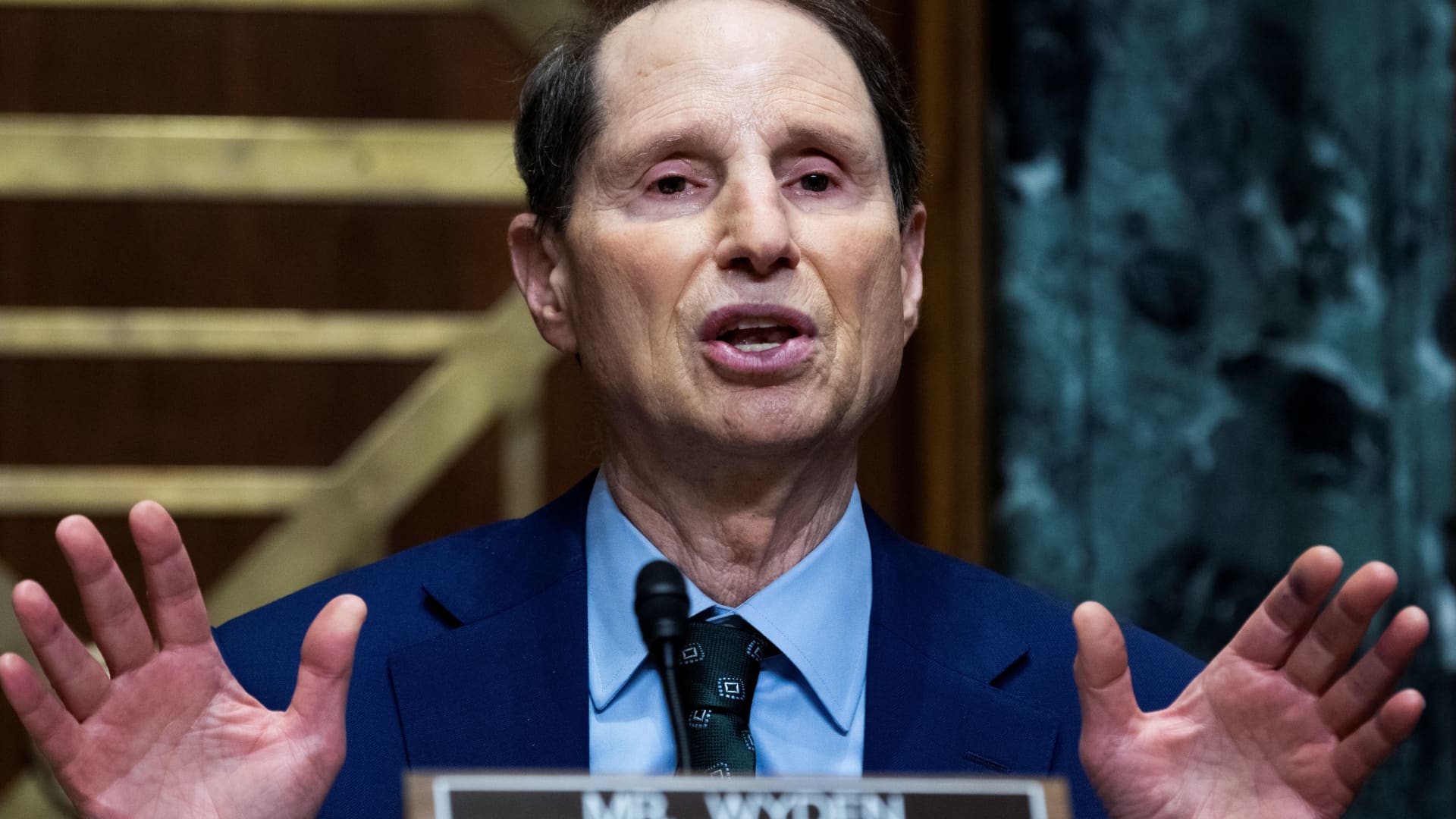
Senate Finance Committee Chairman Ron Wyden, D-Ore., questions IRS Commissioner Charles Rettig at a Senate Finance Committee hearing.
Tom Williams | Pool | Reuters
Senate Finance Committee Chairman Ron Wyden, D-Ore., has outlined five priorities for the nearly $80 billion in IRS funding enacted in August through the Inflation Reduction Act.
Wyden shared expectations for the 10-year investment — including customer service, technology, audits for the wealthy, offshore tax evasion and criminal investigations — in a letter to Treasury Secretary Janet Yellen and IRS Commissioner Charles Rettig.
These priorities are on top of implementing other tax provisions, such as clean energy credits, health insurance subsidies and others, he wrote.
More from Personal Finance:
Biden’s student loan forgiveness could cost $379 billion over 30 years
The tax extension deadline is Oct. 17. Watch out for these 3 common errors
As demand soars for Series I bonds, TreasuryDirect gets a makeover
“As you have explained, the funds will not be used to increase the audit rate relative to historical levels for those making less than $400,000,” Wyden emphasized.
Here’s a breakdown of the five priorities:
1. Boost customer service
Wyden urged the IRS to improve customer service by clearing the backlog of unprocessed tax returns prior to next year’s filing season, pushing for infrastructure investments to “ensure these backlogs do not return,” Wyden wrote.
As of Sept. 23, the IRS had 6.2 million unprocessed individual returns received this year, including tax year 2021 returns and late filings from previous years, according to the agency.
2. Invest in technology
Wyden also asked for technology upgrades, to “improve service and enforcement,” making it easier to process third-party tax forms and flag errors to begin audits more quickly.
“System upgrades should help the IRS use this data to catch tax cheats and reduce the likelihood that it will question accurate returns,” he wrote.
3. Increase audits of the wealthy
Wyden also highlighted the need to “rebalance audit rates,” between wealthy and lower-income taxpayers, by hiring more revenue agents.
IRS audits dropped by 44% between fiscal years 2015 and 2019, according to a 2021 report from the Treasury Inspector General for Tax Administration. Audits dropped by 75% for filers making $1 million or more, and 33% for low-to-moderate earners claiming the earned income tax credit, known as EITC.

In 2021, the U.S. Department of the Treasury estimated there’s a $600 billion annual “tax gap” between what’s owed and collected, which may amount to roughly $7 trillion in lost tax revenue over the next decade.
4. Pursue offshore tax evasion
Another priority is to crack down on “hundreds and thousands of shell companies in offshore tax havens” that increase the risk of underreported income, according to the letter.
Wyden encouraged the IRS to develop a “more robust” whistleblower program, to partner with individuals to “unpack sophisticated schemes.” He said this program has delivered a “huge return on investment.”
5. Rebuild criminal investigations
Wyden also pushed to hire more special agents for the IRS’ criminal investigations division, citing a loss of about one-quarter of its workforce since 2010.
The letter comes as the IRS funding continues to be a hot-button issue among critics, with some saying the resources may target everyday Americans.
However, Yellen responded to these claims in a letter to Rettig on Aug. 10.
“Specifically, I direct that any additional resources — including any new personnel or auditors that are hired — shall not be used to increase the share of small business or households below the $400,000 threshold that are audited relative to historical levels,” she wrote.

