
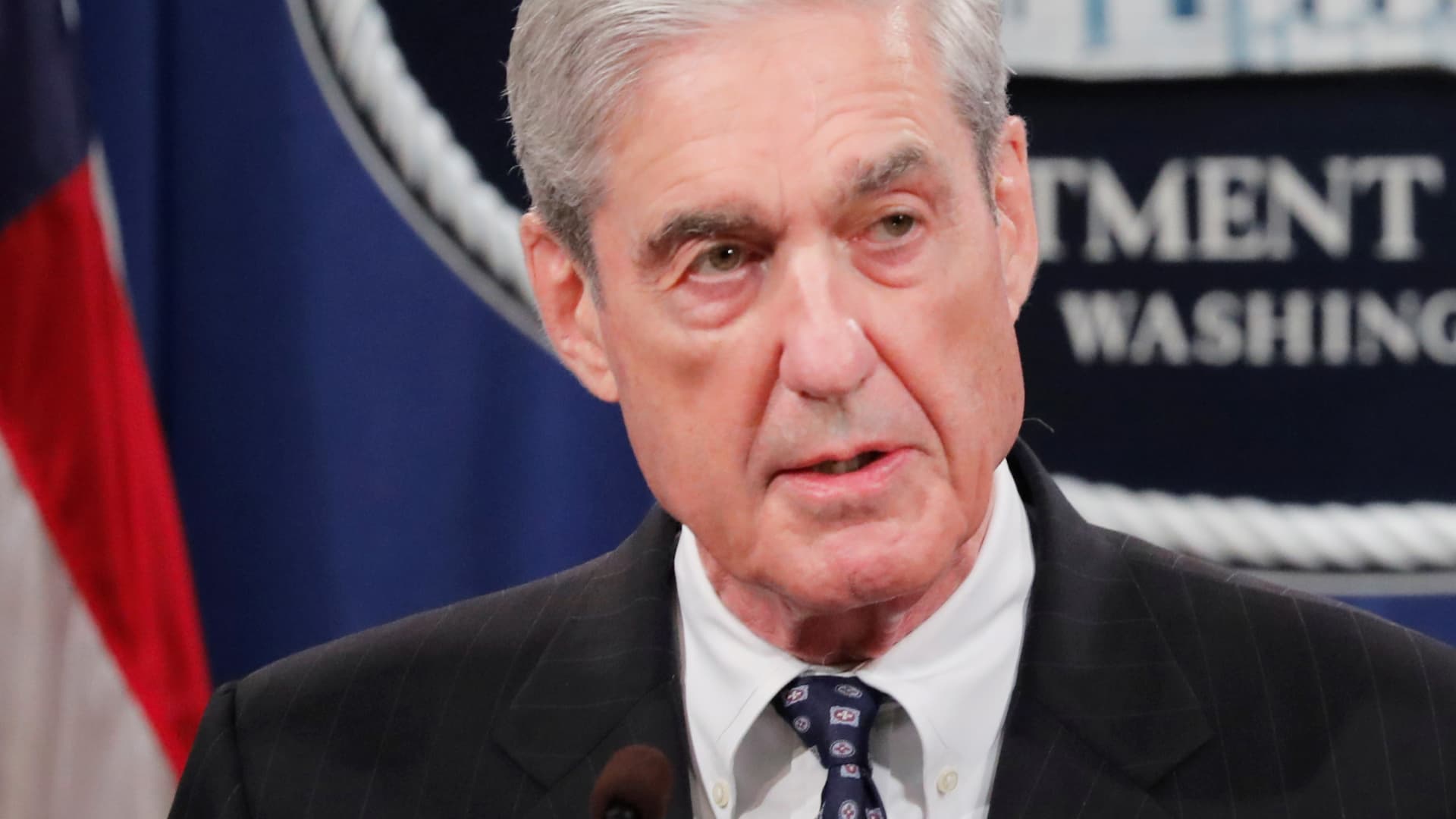




U.S. Secretary of Defense Pete Hegseth holds a briefing with Chairman of the Joint Chiefs of Staff General Dan Caine, amid the U.S.-Israeli war on Iran, at the Pentagon in Washington, D.C., U.S., March 19, 2026.
Evan Vucci | Reuters
A federal judge on Friday blocked the Trump administration’s restrictive Pentagon press access policy, which threatens journalists with being branded security risks if they seek information not authorized for public release.
The lawsuit by the New York Times in the Washington D.C. federal court alleged that policy changes by the Defense Department last year gave it free rein to freeze out reporters and news outlets over coverage the department did not like, in violation of the Constitution’s protections for free speech and due process.
President Donald Trump’s administration has denied that characterization and said the policy is reasonable and necessary to protect the military.
The changes approved under Defense Secretary Pete Hegseth in October 2025 state that journalists can be deemed security risks and have their press badges revoked if they solicit unauthorized military personnel to disclose classified, and in some cases unclassified, information.
Of the 56 news outlets in the Pentagon Press Association, only one agreed to sign an acknowledgment of the new policy, according to the Times’ lawsuit. Reporters who did not sign surrendered their press passes.
The Pentagon assembled a new press corps consisting of pro-Trump outlets and media personalities after the exodus of reporters, which the Times said was evidence that the policy is aimed at stifling unflattering coverage.
The policy states that publishing sensitive information “is generally protected by the First Amendment” but says soliciting that information could be considered by officials when determining whether a reporter poses a “security or safety risk.”
In its lawsuit, the Times said the policy unlawfully restricts essential newsgathering techniques and gives the Pentagon “unfettered” discretion to revoke passes, permitting it to impose the type of “viewpoint-based” press restrictions forbidden by the Constitution.
Justice Department lawyers acknowledged the policy was partly subjective but said press credentialing decisions were still governed by neutral, objective criteria. The government also said soliciting military personnel to commit a crime by disclosing unauthorized information was not legally protected speech.
The policy change was criticized by journalism advocates, who called it another attack on the free press by Trump and his administration.
The Associated Press has a pending lawsuit against Trump administration officials over its removal from the White House press corps after the news agency decided to continue using the Gulf of Mexico’s established name, while acknowledging Trump’s executive order calling on U.S. institutions to refer to it as the Gulf of America.
The AP said the decision was illegal viewpoint-based discrimination, while the government countered that it had wide discretion over press access decisions for non-public spaces.

