


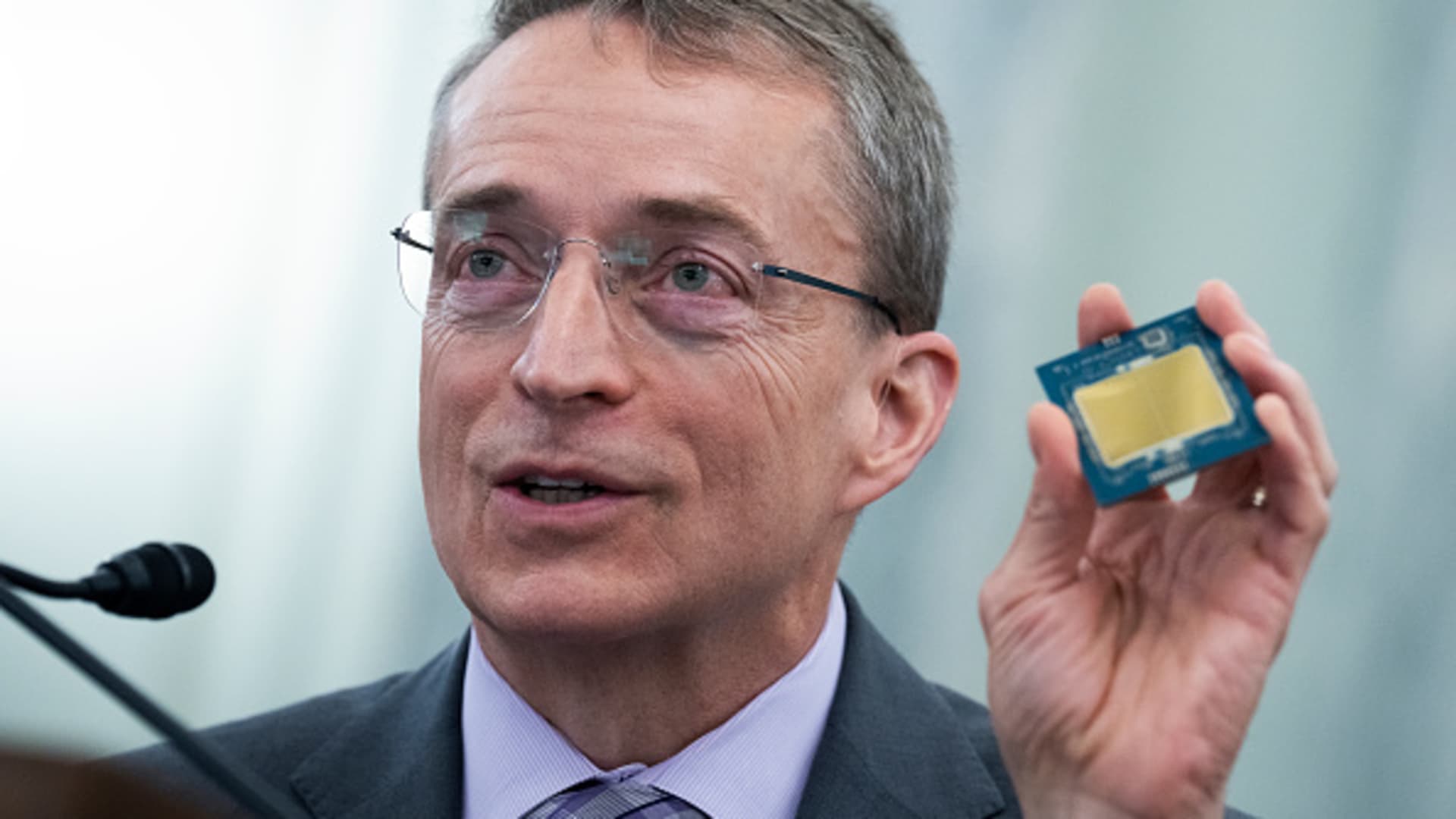
Pat Gelsinger, CEO, of Intel Corporation, holds a semiconductor chip while testifying during the Senate Commerce, Science, and Transportation hearing titled Developing Next Generation Technology for Innovation, in Russell Senate Office Building on Wednesday, March 23, 2022.
Tom Williams | CQ-Roll Call, Inc. | Getty Images
Intel CEO Pat Gelsinger told CNBC on Friday he now expects the semiconductor industry to suffer supply shortages until 2024.
In an interview on “TechCheck,” Gelsinger said the global chip crunch may drag on due to constrained availability of key manufacturing tools, serving as an obstacle to expanding capacity levels required to meet elevated demand.
“That’s part of the reason that we believe the overall semiconductor shortage will now drift into 2024, from our earlier estimates in 2023, just because the shortages have now hit equipment and some of those factory ramps will be more challenged,” Gelsinger said.
The CEO’s comments come one day after the California-based chipmaker offered a second-quarter forecast that was lighter than Wall Street expected. Its first-quarter earnings and revenue topped analyst expectations, however. Intel shares were down more than 6% Friday.
The need for more semiconductors has been growing for years, as the world becomes more digital and processing chips go into everything from smartphones to automobiles to washing machines.
The Covid pandemic caused an acute shortage, though, as factories were disrupted at the same time demand for consumer electronics took off. The shortage has had significant economic consequences and has contributed to the U.S. economy experiencing its hottest inflation since the early 1980s.
Since Gelsinger took over as CEO in February 2021, Intel has announced a slew of major investments to geographically diversify chip manufacturing. The company is spending heavily to build semiconductor factories, known as fabrication plants, in the U.S. and Europe. Most of the world’s manufacturing capacity is now concentrated in Asia.
“We’ve really invested in those equipment relationships, but that will be tempering the build out of capacity for us and everybody else, but we believe we’re positioned better than the rest of the industry,” Gelsinger said.

