


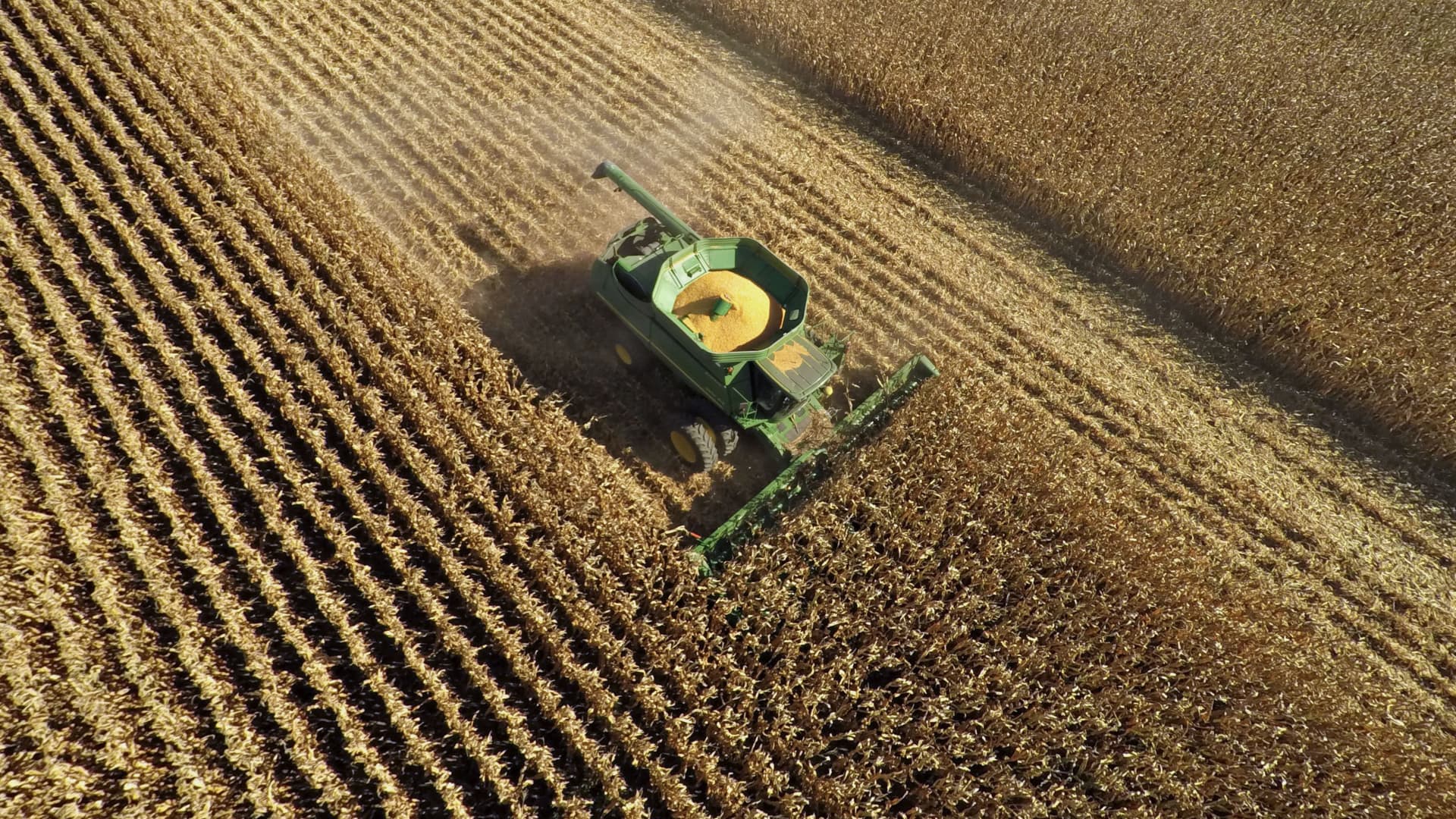
The United States has just about 90 million planted acres of corn, and there’s a reason people refer to the crop as yellow gold.
In 2021, U.S. corn was worth over $86 billion, according to calculations from FarmDoc and the United States Department of Agriculture.
According to the USDA, the U.S. is largest consumer, producer and exporter of corn in the world.
“We’re really good at [corn production],” Seth Meyer, chief economist at the USDA, told CNBC. “And that’s why you see big acres, big demand, export competitiveness.”
It’s not just what we eat.
“We turbocharged the value of corn through the application of science,” Scott Irwin, agricultural economist and professor at the University of Illinois, told CNBC.
Corn is in what we buy, including medications and textiles, and corn is turned into ethanol, which helps to fuel cars across the nation.
The rest of the world relies on U.S. corn, too.
At $2.2 billion in 2019, corn is the most heavily subsidized of all crops in the country.
“A lot of these subsidies … do get embedded into the cost of farmland and they essentially bid up the price of farmland marginally,” Joseph Glauber, senior research fellow at the International Food Policy Research Institute and former USDA chief economist, told CNBC. “So the benefits accrue largely to those who own land.”
The federal crop insurance program’s net spending is forecast to increase to nearly $40 billion from 2021 through 2025, according to the Congressional Budget Office.
At the same time, farmland values have reached all-time record highs.
“Do we get the corn acres because we’ve got the support, or do we have the support because we have the corn acres?” Meyer said, posing the chicken-and-egg question about the nation’s grain superpower.
Watch the video above to learn more about how corn fuels the U.S. economy from its people to its vehicles, the power of the corn belt states, the role of subsidies and where government policy for the industry may go from here.


