


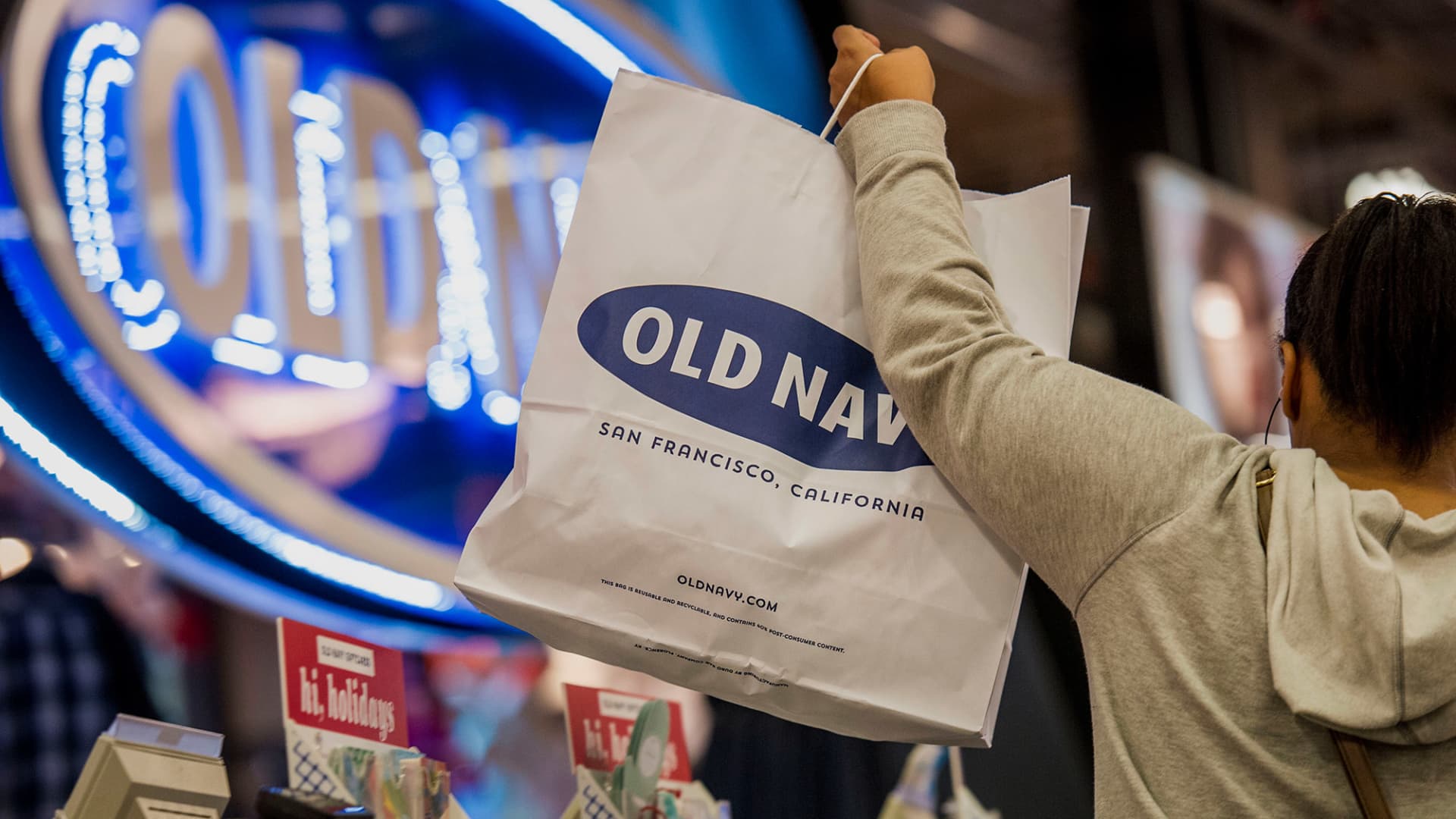
Gap Inc. on Thursday slashed its profit guidance for the full year as it reported a decline in fiscal first-quarter sales, which were dragged down by its Old Navy business.
Shares fell more than 10% after hours, after closing the day up 4%.
An imbalanced mix of clothing sizes, ongoing inventory delays and an uptick in price-lowering promotions put a dent in Old Navy’s performance during the quarter.
The lower-income consumer, which is Old Navy’s target customer, is starting to feel pinched by inflation, Chief Executive Officer Sonia Syngal told CNBC. Shoppers also have quickly shifted from buying up active clothes and fleece hoodies — Old Navy’s “sweet spot” — to looking for party dresses and office clothes, she said in a phone interview.
“We’re dealing with really volatile consumer signals — whether it was last year in Covid, or this year’s post-Covid behaviors,” said Syngal. “Over time, we’ll see customer preference for product types balanced out.”
The results from Gap signal a bigger divergence that is shaping up in the retail industry between those companies that cater to Americans with plenty of cash in their wallets and those that sell to cost-conscious shoppers who are seeking out deals.
As inflation heats up, the latter have been hit the hardest and have already started to curtail certain purchases. Meantime, the wealthiest consumers continue to splurge on expensive outfits, jewelry and luggage for summer vacations at stores including Nordstrom, Bloomingdale’s and Ralph Lauren.
In late April, Gap had warned of obstacles within the Old Navy business when it announced the departure of the unit’s chief executive officer, Nancy Green. Syngal has been helping to lead the discount apparel brand in the interim, as the company looks for a successor to Green.
For the fiscal year 2022, Gap now expects to earn between 30 cents and 60 cents per share, on an adjusted basis. That’s down from a prior range of 1.85 and $2.05. And well below analysts’ expectations for $1.34 per share, based on Refinitiv data.
Chief Financial Officer Katrina O’Connell said that Gap revised its outlook to account for the “executional challenges” at Old Navy, an uncertain macroeconomic environment and inflationary cost pressures. Plus, a slowdown in China that is hurting Gap’s namesake brand.
Gap swung to a net loss in the three-month period ended April 30 of $162 million, or 44 cents per share, compared with net income of $166 million, or earnings of 43 cents a share, a year earlier.
Revenue fell roughly 13% to $3.48 billion from $3.99 billion a year earlier. That came in slightly ahead of expectations for $3.46 billion.
Gap said its sales figure was hit by an estimated 5 percentage points related to the retailer lapping a year-ago lift from stimulus checks, in addition to roughly 3 percentage points from divestitures, store closures and transitioning its European business to a partnership model.
Overall, same-store sales fell 14% from the prior year, more than the 12.2% drop that analysts had been looking for. Within that figure, Gap said its online sales declined 17% and in-store sales dropped 10% versus last year.
Here’s a breakdown of same-store sales performance, by brand:
- Gap: Down 11% year over year
- Old Navy: Down 22% year over year
- Banana Republic: up 27% year over year
- Athleta: down 7%
Gap’s executives also acknowledged Thursday that a recent push to sell more plus-size items at Old Navy resulted in the retailer not carrying enough of its core sizes for customers, and too much of the extended sizes that weren’t being purchased.
“Our hindsight is that maybe with the inclusive sizing launch, we had gotten away from really messaging, the core of what works for Old Navy, which is that value messaging,” CFO O’Connell told CNBC in a phone call. “We really are trying to go back to that.”
Gap’s total inventories as of April 30 were up 34% compared with the prior year.
Those levels will start to come down throughout the year, O’Connell said, but could remain elevated in the second quarter.
“Our inventory levels were significantly higher than we had hoped,” O’Connell said, adding that nearly half of the unwanted increase was due to prolonged transit times that she expects aren’t getting better anytime soon.
This story is developing. Please check back for updates.


