


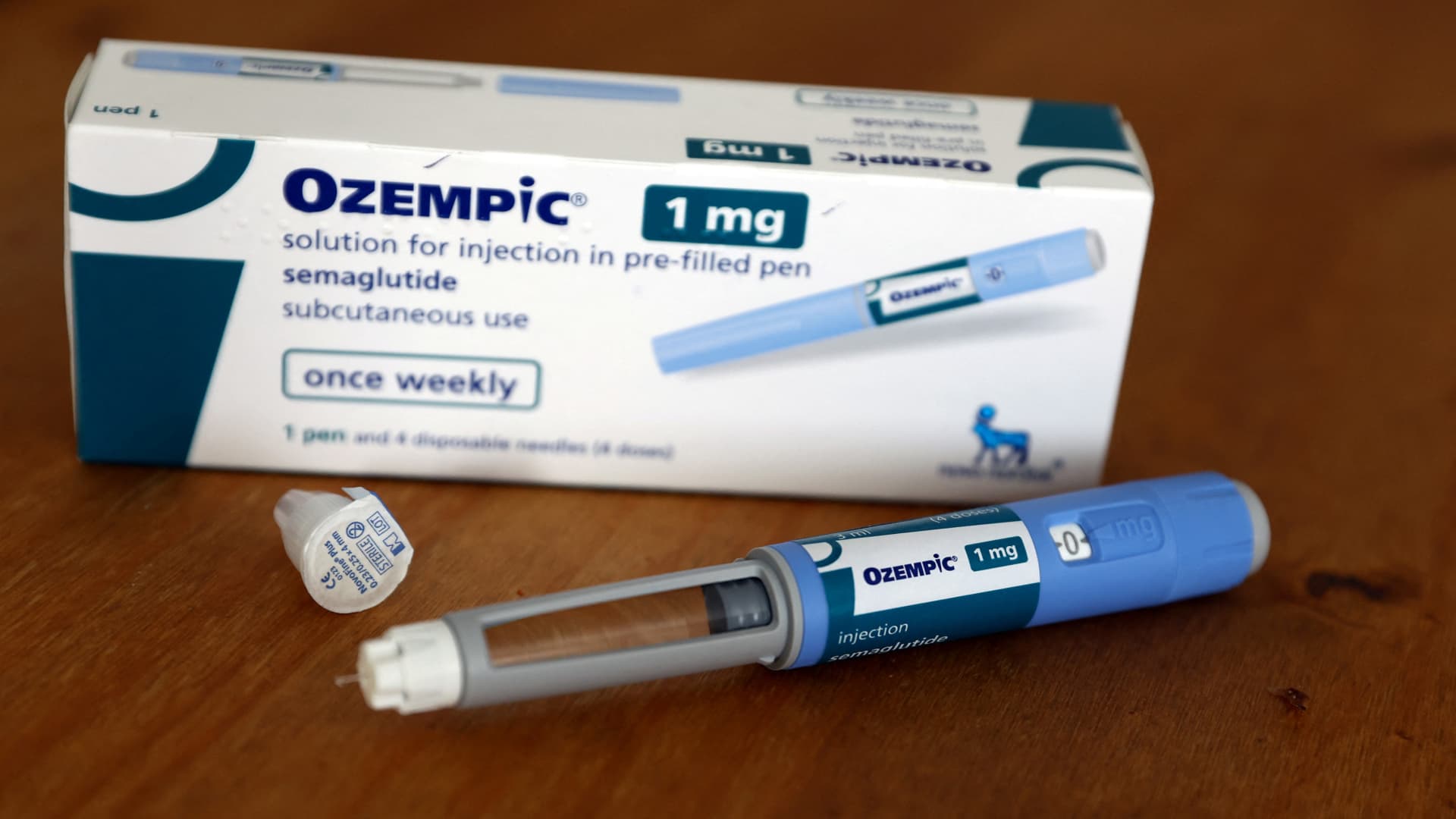
A box of Ozempic and contents sit on a table in Dudley, North Tyneside, Britain, October 31, 2023.
Lee Smith | Reuters
The Federal Trade Commission on Tuesday said it is challenging hundreds of alleged “junk” patents held by pharmaceutical companies for 20 brand-name drugs, including Novo Nordisk’s blockbuster drugs Ozempic, Saxenda and Victoza.
The FTC issued letters to 10 companies, warning them that certain drug patents were improperly listed. These companies include Novo Nordisk, AstraZeneca, Boehringer Ingelheim, Covis Pharma, GlaxoSmithKline, Novartis, Teva Pharmaceuticals and Amphastar Pharmaceuticals, as well as some of their subsidiaries.
Many of the drug patents are for Type 2 diabetes, along with asthma and inhalers for chronic obstructive pulmonary disease, or COPD.
Most top-selling medications are protected by dozens of patents covering various ingredients, manufacturing processes, and intellectual property. Generic drugmakers can only launch cheaper versions of a branded drug if the patents have expired or are successfully challenged in court.
“By filing bogus patent listings, pharma companies block competition and inflate the cost of prescription drugs, forcing Americans to pay sky-high prices for medicines they rely on,” FTC Chair Lina Khan said in a release. “By challenging junk patent filings, the FTC is fighting these illegal tactics and making sure that Americans can get timely access to innovative and affordable versions of the medicines they need.”
The FTC also notified the Food and Drug Administration about the challenges. The FDA manages patent listings for approved drugs on a document called the Orange Book.
The FTC first challenged dozens of branded drug patents last fall, leading three drugmakers to comply and delist their patents with the FDA. Five other companies did not.
The Tuesday announcement expands the Biden administration’s effort to crack down on alleged patent abuses by the pharmaceutical industry. The FTC has argued that drugmakers are needlessly listing dozens of extra patents for branded medications to keep their drug prices high and stall generic competitors from entering the U.S. market.
The patent disputes add to a broader effort by the Biden administration to make health care more affordable for Americans – a key pillar of President Joe Biden’s 2024 reelection campaign.


