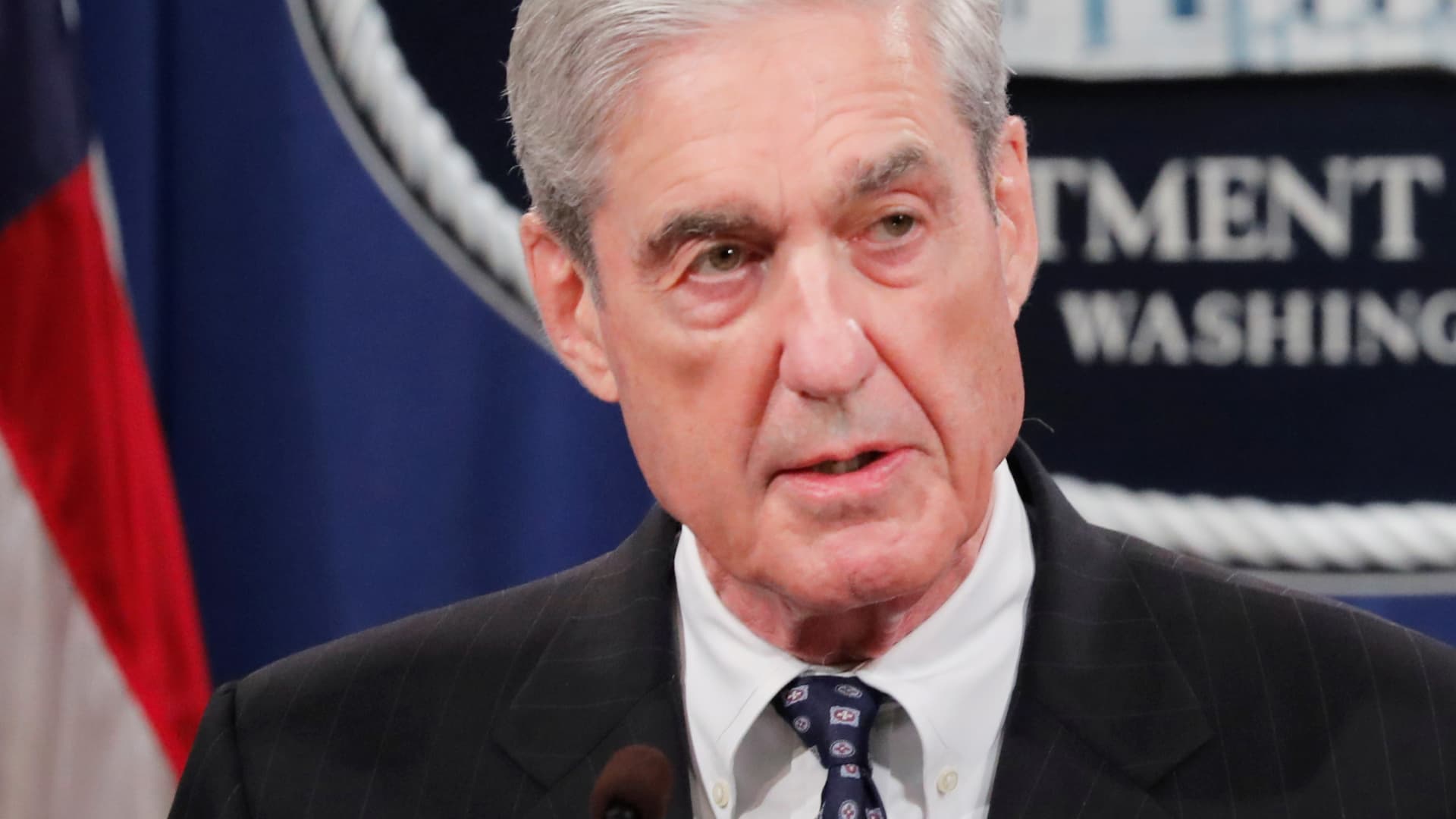
Emmanuel Macron, president of France, arrives at the Stade de France prior to the Closing Ceremony of the Olympic Games Paris 2024 at the Stade de France on August 11, 2024 in Paris, France.
Tom Weller/voigt | Getty Images Sport | Getty Images
Time is running out on the so-called “Olympic political truce” declared by French President Emmanuel Macron in late July, pushing the country’s rocky political landscape back into focus.
The snap legislative election called by Macron for early July — just before Paris hosted the world’s biggest sporting event — resulted in a hung parliament, with no party or alliance securing a majority. The left-wing New Popular Front alliance won the highest number of seats and prevented a much-discussed victory for the far-right National Rally.
For the past few weeks, however, the nation has been largely united by sporting spirit.
The usual stream of squabbling from politicians across the spectrum has dried up, and a “caretaker” government has remained nominally in place. The National Assembly’s next nine-month session is not due to begin until Oct. 1.
Macron is set to remain president until his term runs out in 2027, although much of his domestic political capital has been expended after his Renaissance party’s electoral battering.
Prime minister tussles
One of the key questions back on the agenda now is who Macron will appoint as the new prime minister — who leads the French government, nominates ministers and instigates legislation — after the resignation of his ally Gabriel Attal.
Macron is keeping his cards close to his chest, and has not commented on Lucie Castets, the little-known candidate nominated for the role by New Popular Front after much debate.
While theoretically free to appoint anyone to the role, and with no obligation to choose a candidate from the party with the most seats, an unpopular choice could be ousted by a vote of no confidence in parliament. Macron cannot dissolve the National Assembly and call another election for another year.
Elsa Clara Massoc, assistant professor of International Political Economy at the University of St. Gallen, said the situation was “unprecedented” and looked to be a potential “dead-end” because of the extent of division in the new parliament.
“Under the previous legislature, Macron didn’t have an absolute majority but still more than the Left today and could count on the support of Conservatives to not endure a censor motion,” she told CNBC by email.
She highlighted issues including the fact that New Popular Front’s 178 seats are well short of the 289 needed for a majority and its candidate Castets is likely to be rejected by other parties.
Meanwhile, Macron’s own politics and allied government have been “widely rejected by the French,” Massoc added, and no party will form an alliance with far-right National Rally. Even within the leftist grouping, parties are divided and some will refuse any sort of alliance with centrists, she said.
One outcome could see the right-wing Les Republicains willing to form a “passive majority” with the center, but the former appears reluctant to lose “what remains of its specificity,” Massoc added, and opposition in parliament would still be high.

There are further questions over how such a divided parliament will agree on any legislation, with approval of the 2025 budget looming. Even in 2022, Macron resorted to using a special constitutional power to pass the next year’s spending bill.
There is also likely to be fierce debate over how — or whether — to take action to tackle France’s huge debt pile, and whether flagship Macronist policies such as raising the national retirement age can or should be unwound.
Under the French political system, the parliament has relatively little power and between 2017 and 2022, 65% of texts adopted were laws proposed by the government rather than parliament, Massoc noted.
From a markets perspective, the French CAC 40 index has fallen over 4.5% since the result of the election on July 7. But analysts say a divided parliament could actually lead to more stability in stocks and bonds as it will likely prevent the implementation of some parties’ more populist policies.
Political parties have their sights set firmly on the 2027 presidential race — which Macron cannot run in — and very few will want to be responsible for cutting public spending in order to tackle the public deficit, Renaud Foucart, senior lecturer in economics at Lancaster University, told CNBC by phone.

For now, uncertainty reigns and Macron’s strategy appears to be to drag things out for as long as possible, he continued.
From a personal perspective, even if he is a “lame duck” leader on the home front, Macron will likely be happy taking a more international focus and continue to try to influence European politics, Foucart said.
“His project that included transforming the labor market and deregulating the economy is basically over — he did what he wanted to do,” he continued.
Mujtaba Rahman, managing director for Europe at Eurasia Group, said in a Monday note that Macron has had both failures and successes but gained little credit for his domestic wins, including reducing high unemployment.
The left wing focuses on his lowering of taxes for the rich and “assaults on the French welfare state,” while the right wing points to high immigration numbers and the violent crime rate, he said.
Macron has also ultimately “failed to sell his vision of a stronger France in a stronger Europe to a majority of French voters,” Rahman said.
“Seven years ago, Macron pledged to lead France to a promised land beyond the sterile alternation of left and right. Instead, he has taken France into a political quicksand with no secure government, a record budget deficit, and 3 trillion [euros, or $3.28 billion] in accumulated debt,” Rahman said.
Disclosure: CNBC parent NBCUniversal owns NBC Sports and NBC Olympics. NBC Olympics is the U.S. broadcast rights holder to all Summer and Winter Games through 2032.