


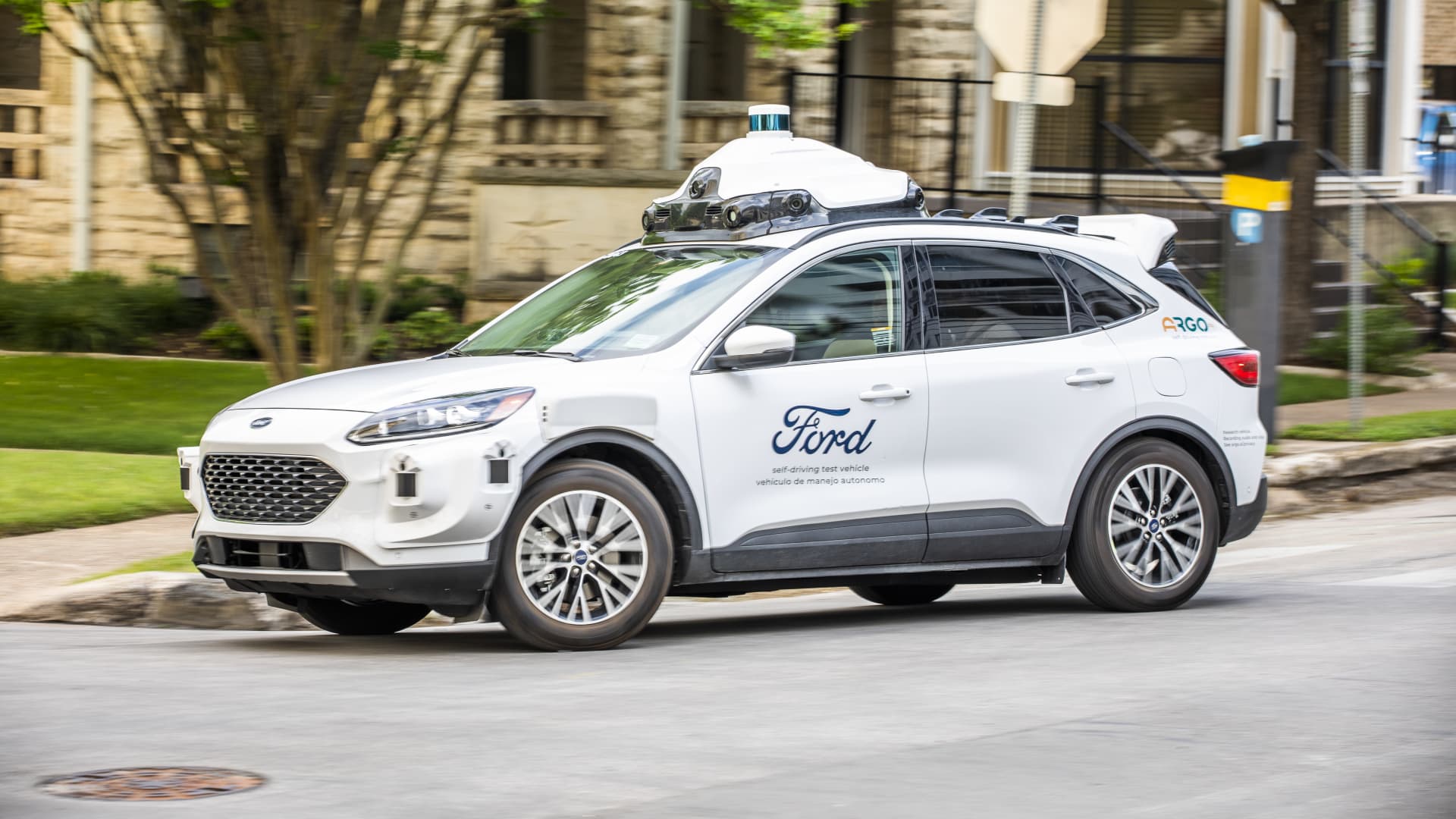
Argo AI begins driverless operations in Miami and Austin.
Courtesy: Argo AI
Robotaxi start-up Argo AI said Tuesday it has begun operating its autonomous test vehicles without human safety drivers in two U.S. cities — Miami and Austin, Texas — a major milestone for the Ford- and Volkswagen-backed company.
For now, those driverless vehicles won’t be carrying paying customers. But they will be operating in daylight, during business hours, in dense urban neighborhoods, shuttling Argo AI employees who can summon the vehicles via a test app.
CEO Bryan Salesky said that the company has been working to develop self-driving vehicles that can operate safely in cities since its founding in 2016.
“From day one, we set out to tackle the hardest miles to drive — in multiple cities — because that’s where the density of customer demand is, and where our autonomy platform is developing the intelligence required to scale it into a sustainable business,” Salesky said.
Argo has been testing its self-driving technology on streets in eight cities in the U.S. and Europe, using heavily modified Ford and Volkswagen vehicles with, until now, human safety drivers on board.
Most of Argo’s robotaxis still carry only Argo AI employees. But since December, some of the company’s vehicles have been available to passengers in Miami Beach via Lyft’s ridesharing network.
Lyft owns about a 2.5% stake in Argo AI. The vehicles available via Lyft will continue to have human safety drivers for the time being, the company said.
Argo AI is one of several companies working to deploy robotaxis at scale in cities in the U.S. and elsewhere – none have yet reached the point of carrying paying passengers around the clock, in large volume, in busy urban neighborhoods.
General Motors-backed Cruise, a key Argo AI rival, has begun offering driverless taxi services to the public in San Francisco, but the service is currently limited to late-night hours and the company isn’t yet charging for the rides. Waymo, the Alphabet subsidiary that grew out of the pioneering Google Self-Driving Car project, is operating driverless taxis with passengers in and around Phoenix, Arizona.


