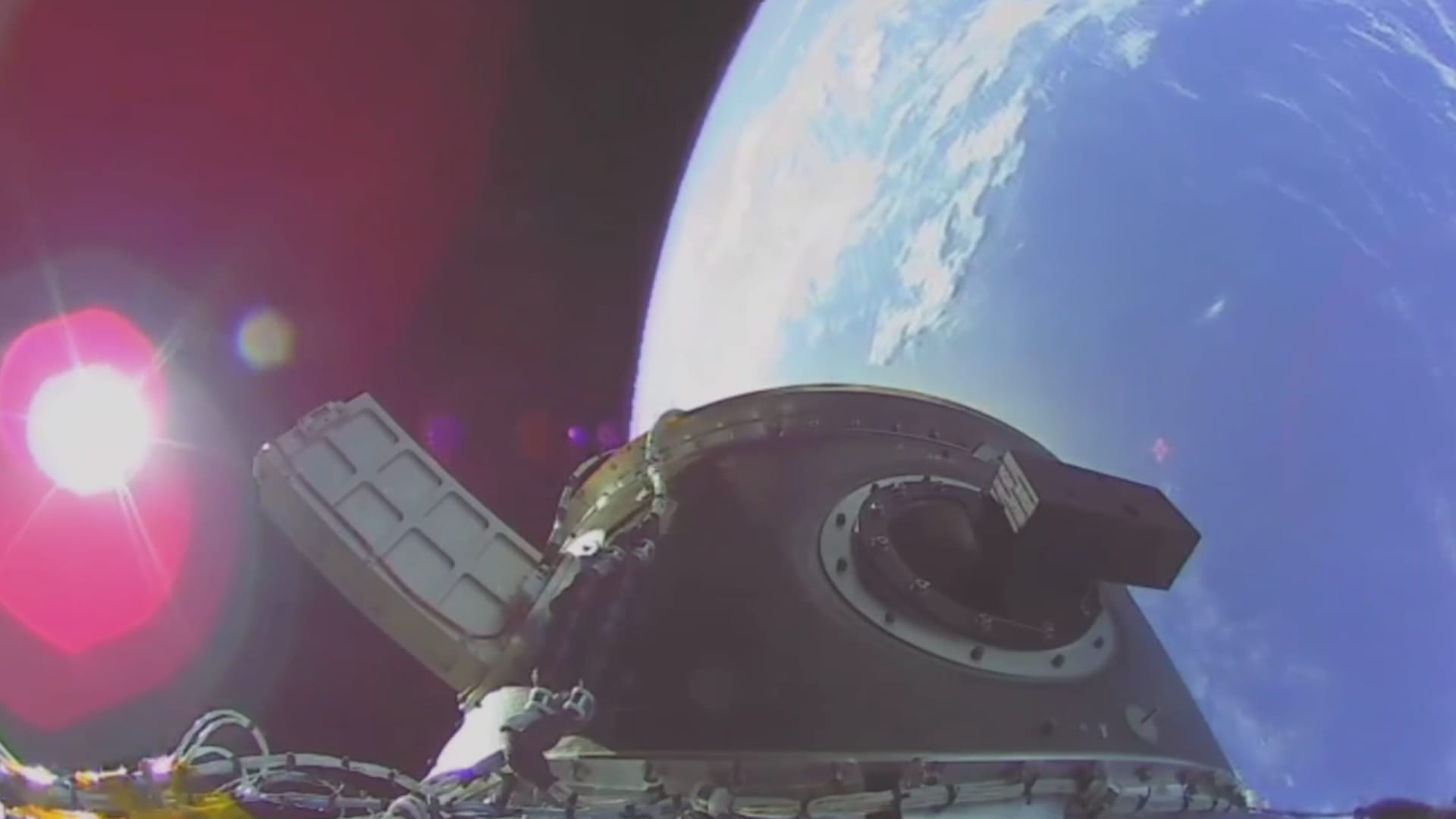
The view from the upper stage of the Alpha rocket after reaching orbit on Oct. 1, 2022.
Firefly Aerospace
Private venture Firefly Aerospace reached orbit with its Alpha rocket for the first time on Saturday, a milestone in the company’s development that sees it join an increasingly competitive U.S. launch market.
Firefly is the fifth U.S. rocket builder to reach orbit in the past 15 years — joining a select group that includes SpaceX, Rocket Lab, Virgin Orbit and Astra.
“It’s a fantastic group to be a part of … but there’s nobody else in that group that has the capability of the rocket we just put into space,” CEO Bill Weber told CNBC. “There’s an open for business sign on Firefly.”
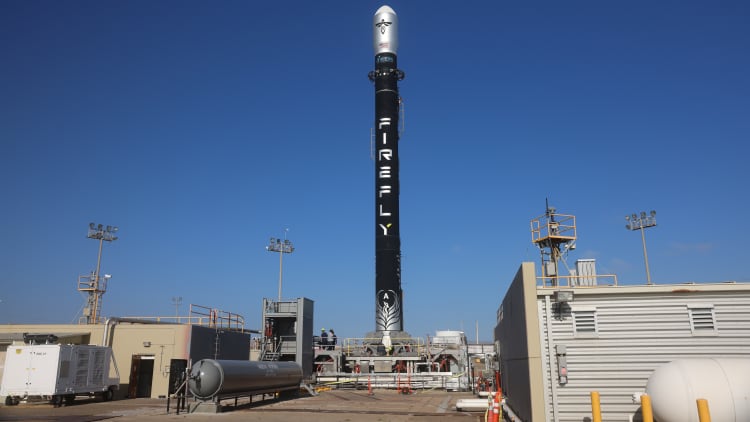
Standing at 95 feet tall, Firefly’s Alpha rocket is designed to launch as much as 1,300 kilograms of payload to orbit – at a price of $15 million per launch. This puts Firefly in the “medium-lift” category of rockets, in between “small” launchers and the “heavy” rockets.
“There’s a business case that is just screaming to be addressed” in the middle part of the launch market, Weber said.
Firefly launched the mission, its second attempt to reach orbit, from California’s Vandenberg Space Force Base, with the Alpha rocket delivering three satellite payloads. The success comes a year after its first attempt failed mid-flight.
Firefly Aerospace’s Alpha rocket on the launch pad at Vandenberg Space Force Base.
Andrew Evers
Firefly has another Alpha launch scheduled for this year, and plans to launch as many as six in 2023 and 12 in 2024.
“We don’t want to just do this once. We want to do this once a month and then ultimately once a week,” Weber said. “There is more demand in the market than rockets we’re going to build and that’s a great place to be from a growth perspective.”
Sign up here to receive weekly editions of CNBC’s Investing in Space newsletter.
Weber was named Firefly CEO just a month ago, with company co-founder Tom Markusic stepping down earlier this year, shortly after private equity firm AE Industrial Partners acquired a significant stake in the company. Weber was previously CEO of KeyW, a cybersecurity company sold to Jacobs in 2019.
The company has a variety of plans for expansion, including a partnership struck this summer with Northrop Grumman to move the contractor’s Antares rocket work to the U.S. from Russia and Ukraine. It also plans to build a larger rocket called “MLV.”
Firefly is building out additional product lines as well, including its “Blue Ghost” lunar lander and a space utility vehicle, or “space tug,” to transport satellites into unique orbits after a launch. Weber said the first Blue Ghost mission to the moon is currently scheduled for May 2024.
“We’re going to be one of the first missions, if not the first mission, for NASA that puts a spacecraft back on the moon,” Weber said.
With the funding its raised previously, Firefly’s CEO said the company is capitalized to “do the things that we need to do in 2022 and 2023.” But Alpha reaching orbit gives the company a new status for potential investors.
“[Saturday] morning changed a lot of things for this company, on a lot of different fronts,” Weber said.