


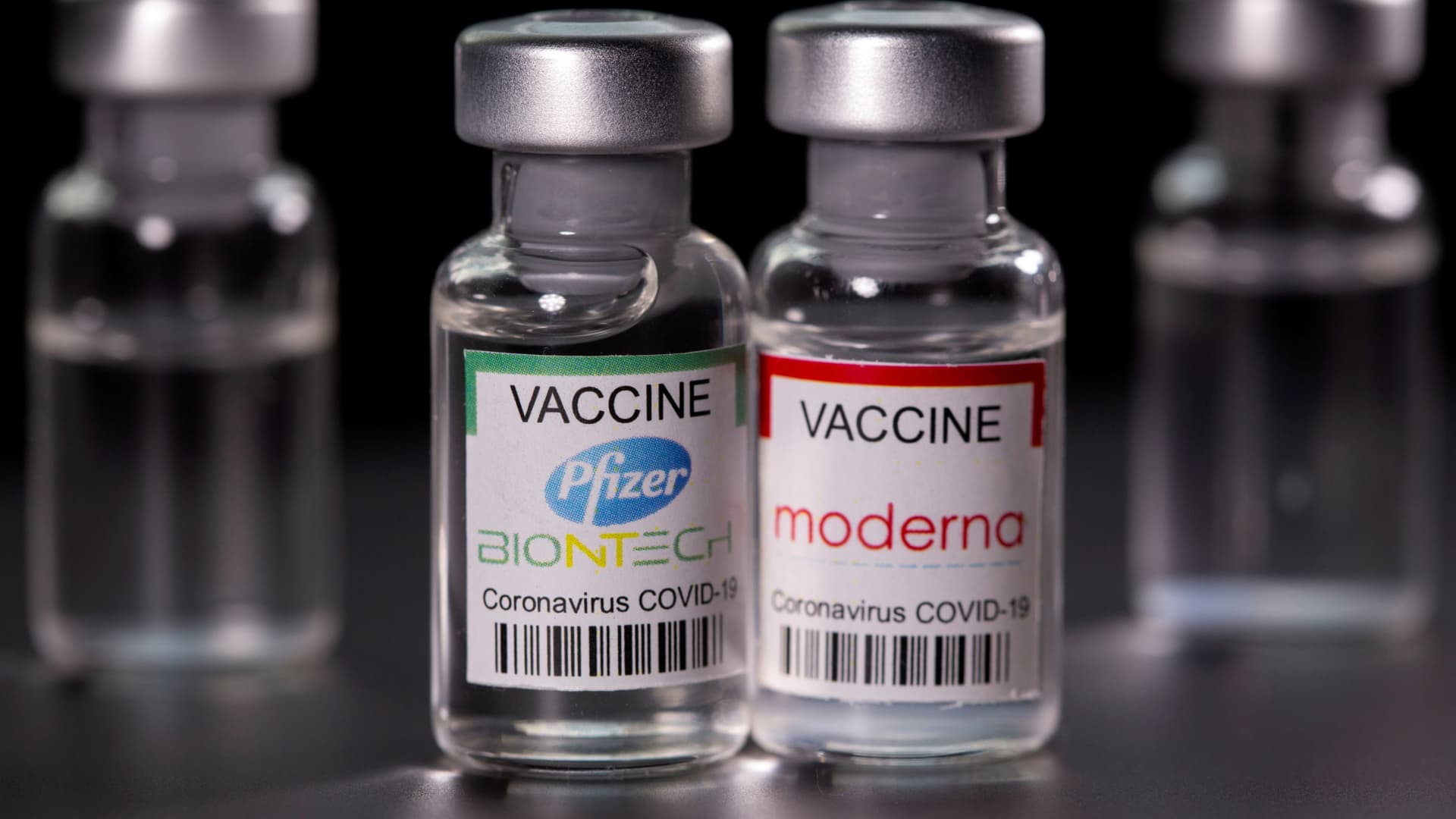
The Food and Drug Administration on Friday authorized Moderna’s and Pfizer’s Covid-19 shots for children as young as 6 months old, which makes nearly every person in the U.S. now eligible for vaccination.
The FDA decision comes after its committee of independent vaccine experts voted unanimously to recommend the shots after weighing their safety and effectiveness during an all-day meeting Wednesday that was open to the public.
The FDA authorized Pfizer’s three-dose vaccine for children 6 months to 4-years-old, and Moderna’s two-dose vaccine for children 6 months to 5-years-old. Children under age 5 were the only people left in the U.S. not eligible for vaccination. Many parents have been waiting months for the FDA to authorize the vaccines for their kids.
The FDA on Friday also authorized Moderna’s vaccines for kindergarteners through high schoolers. Previously, Pfizer’s vaccine was the only Covid shot available for this age group.
However, there is still one more step left before vaccinations of children under age 5 can begin. The Centers for Disease Control and Prevention’s committee will meet on Saturday to vote on guidelines for pharmacies and doctors’ offices. CDC Director Dr. Rochelle Walensky then has to sign off on those guidelines before kids can start receiving the shots.
The White House expects vaccinations to begin as soon as Tuesday. Appointments might be limited initially but every parent who wants to get their child vaccinated should be able to do so within weeks, according to Dr. Ashish Jha, who oversees the Biden administration’s Covid response.
The federal government has made 10 million Pfizer and Moderna doses available to state and local authorities.
Dr. Arnold Monto, acting chair of the FDA committee, said it took longer for the agency to authorize the shots for infants through preschoolers than for other ages because they are a vulnerable group that requires special care to make sure the shots were safe and effective.
Although Covid is generally less severe in children than adults, hospitalizations of kids under age 5 spiked during the winter omicron wave, hitting the highest level of the pandemic. Covid has killed more than 200 six-month to 5-year-olds since January 2020, according to the CDC.
Pfizer vs. Moderna shots
Pfizer’s and Moderna’s vaccines for infants through preschoolers differ in the number of shots they use, the dosage level and the eligibility age to receive them. Pfizer’s vaccine also appeared more effective than Moderna’s shots with children under 5, though the data is preliminary.
Pfizer’s vaccine is administered in three doses for children 6 months to 4 years old. The shots are dosed at 3 micrograms, one-tenth the level of what adults receive. Three shots were about 75% effective at preventing infection from omicron in 6-month- to 2-year-olds and 82% effective in 2- to 4-year-olds.
However, it is crucial that parents who opt for Pfizer make sure their kids get the third shot to have protection against the virus. Two doses were only about 14% effective at preventing infection for kids under age 2, and 33% effective for those ages 2 to 4.
Moderna’s vaccine is administered in two doses for children 6 months to 5 years old. The shots are dosed at 25 micrograms, one-fourth the level that adults receive.
Moderna’s vaccine was about 51% effective at preventing infection from omicron for kids 6 months to 2 years old, and about 37% effective for kids ages 2 to 5 years old. However, the company expects the vaccine to provide strong protection against severe illness because the kids had higher antibody levels than adults who received two doses.
The most common side effects from the vaccines were pain at the injection site, irritability and crying, loss of appetite and sleepiness, according to the FDA. Very few children who received either shot developed a fever higher than 102 degrees Fahrenheit, and there were no cases of myocarditis, a type of heart inflammation, in Pfizer’s or Moderna’s trials.


