


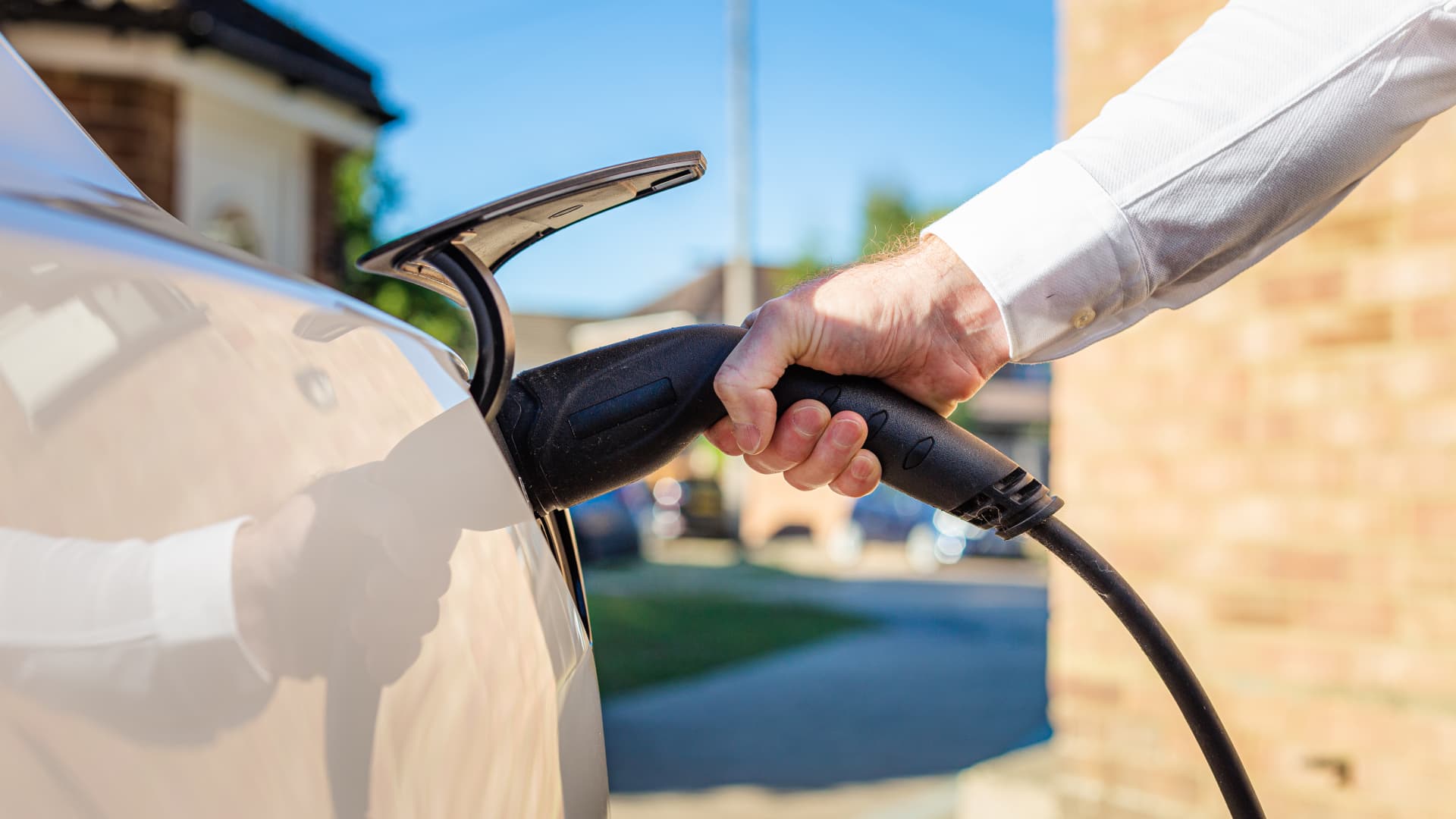
The U.K. has laid out plans to ramp up the number of electric vehicles on its roads over the next few years.
Coldsnowstorm | E+ | Getty Images
Electric car drivers in the U.K. have seen the cost of using a public, “rapid” charger on a pay-as-you-go tariff rise by 42% since May, according to data released Monday.
Figures from RAC Charge Watch — which is part of the RAC, a motoring organization — show that it now costs EV drivers using the above infrastructure an average of 63.29 pence (72 cents) a kilowatt hour to charge their vehicle.
Breaking the figures down, the RAC said this meant an 80% rapid charge of a “typical family-sized electric car” using a 64 kWh battery cost, on average, £32.41 (around $34.87).
The RAC said the increase was down to “the soaring costs of wholesale gas and electricity.” It added that those using “ultra-rapid” chargers had also seen average charging costs jump by 25%.
The analysis also showed that “a driver exclusively using a rapid or ultra-rapid charger on the public network will now pay around 18p per mile for electricity,” the RAC said.
“This compares to 19p per mile for a petrol [gasoline] car and 21p per mile for a diesel one, based on someone driving at an average of 40 miles to the gallon,” it went on to state.
Despite the above, the RAC noted that many EV users would for the most part charge at their home, where electricity costs less.
With the U.K. government’s Energy Price Guarantee set to come into force imminently, the price per mile for an average-sized electric vehicle would come in at roughly 9p for charging at home, if driven in a reasonably efficient manner. An 80% charge at home would cost £17.87, the RAC said.
“For those that have already made the switch to an electric car or are thinking of doing so, it remains the case that charging away from home costs less than refuelling a petrol or diesel car, but these figures show that the gap is narrowing as a result of the enormous increases in the cost of electricity,” Simon Williams, the RAC’s electric vehicle spokesperson, said.
“These figures very clearly show that it’s drivers who use public rapid and ultra-rapid chargers the most who are being hit the hardest,” he added.
The U.K. wants to stop the sale of new diesel and gasoline cars and vans by 2030. It will require, from 2035, all new cars and vans to have zero-tailpipe emissions.
With more EVs set to arrive on Britain’s roads in the years ahead, the RAC is backing calls for a sales tax cut in electricity sold at public chargers in order to redress what it sees as an imbalance between public and private charging.
“While the Government’s Energy Bill Relief Scheme announced last week should help prevent charging costs from spiralling still further, it remains the case that drivers using public chargers unfairly pay 20% in VAT [sales tax] for electricity they buy, compared to charging at home where it’s just 5%,” it said, adding that it was supporting a campaign for a 5% rate for both public and private charging.
In a statement sent to CNBC, a government spokesperson said EVs continued to “offer opportunities for savings against their petrol and diesel counterparts with lower overall running costs thanks to cheaper charging, lower maintenance costs and tax incentives.”
“We want consumers to have the confidence to make the switch to cleaner, zero emissions cars, and that is why we continue to support the growth of our world-leading charging network and have pledged £1.6bn since 2020 to delivering chargepoints across the country,” the spokesperson added.
With European economies facing an energy crisis and soaring prices over the coming months, there have been concerns in some quarters that the increasing cost of charging an EV will disincentivize uptake among consumers.
Speaking to CNBC earlier this month, the head of equity strategy at Saxo Bank said “the cost advantage for electric vehicles versus a gasoline car” was “fast diminishing” in Europe.
“I’m really wondering to what degree that will begin to impact sales for EVs,” Peter Garnry said.

