


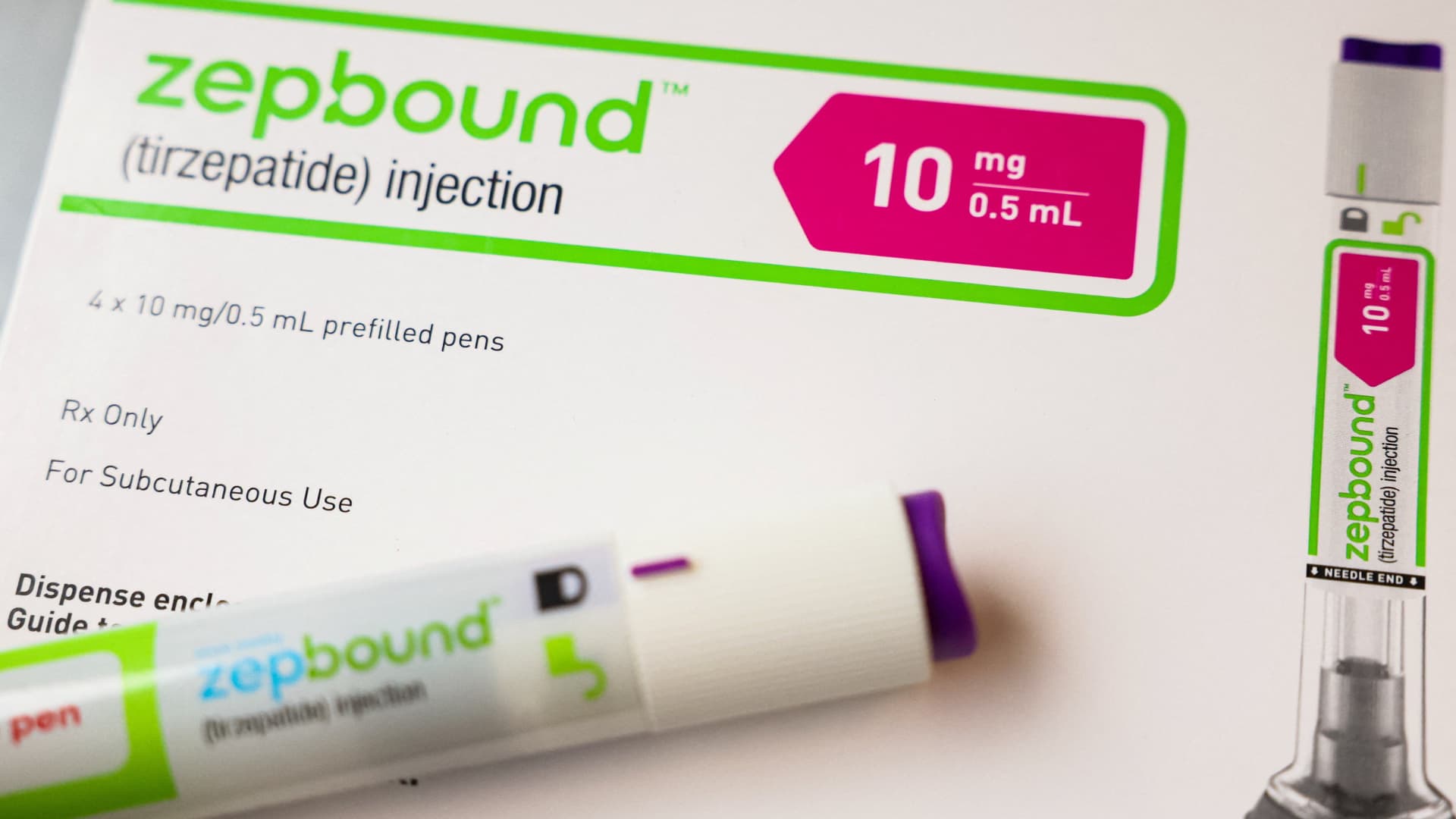
An injection pen of Zepbound, Eli Lilly’s weight loss drug, is displayed in New York City, U.S., December 11, 2023.
Brendan McDermid | Reuters
Eli Lilly on Wednesday said its highly popular weight loss drug Zepbound showed the potential to treat patients with the most common sleep-related breathing disorder in two late-stage clinical trials.
The initial results add to the long list of potential health benefits of weight loss and diabetes treatments, which have skyrocketed in demand over the last year despite their high prices and spotty insurance coverage.
Zepbound was more effective than a placebo at reducing the severity of obstructive sleep apnea, or OSA, in patients with obesity after a year, according to preliminary data from both trials. The pharmaceutical giant said it plans to present the results at an upcoming medical conference and submit it to the U.S. Food and Drug Administration and regulators in other countries in the middle of the year.
Eli Lilly previously announced that the FDA granted Zepbound “fast track designation” for patients with moderate-to-severe OSA and obesity. That designation expedites the review of drugs that treat a serious or life-threatening condition and fill an unmet medical need.
The results are an early sign of hope for the estimated 80 million patients in the U.S. suffering from OSA, which refers to interrupted breathing during sleep due to narrowed or blocked airways. Around 20 million of those people have moderate-to-severe forms of the disease, but 85% of OSA cases go undiagnosed, according to Eli Lilly.
OSA can lead to excessive daytime sleepiness, loud snoring and can contribute to serious complications, including hypertension, stroke and heart failure. Patients with the condition have limited treatment options outside of cumbersome and often uncomfortable machines that provide positive airway pressure, or PAP, to allow for normal breathing.
“Addressing this unmet need head-on is critical, and while there are pharmaceutical treatments for the excessive sleepiness associated with OSA, [Zepbound] has the potential to be the first pharmaceutical treatment for the underlying disease,” Dr. Jeff Emmick, Eli Lilly’s senior vice president of product development, said in a release on Wednesday.
Zepbound has slipped into shortages since receiving approval in the U.S. for weight management in November. The active ingredient in Zepbound, known as tirzepatide, is also approved under the brand name Mounjaro for diabetes.
Initial trial results
The two phase three trials, both called SURMOUNT-OSA, tested Zepbound in two groups of patients. Notably, 70% of participants across the studies were men.
Researchers specifically examined how much the weekly injection reduced the so-called apnea-hypopnea index, or AHI, which records the number of times per hour a person’s breathing shows a restricted or completely blocked airway. The index is used to evaluate the severity of obstructive sleep apnea and the effectiveness of treatments for the condition.
In both sub-studies, Zepbound was superior to placebo in reducing AHI, which was the main goal of the trials.
The first study evaluated the drug in adults with moderate to severe obstructive sleep apnea and obesity who were not on PAP therapy.
People who took Zepbound had an average of 27.4 fewer AHI events per hour at 52 weeks, compared to an average reduction of 4.8 events per hour for the placebo.
Zepbound also met the trial’s second goal, leading to an overall AHI reduction of 55% compared to a decrease of 5% for the placebo.
The second study tested Zepbound in adults with the same conditions, but those patients were on and planned on continuing PAP therapy.
People who took Zepbound had an average of 30.4 fewer AHI events per hour at 52 weeks, compared to an average reduction of 6 events per hour for the placebo.
Zepbound led to an overall AHI reduction of nearly 63% compared to a decrease of more than 6% for the placebo.
Across the two studies, Zepbound helped patients lose around 20% of their weight. But Eli Lilly noted that men are known to achieve less weight loss than women with therapies like Zepbound.
Eli Lilly’s Zepbound works by imitating two naturally produced gut hormones called GLP-1 and GIP. GLP helps reduce food intake and appetite. GIP, which also suppresses appetite, may also improve how the body breaks down sugar and fat.
Notably, Eli Lilly’s main rival Novo Nordisk is no studying its own weight loss and diabetes drugs in patients with sleep apnea.


