



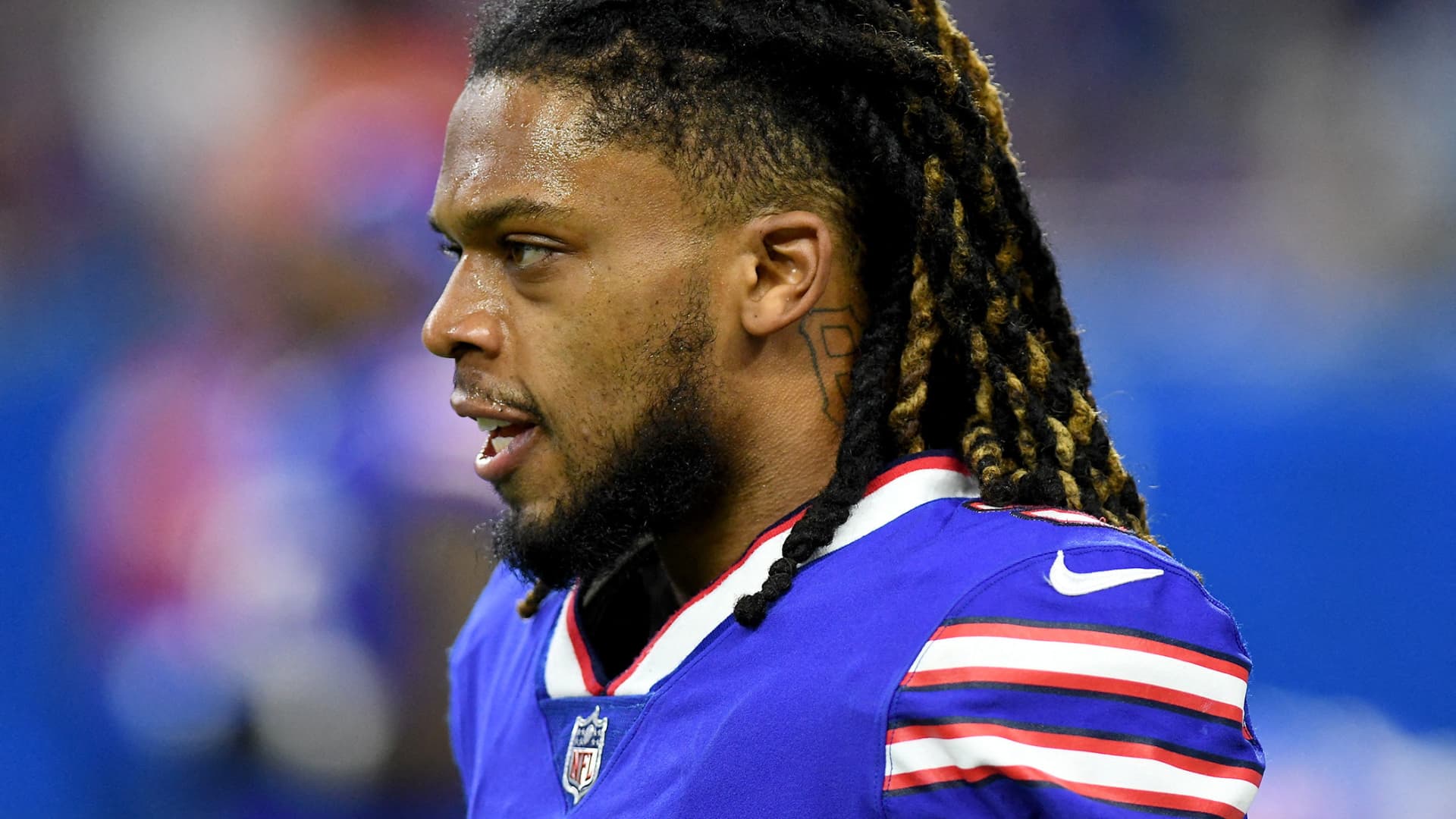

Damar Hamlin’s on-field cardiac arrest at a “Monday Night Football” game in January was a moment of national trauma that occurred on live television. His recovery from the near-death experience and his poise as an individual ultimately inspired the nation. Still, his decision to play in the National Football League again after the personal medical trauma he experienced left many wondering how he was able to find the courage to return.
In a recent interview at the CNBC CEO Council Summit, Hamlin — who already has returned to recent practices with the Bills — made clear that his decision to return to the NFL was never really in doubt based on the approach he has always taken in life, and based on what football has always meant to him.
“Football’s always been my peace. It’s always been my escape from the world. And that was kind of like where I overcome my fears the most in my life,” said Hamlin at the CNBC CEO event.
Hamlin noted that he also reviewed statistics in making the decision.
Hamlin experienced commotio cordis, a rare cardiac condition that occurs when there is blunt impact to the chest at the same moment as the heart is preparing to contract. If the physical blow hits during a narrow window in the heart rhythm — a period of time as brief as 20 to 40 milliseconds — it can disrupt the heartbeat and cause sudden cardiac arrest. There are fewer than 10 cases of commotio cordis per year, according to the American Heart Association, and most cases occur in young male athletes.
Doctors are confident that Hamlin is in good enough health to play football again, and it is very rare for someone to suffer from commotio cordis twice, or for survivors to be more likely to experience other heart-related issues, according to the American Heart Association. Commotio cordis is not linked to underlying cardiac issues or heart disease.
Research conducted by Massachusetts General Hospital, as well as numerous other studies conducted around the world, have found that one in four cardiac arrest survivors can develop major post-traumatic stress, which often leads them to avoid situations that can remind survivors of the health crisis.
Hamlin told CNBC he is focused on the future. “You know, try to look at it as adversity and not so much getting caught up in what happened. Trying to be focused on the growth from what happened, you know, not kinda trying to own the situation, just trying to grow from it,” Hamlin said.
Watch the full video clip above from Hamlin’s interview with NBC Sports’ Maria Taylor at the CNBC CEO Council Summit to hear the football player in his own words on what returning to the NFL means to him.


