


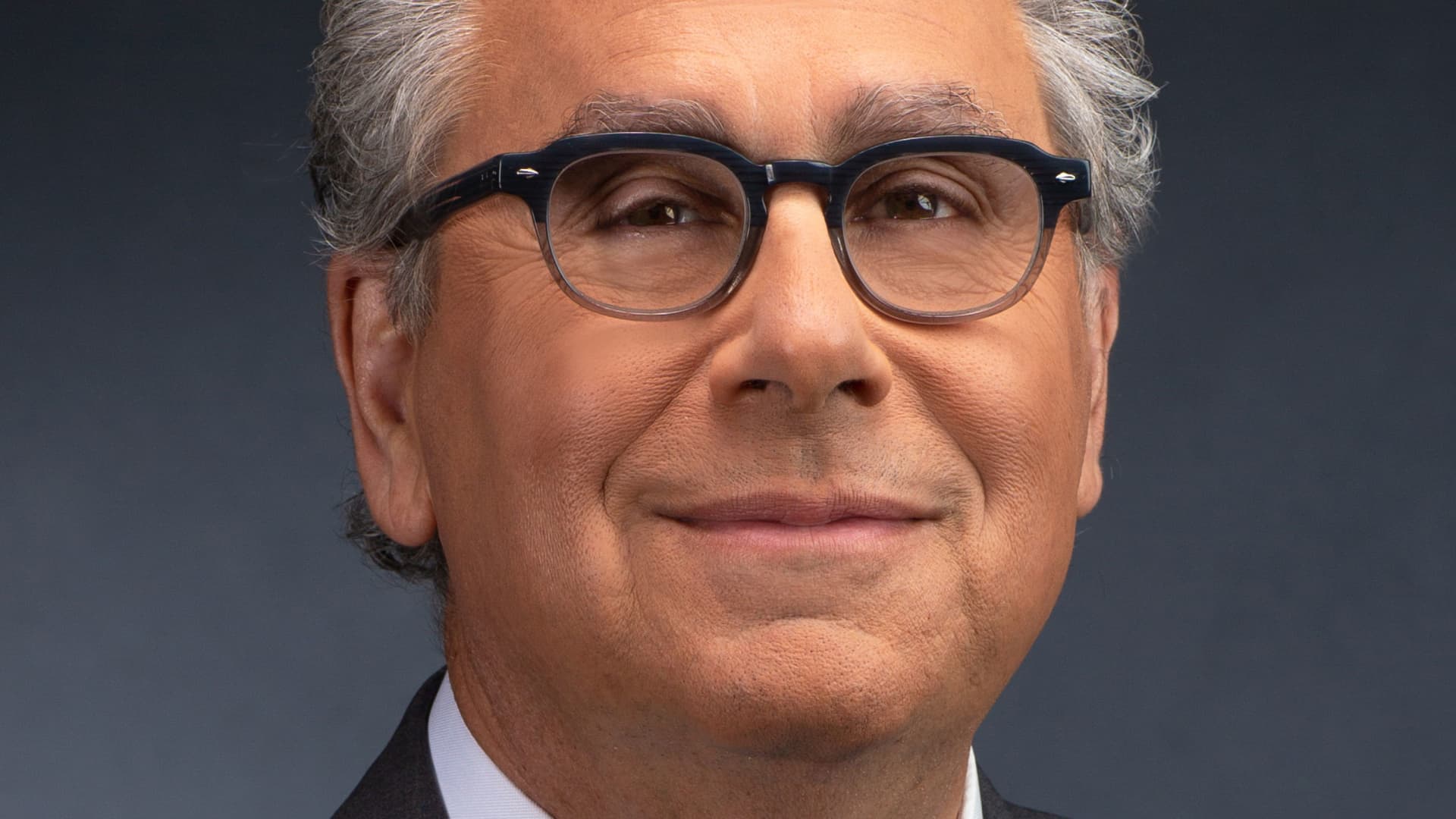
Mark Hoffman, Chairman of CNBC
Mark Hoffman, CNBC’s president since 2005 and chairman since 2015, announced Tuesday he will step down on Sept. 12.
Hoffman is leaving of his own accord. NBCUniversal hired Cesar Conde to oversee NBC News, MSNBC and CNBC in May 2020 to bring more centralized leadership to the group.
KC Sullivan will return to replace Hoffman as CNBC’s new president. Sullivan has spent the last two years as president and managing director of NBCUniversal’s global advertising and partnerships, based in London. Before that, he was president and managing director of CNBC International and CNBC’s chief financial officer.
Sullivan will return to the U.S. for his new role. Hoffman will stay on as a consultant through the transition, Conde wrote in a note to NBCUniversal employees.
“Mark has overseen the steady continued growth of CNBC as the world’s #1 business and money news brand,” Conde said. “No business news organization comes close to the reach and influence of CNBC, a true testament to Mark’s leadership.”
CNBC is one of NBCUniversal’s most consistently profitable assets, even as millions of Americans drop linear cable TV subscriptions each year. Hoffman, 65, has increased profitability at CNBC in 16 of his 17 years running the company. CNBC is set to grow its profitability again in 2022, according to a person familiar with the matter.
“We are in the business of business so it’s important to note we’ve never been more profitable, setting record after record in financial performance, year after year, as we maneuvered through economic cycles, exogenous events and the historic secular change that accompanied the information age,” Hoffman said in a note to CNBC employees.
Hoffman’s CNBC tenure
Hoffman first joined CNBC in 1997 before leaving in 2001 for a series of leadership positions at local TV stations. He returned to CNBC in 2005 and immediately pushed to acquire 50% equity interests in CNBC Europe and CNBC Asia from Dow Jones, as well as a 25% stake in CNBC World.
With financial control over its international properties, Hoffman expanded CNBC’s TV reach and turned his attention to growing CNBC’s digital business. CNBC.com has grown sixfold in the past six years, with unique monthly readership growing from about 30 million to nearly 200 million.
He’s focused on consistency on the cable network side, which still makes up the majority of CNBC’s revenue. Hoffman has renewed contracts for notable TV personalities including Jim Cramer, Joe Kernen, Becky Quick, David Faber, Carl Quintanilla and Andrew Ross Sorkin to maintain CNBC’s leadership as a trusted source of news, especially for wealthier Americans.
“Once defined as a moribund domestic cable channel that many thought would never fully recover from the dotcom bubble bursting, CNBC is today a global multimedia powerhouse, punching far above its weight, in the digital age,” Hoffman said.
While CNBC is no longer rated by Nielsen, CNBC TV has ranked No. 1 among all business news platforms for 29 consecutive years in reaching Americans who make more than $125,000 a year, according to Ipsos surveys.
Disclosure: Comcast‘s NBCUniversal is the parent company of CNBC.


